

Economic Woes Loom for Venezuela Amid U.S. Oil Blockade
Venezuela stands on the brink of economic turmoil as the United States continues its oil blockade, a strategy that could cut the country’s export earnings by a staggering 70%. The implications of this policy could be catastrophic.
Venezuela’s oil production has plummeted since the 1990s, and now this blockade threatens to bring it to a halt. As Benedicte Bull, a professor at the University of Oslo specializing in Latin American economics, observes, the loss of oil revenue could trigger a collapse of the nation’s economy, which is already precarious.
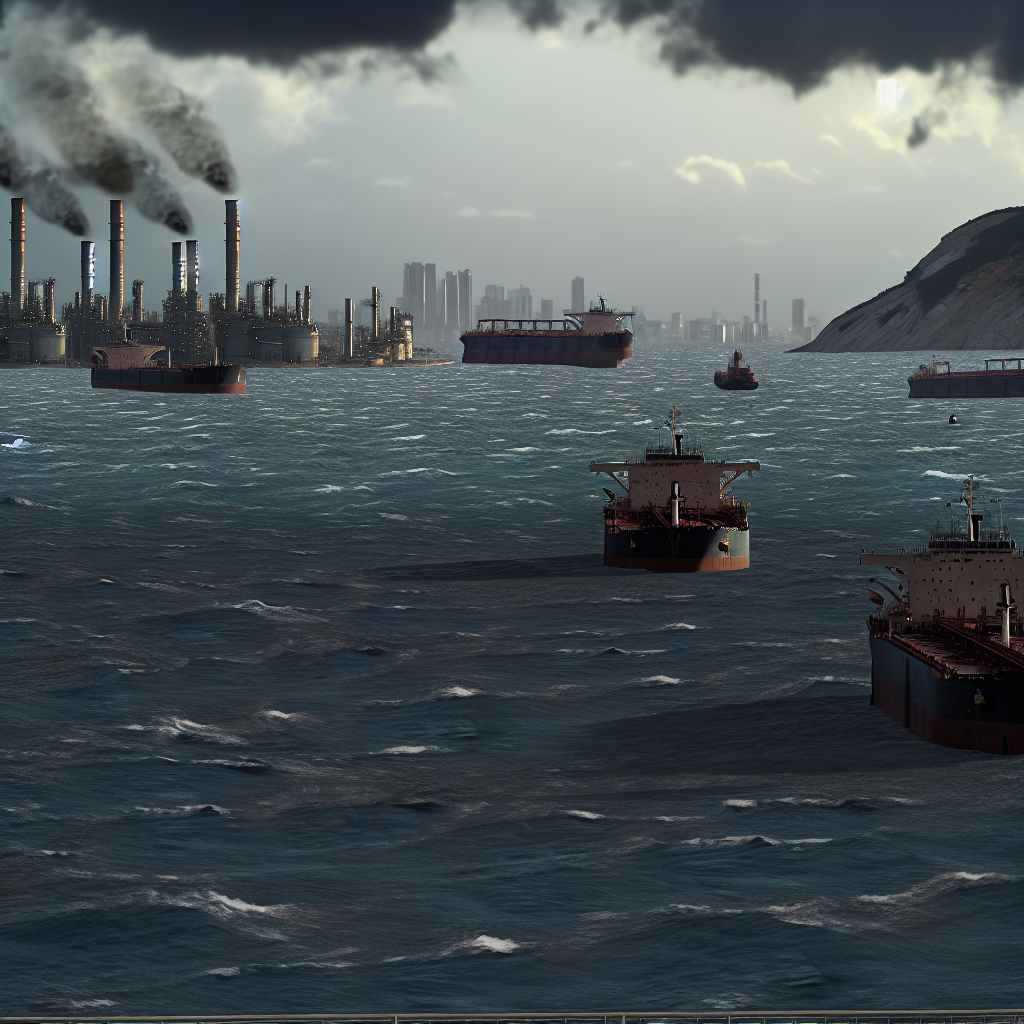
The United States maintains a formidable naval presence off Venezuela’s coast, compounded by a recent blockade of oil tankers instituted on December 11. Experts believe this measure could stifle the production of crude oil, Venezuela’s main source of income, as the state oil company PDVSA struggles to find storage options. By the end of January, all available storage could be exhausted, leading to further reductions in output.
Currently, Venezuela produces 1.2 million barrels of oil per day, a number that is projected to plummet to just 300,000. With Chevron being the sole U.S. company operating under an exemption, it also grapples with its inability to pay for the oil produced, further complicating the issue for the beleaguered nation.
The Oil Economy’s Critical Importance
For Venezuela, oil is more than just a commodity; it is the backbone of the economy. Bull emphasizes, “The importance of oil revenues can hardly be overstated. Venezuela’s dependence on oil far eclipses that of Norway.” The state has little to rely on besides its oil exports, with minor contributions from rum and shrimp inadequate to fill the gap.
The blockade poses an acute threat to the Venezuelan economy. “An absence of oil revenue would lead to economic chaos,” Bull warns. The appointment of Delcy Rodríguez as acting president, while viewed favorably by the U.S., could place her in a precarious position, riddled with challenges should the blockade persist.
Negotiating a Possible Path Forward
Experts speculate on the potential for a diplomatic solution that could permit some oil exports, providing relief not just for Venezuela but also benefiting U.S. interests. Bull believes this would require some concessions from both sides.
A broader geopolitical angle concerns Cuba and China, both of whom may find themselves adversely affected by the blockade. Bull notes that Cuba relies heavily on Venezuelan oil. Since Maduro was a staunch ally of Cuba, Rodríguez’s appointment could signal a shift in that relationship, potentially making Cuba vulnerable to further U.S. pressure.
Marco Rubio, U.S. Secretary of State and a prominent architect of the sanctions, has a personal history tied to Cuba, adding nuance to U.S. policy decisions. His approach may well aim at weakening Cuba’s support system via the Venezuelan oil supply.
China is another key player, having secured 80% of Venezuela’s oil exports due to substantial loans extended to the nation. Bull posits that U.S. efforts may also seek to undermine this dependency, altering the power dynamics in not only Venezuela but the broader region.
Conclusion
As the blockade remains firmly in place, the ramifications for Venezuela are dire. Economic collapse seems imminent without a strategic pivot or agreement that allows for some oil export activity. With the stakes exceedingly high, the next steps will be crucial for both Venezuela and the surrounding nations reliant on its oil.
