

The Laura Maersk: A Beacon of Denmark’s Green Ambitions
On a golden afternoon in September 2023, the Laura Maersk loomed majestically in the Copenhagen harbor, its sleek blue hull adorned with vibrant nautical flags and emblazoned with the phrase “ALL THE WAY TO ZERO.” This was not just any container ship; it was the world’s first to be powered by green methanol, signaling a pivotal moment in maritime history.
The Laura Maersk encapsulates the spirit of its homeland, Denmark—a progressive nation of approximately six million that has emerged as a pioneer in clean technology, emission reduction, and the energy transition. While many countries falter in their climate ambitions, Denmark continues to lead the way, demonstrating that environmental responsibility and economic vitality can thrive in harmony.
In fact, the latest Climate Change Performance Index, which evaluates nations’ efforts to align with the Paris Agreement, ranks Denmark at the top among 63 countries, including the European Union. This index measures factors such as greenhouse gas emissions, energy usage, reliance on renewables, and climate policy. At COP30 in Brazil last November, Denmark’s Climate Minister, Lars Aagaard, unveiled the country’s ambitious goal of an 82% reduction in emissions from 1990 levels by 2035—outpacing the EU’s target of 66.3% to 72.5% for the same timeline. In comparison, Canada aims for a 45% to 50% reduction based on 2005 levels by 2035. Denmark is not just setting lofty targets; it is on track to exceed its 2030 emissions goal and aims for climate neutrality by 2045—five years ahead of the EU’s timeline.
So, what sets Denmark apart? How has this small nation successfully combined cutting-edge clean technology with broad public support for ambitious climate policies, while also sustaining the fourth-highest GDP per capita in Europe? “There’s a saying in Danish: ‘If two Danes meet, they shake hands. If three Danes meet, they form an association,’” observes Gert Tinggaard Svendsen, a professor of political science at Aarhus University. He points to a unique capacity for collaborative problem-solving as a key to Denmark’s success.
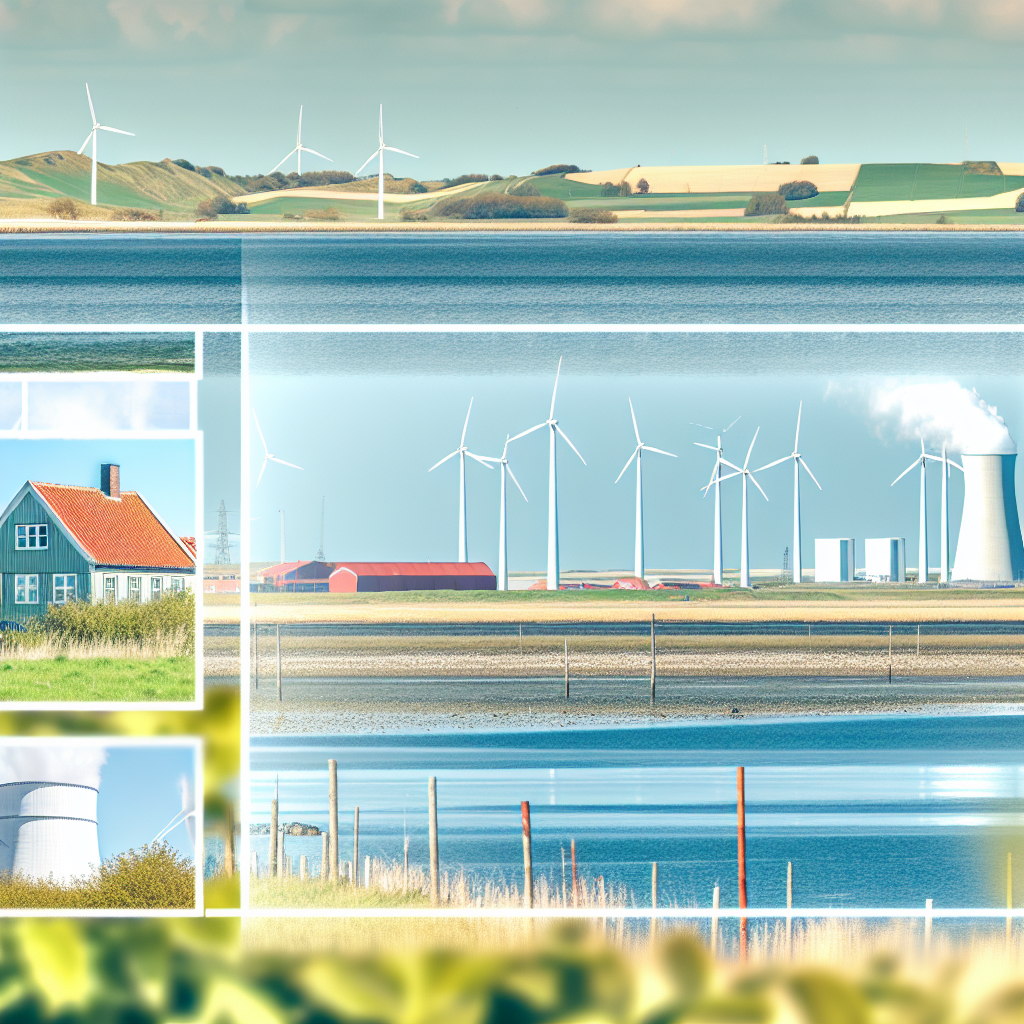
This spirit of cooperation is underpinned by a remarkable level of social trust—75% of Danes report trusting others, well above the OECD average. Svendsen traces this trait back to the seafaring Vikings, who forged their trading agreements through handshakes, establishing a culture that valued honesty and encouraged cooperative behavior. He argues that this enduring legacy forms the foundation of Denmark’s energy transition, using the island of Samsø as a prime example. In 1997, facing challenges of unemployment and depopulation, the island’s 4,000 residents committed to renewable energy. With the installation of 11 onshore and 10 offshore wind turbines, along with solar panels and biomass-fueled heating plants, the island proudly achieved a 100% renewable energy status by 2007, a global first.
A crucial element of this transformation has been the focus on local ownership and economic engagement. On Samsø, residents living near wind turbines were given the opportunity to invest directly in them, turning what were once perceived visual eyesores into meaningful investment opportunities. This shift has greatly influenced the broader Danish energy transition. In 1996, Copenhagen’s municipal energy utility pioneered one of the world’s largest offshore wind farm projects, inviting local investors to participate. The Middelgrunden Wind Turbine Cooperative raised half of the construction costs and continues to own the project, exemplifying the power of public-private partnerships that align governmental policies with community interests. Today, wind energy accounts for 60% of Denmark’s electricity production—the highest per capita generation in the world—thanks to policies mandating community ownership of new projects since 2009.
Local ownership fosters a shared sense of pride among Danes, who view the energy transition as an opportunity rather than a necessary concession to ecological limits. A notable example is Copenhagen’s waste-to-energy power plant, designed by the Danish architectural firm Bjarke Ingels Group. Opened in 2017, the facility features a ski slope on its roof and a climbing wall on its facade, serving as a striking illustration of what Bjarke Ingels calls “hedonistic sustainability.”
Sustainability has become synonymous with Denmark. Since 2019, the foreign ministry has underscored green diplomacy as central to its international policies, particularly as the country currently holds the presidency of the Council of the European Union. Denmark is actively framing energy transition and the move away from Russian oil as essential to national security, while also encouraging international entities to pursue more ambitious climate goals.
Returning to the Laura Maersk, this groundbreaking vessel embodies Denmark’s commitment to achieving net-zero emissions in global shipping—a sector responsible for 2% to 3% of the world’s greenhouse gas emissions. Its launch marks a determined stride toward this ambitious target. Moreover, it highlights a distinctive aspect of Danish corporate culture that encourages private-sector engagement with sustainability.
Maersk is one of numerous companies in Denmark owned by a foundation. Steen Thomsen, a professor of corporate governance at the Copenhagen Business School, notes that around 1,400 enterprise foundations are registered in the country, including about 20 multinational firms like Maersk, brewer Carlsberg, and pharmaceutical giant Novo Nordisk. Unlike the typical North American model in which corporations establish foundations for philanthropy, these Danish foundations operate the companies directly, holding a majority of shares and voting rights.
Thomsen explains that this structural model leads enterprises to invest more in research and development, be better employers, and execute social and environmental responsibilities. “The foundation has a dual purpose: to be a good long-term owner and to practice some form of philanthropy,” he says. “It can’t stray too far from ethical practices while engaging in charitable work.”
The prevalence of enterprise foundations has reshaped the Danish economy in noteworthy ways, fostering a focus on long-term benefits rather than short-term personal excesses. This has resulted in a culture that prioritizes collective advancement—whether it’s the sharing of innovations or Maersk’s commitment to advances that accelerate the shipping industry’s decarbonization.
While the Danish model may be challenging for other nations to replicate, it serves as a compelling example of what is possible. Initial concerns about the future of decarbonized shipping—largely stemming from the limited availability of green methanol—have dissipated since a joint Danish-Japanese consortium inaugurated the world’s first commercial-scale green methanol plant in southern Denmark last May. This facility uses renewable energy and captures carbon dioxide from waste incineration and biogas to produce methanol for customers like Novo Nordisk and Lego. At the plant’s opening, the Laura Maersk was present, poised to refuel its pioneering journey toward a sustainable future.
Naomi Buck is a Toronto-based writer.
