
The primary reason Donald Trump abandoned the idea of a military takeover of Greenland wasn’t merely the troubling national security repercussions a breach of NATO would entail. While the destabilizing effects of such an action would undoubtedly be profound, the pivotal factor influencing Trump’s change of heart was financial.
Over time, Trump began to grasp that decades of transatlantic security cooperation have resulted in significant economic ties between the United States and Europe. Sources close to the president likely informed him that ordering a military occupation of Greenland could spell economic disaster for the U.S.
Though Trump’s senior economic advisors and the business magnates he consults may hesitate to openly contradict him, it appears that in this instance, their fears of the ramifications of an economic collapse outweighed their concerns about his reactions. The potential fallout of an economic crisis certainly loomed large in their minds.
The risks of an economic catastrophe following a military strike on Greenland were unmistakably clear. European investors play a crucial role in bolstering the strength and stability of the U.S. economy. According to data from the Federal Reserve, European governments and private investors currently hold a staggering $10.4 trillion—or 15.3 percent—of U.S. stocks, $3.4 trillion (11.0 percent) of U.S. government securities, and $2.9 trillion (11.6 percent) of U.S. corporate bonds.
On a global scale, foreign investors—both public and private—now own nearly one-third of the U.S. economy, comprising 31.3 percent of all U.S. stocks, 36.3 percent of U.S. government securities, and 20.1 percent of U.S. corporate bonds. Narrowing it down further, European investors control 48 percent of all foreign-owned U.S. stocks, 57 percent of the foreign-held corporate debt, and 32 percent of foreign-owned U.S. Treasury and agency securities.
The Europeans are well-versed in safeguarding their interests. In 2023, in response to geopolitical pressures from China, the European Union established the “Anti-Coercion Instrument” (ACI), a powerful economic tool that enables the EU Council to cease government purchases of public securities from nations attempting to leverage coercive tactics. Uniquely, decisions made under the ACI cannot be vetoed by a single member, such as Hungary, where Prime Minister Viktor Orban has close ties to Trump. Recently, French President Emmanuel Macron suggested invoking this ACI should Trump persist with military options against Greenland.
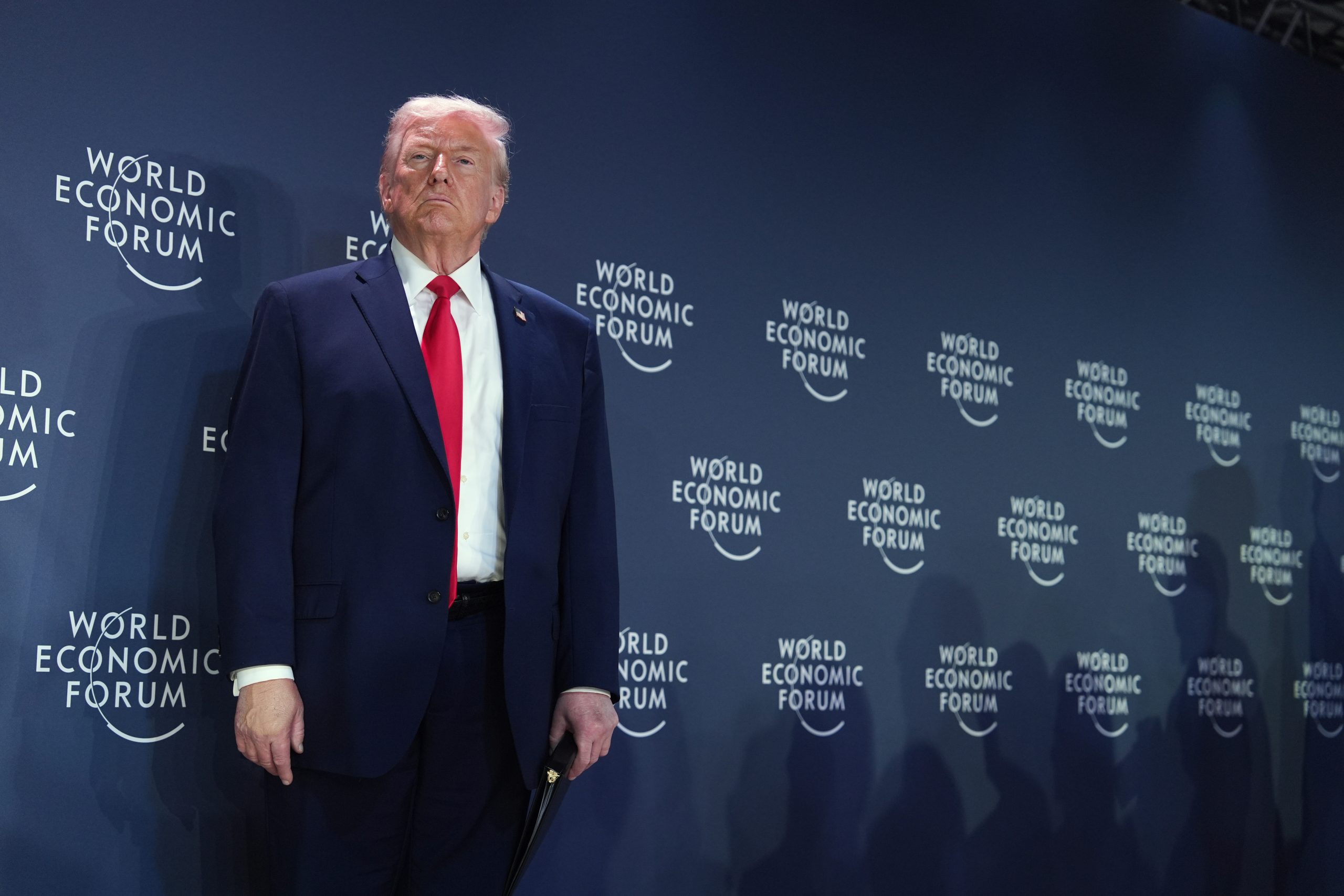
It’s highly probable that Trump’s advisors relayed Macron’s warning to him en route to Davos, along with the critical fact that EU governments, together with the UK and Canada, hold between $1.5 trillion and $2 trillion in U.S. Treasury securities—approximately one-third of which require annual refinancing. Considering that Trump’s 2026 budget deficit would absorb the bulk of new U.S. private savings, a halt to European purchases could send U.S. interest rates soaring, sending shockwaves through the bond and stock markets. Just the implication of this prospect has already caused rates on 10 and 30-year bonds to rise.
In the event of a transatlantic crisis, private European investors represent a threat as significant as that posed by their respective governments.
European banks, hedge funds, insurance companies, pension funds, private endowments, and affluent families own astonishing multiples of U.S. financial assets: eight times more U.S. stocks, 19 times more corporate bonds, and nearly as many Treasury securities as their governments combined. If a sizable segment of these investors decided to offload their U.S. holdings, it could trigger a calamitous decline in stock and bond markets, risking the solvency of major American firms.
Observing which sectors might suffer the heaviest toll is a matter of simple arithmetic. Corporations with significant foreign stock ownership, especially in sectors like computer and electronics manufacturing, information and telecom services, broadcasting, chemicals, and notably financial institutions, stand out. If these entities were to experience a sudden and substantial sell-off by private European investors, the repercussions could rival the financial crisis of 2008-2009.
They wouldn’t act alone. U.S. hedge funds currently hold about $2.9 trillion in financial assets. At the first hint that European private investors are preparing to withdraw from the U.S. market, American hedge funds would likely follow suit, quickly joined by investment and commercial banks managing vast tracts of assets belonging to insurance companies, pension plans, endowments, and wealthy families.
European investors have made substantial commitments to the American economy due to its relative strength, stability, and security compared to other major economies. U.S. stock returns have historically outpaced others, taxes on these gains have remained favorable, and inflation has generally been kept in check. Furthermore, European institutions have invested in U.S. assets with confidence, bolstered by the assurance that the American government stands firmly behind contracts and enforces private agreements.
That is the crux of the matter: NATO serves as a foundational contract binding the U.S. to Europe, and Trump’s move to seize Greenland would rip apart that agreement—along with the economic confidence that accompanies it.
A militaristic approach to Greenland would paint the U.S. as an adversary, and European investors are acutely aware that such a position leaves them vulnerable to asset seizures or punitive taxation. As they deliberate the security of their investments in U.S. stocks, corporate bonds, and Treasury securities, these investors must weigh their ownership rights against the backdrop of a potential U.S. threat.
While Trump may not fully comprehend the intricate web of economic interdependence that ties the U.S. to Europe, it is crucial he recognizes that wielding military force against a NATO ally would not only dismantle transatlantic security cooperation but also fracture the economic ties that reinforce it.
