

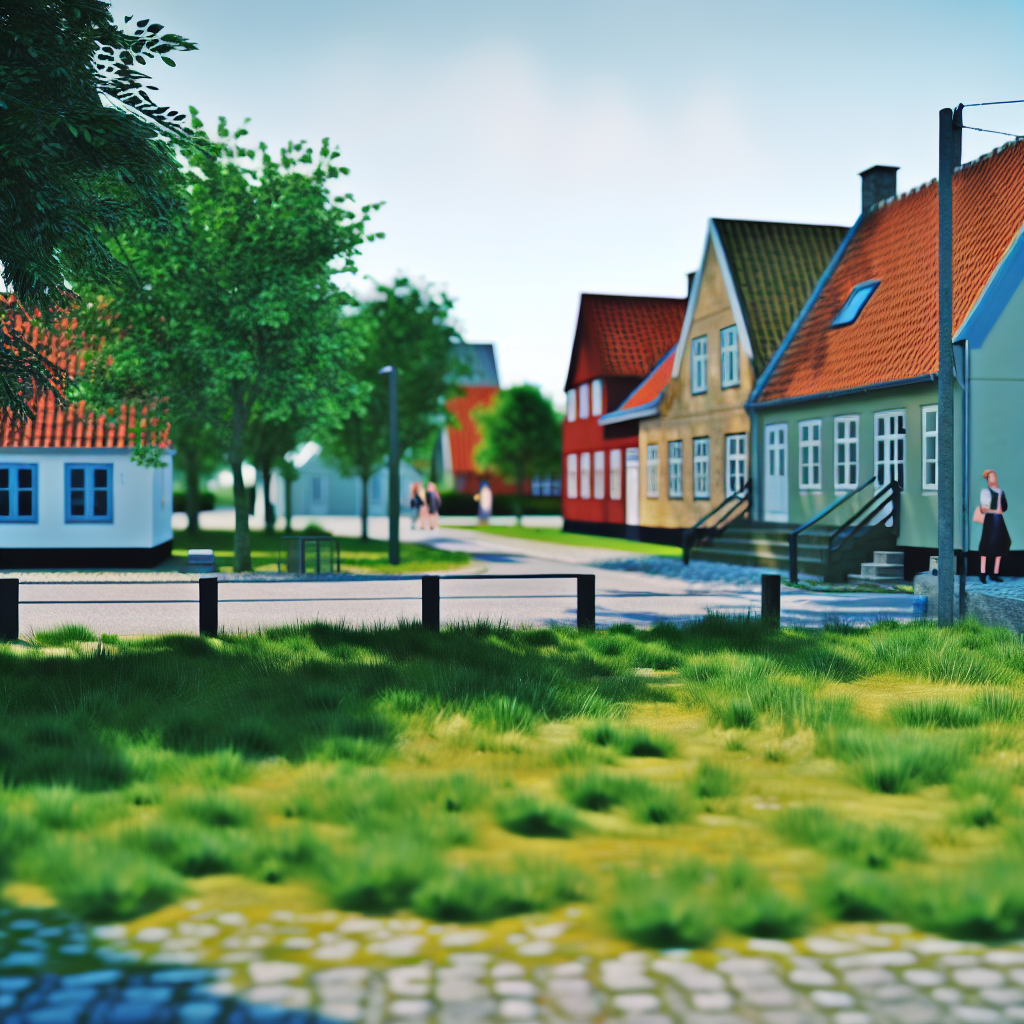
I’ve spoken before about “The Danish Year” on my platform, *How to Live in Denmark*. It encapsulates a series of events we come to expect each year in this vibrant country, even if they don’t fall under the category of formal holidays. Starting in 2025, I plan to delve deeper into this theme with a monthly podcast that explores the various facets of the Danish year, placing them within the broader context of Denmark’s past and future.
As I traverse the country, giving talks in various towns and cities, I rely on the Danish national train service, DSB. While many Danes express their frustration with DSB, I find it quite agreeable. The trains are typically clean, arrive on schedule, and even reward frequent travelers with points that can be redeemed for treats like ice cream. Travel becomes a scenic journey across Denmark’s charming, flat landscape, with large windows inviting views of the countryside whizzing by.
Though the title of my podcast is *How to Live in Denmark*, it’s essential to recognize that Denmark is not a monolith. Its varied landscapes—featuring rolling hills, dense forests, and expansive bodies of water—are mirrored in its governance. While the Parliament in Copenhagen grapples with significant national issues such as defense and immigration, local authorities wield considerable power over the elements that shape everyday life.
Democracy in Denmark: Localities Have a Lot of Control
From childcare and elder care to job centers and services for the disabled, the quality and availability of these essential services can vary dramatically depending on where you reside in this nation of 6 million.
Healthcare, too, is divided regionally; you may experience shorter wait times in hospitals in some areas while others may offer a wider array of psychiatric services. Furthermore, income tax rates fluctuate from one locality to another, meaning that a move—whether significant or slight—could lead to a surprising shift in your take-home pay.
The timing of my reflections is no coincidence, as we are now in the heart of local election season in Denmark. October marks the commencement of campaigning, with elections generally scheduled for June and November, allowing voters to participate before embarking on their many delightful Danish vacations.
This thoughtful planning ensures robust voter turnout, typically around 70% for local elections, and 85% for national ones—testament to a well-structured democratic process.
The Competitive Landscape of Election Poster Displays
October is also the time when campaign posters begin to adorn our streets—exactly 28 days before the vote. It’s an exciting race: on October 25 at the stroke of noon, teams of poster-hangers spring into action, eager to claim the prime spots on lamp posts, trees, bridges, and fences.
Once the posters are up, the law forbids their removal, leading to an all-hands-on-deck approach to ensure each party’s materials are displayed prominently. On that particular Saturday, a flurry of young volunteers will be seen energetically using ladders and zip ties to fasten their party’s images, all while adhering to regulations that stipulate advertisements must be positioned at least one-and-a-half meters below power lines.
This youthful enthusiasm is matched by the number of young candidates vying for political office, and it’s not uncommon to spot them participating in the poster-hanging frenzy.
Election Posters: A Missed Design Opportunity
Ironically, in a country renowned for its exceptional design sensibility, Danish election posters all showcase a remarkably uniform aesthetic. They typically feature a candidate’s face, a name, and the corresponding party’s colors and symbols—nothing more. Slogans and promises? Nonexistent. Voters are left to undertake their own research if they wish to understand a candidate’s platform.
With 13 national parties and numerous local options, Danish voters frequently must consult various media outlets that provide online quizzes, matching their political beliefs with suitable candidates and parties.
The Lifecycle of Political Parties
Political parties in Denmark evolve like spring flowers: blooming from specific issues—like lowering car taxes—or when a charismatic leader departs a major party, dragging their supporters into the spin-off. However, as quickly as they emerge, these parties often dissolve or merge when their founder retires or their key issues lose traction.
Main Parties Taking a Stand on Immigration
In some instances, smaller parties fade away as larger, established parties absorb their core issues. Numerous smaller factions focused on anti-immigration sentiments find their stances mirrored in the larger parties, including historically left-leaning groups like the Social Democrats. Under Prime Minister Mette Frederiksen, this party has been integral to coalitions that have progressively tightened residency requirements.
For newcomers, the path to establishing a life in Denmark often remains shrouded in uncertainty, with the rules and waiting times for permanent residency shifting unpredictably.
Even non-Danish residents holding permanent status can experience an unwelcoming atmosphere; recent comments from the new immigration minister emphasize the expectation for newcomers to integrate, seemingly placing the onus on them rather than on the welcoming party.
The Right to Vote for Foreign Residents
Ironically, foreigners have the right to vote in Danish local elections. EU citizens, UK nationals, and non-EU residents who have lived in a municipality for four consecutive years can participate in the electoral process just like their Danish counterparts.
I recently attended a debate in Copenhagen conducted in English, where Danish candidates aimed to connect with foreign votes—about 15% of the capital’s voting base—though turnout from this demographic remains low.
Despite lackluster debates, with some candidates struggling with their English, the very fact that political engagement is sought from foreign residents seems like a paradox, especially given the contradictory sentiments expressed by other politicians towards this demographic.
A Candidate’s Face on a Sweet Wrapper
Interestingly, foreigners may also run for local office in Denmark. To qualify, candidates need not be Danish citizens; they simply must reside in the locality for the requisite four years.
It’s heartening to witness a diverse array of individuals participating in Danish democracy—whether they are young, old, ethnic Danes, or immigrants. Engaging with these candidates is a common affair, as they often distribute campaign flyers emblazoned with their images in places like shopping centers and train stations. I fondly remember one candidate who handed out bonbons wrapped in her own likeness—and she won!
You can’t help but notice their faces adorning election posters in train windows as you travel across Denmark, each large smile hoping to capture your vote.
