

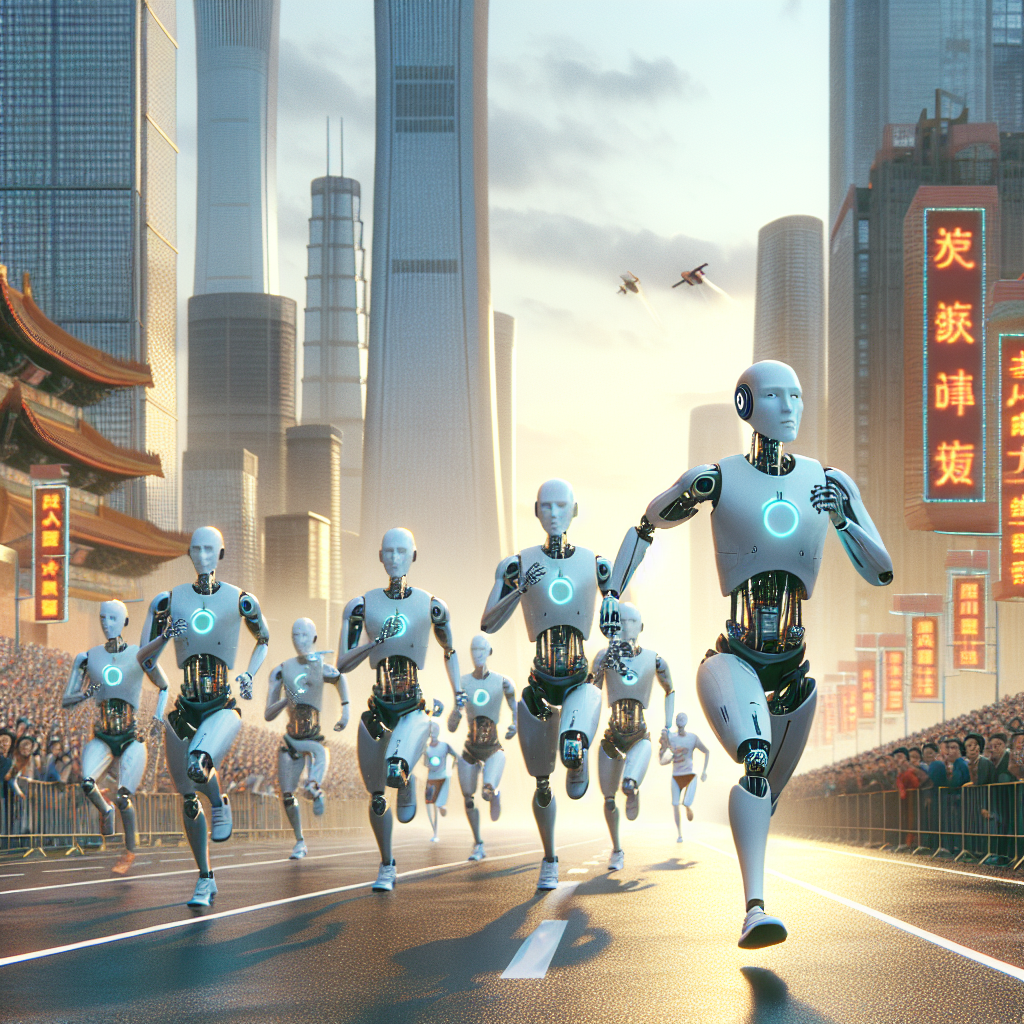
On a sunny Sunday in Beijing, a remarkable spectacle unfolded as humanoid robots showcased their athletic prowess, darting past their human counterparts in a half-marathon that has quickly become a highlight of the city’s sporting calendar.
This event, organized for the second consecutive year, witnessed a significant transformation from its inaugural outing, which was marred by mishaps and largely ended in frustration for many competitors. Last year, most robots struggled to finish the race; this time, however, the scene was markedly different.
The standout performer among the robots, developed by the Chinese firm Honor, clocked an impressive time of 50 minutes and 26 seconds—outpacing not just the other robotic contenders but also dominating the field of human athletes. This remarkable feat eclipses the current world record for the half-marathon, recently set by Ugandan runner Jacob Kiplimo in Lisbon.
Participation swelled dramatically this year, with the number of robot teams soaring from 20 to over 100, a clear testament to the growing interest and investment in robotics. Notably, nearly half of these robots autonomously navigated the 21-kilometer route, shedding the remote controls that had bound their predecessors.
To ensure safety and smooth racing, the robots and approximately 12,000 human runners were carefully routed along parallel tracks, preventing any potential collisions. With each stride taken by these innovative machines, one thing became clear: the future of athletic competition is not just human but increasingly robotic.
