

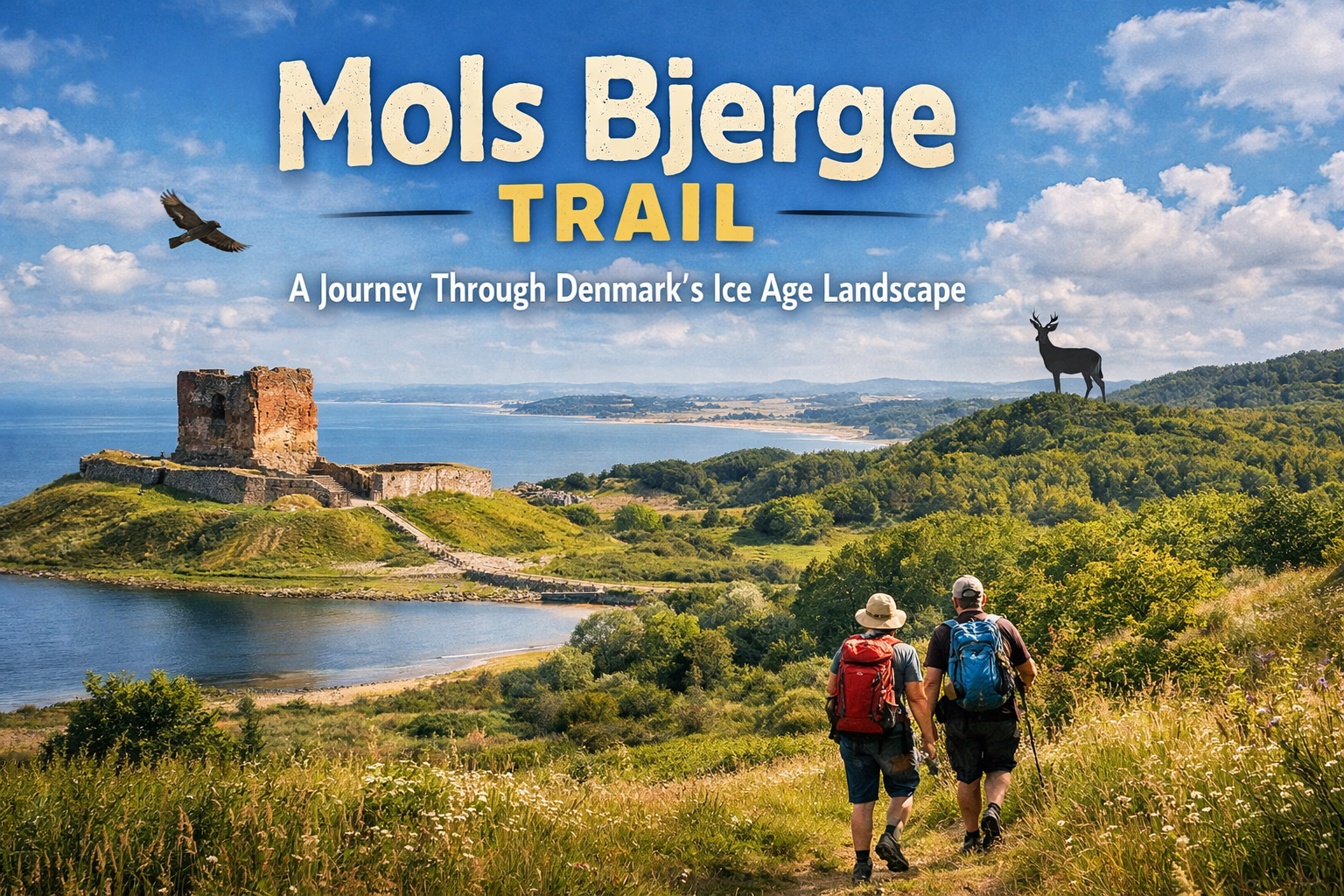
Introduction to the Trail and Its Setting
Nestled within the Djursland peninsula of Jutland, Denmark, the Mols Bjerge National Park presents a striking contradiction to the country’s famously flat topography. The Mols Bjerge Trail, an internationally recognized 80-kilometer hiking route, weaves through this extraordinary region, offering adventurers a deeply immersive experience in one of Denmark’s most hilly and varied landscapes. Designated as a Leading Quality Trail by the European Ramblers Association, this route is celebrated for its exceptional trail standards, diverse terrain, and profound cultural history.
As hikers traverse the undulating hills, deep kettle holes, and expansive coastal panoramas, they are treated to a vivid showcase of geological forces that shaped the land during the last Ice Age . The sheer diversity of the environment—from sun-dappled coastal stretches to dense, ancient woodlands—makes this trail a premier destination for outdoor enthusiasts seeking both physical challenge and natural beauty.
The landscape of Mols Bjerge is a direct result of colossal glacial movements that occurred thousands of years ago. Massive ice sheets carved the earth, leaving behind a dramatic topography characterized by towering marginal moraines and deep depressions known as kettle holes. Today, this undulating terrain is blanketed by a rich tapestry of flora and fauna, making it a vital sanctuary for biodiversity in Denmark.
The trail also serves as a portal into the region’s storied past, where Bronze Age burial mounds and medieval ruins stand as silent sentinels over the rolling hills. Walking the Mols Bjerge Trail is akin to stepping into a living museum, where every ridge and valley tells a story of geological upheaval and centuries of human adaptation.
Detailed Route, Terrain, and Scenery Description
Kalø Stage
The journey typically begins near the 700-year-old Kalø ruined castle. Hikers walk along the coast where crooked, gnarled trees stand as silent witnesses to centuries past. The path ascends to Krogryggen, offering sweeping views over Aarhus Bay. This stage introduces open pastures, kettle holes, and ends in the idyllic village of Femmøller, known for its historic water mills.
Mountain Stage
This is Denmark’s only true mountain stage and requires physical endurance. The trail climbs steeply and enters the heart of the national park. Hikers experience dramatic ravines, ancient woods, and rare wildlife habitats. The lack of buildings enhances the feeling of remoteness, while panoramic viewpoints reward the effort.
Ebeltoft Stage
This stage transitions into forest landscapes shaped by the Ice Age. Highlights include Ørnbjerg Mølle, Ulstrup Ådal valley, and Stubbe Sø lake—ideal for birdwatching. The trail continues along an old railway line and ends in the charming seaside town of Ebeltoft, known for its cobblestone streets and traditional Danish architecture.
Gåsehage Stage
The final stage is a coastal route beginning and ending in Ebeltoft. It features salt meadows, sandy beaches, and bird protection areas like Ahl Hage. Along the way, hikers encounter grazing cattle, sheep, and horses that help maintain the landscape naturally.
Practical Information
Completing the Mols Bjerge Trail typically takes four days. The terrain varies, offering a moderate to challenging hiking experience. Proper preparation is essential, especially due to Denmark’s unpredictable weather.
| Practical Information | Details |
|---|---|
| Total Distance | 80 kilometers (approx. 20 km per stage) |
| Duration | 4 days |
| Difficulty Level | Moderate to Hard |
| Best Season | April to October |
| Accommodation | Shelters, campsites, and local inns |
| What to Bring | Hiking boots, waterproof clothing, water, snacks, binoculars, map |
Tips and Highlights
Downloading the National Park Mols Bjerge app is highly recommended for navigation. While wild camping is restricted, designated campsites are available and should be booked in advance during peak seasons .
Birdwatching is a major highlight, especially around Stubbe Sø and Ahl Hage. Bringing binoculars enhances the experience. Hikers should also respect grazing animals by keeping a safe distance and not feeding them.
The ruins of Kalø Castle and the charming town of Ebeltoft provide cultural highlights, complementing the natural beauty of the trail. Photographers will find endless opportunities, from panoramic hilltop views to serene woodland scenes.
Map Information
The traditional starting point is near Kalø Castle Ruins, accessible from Rønde.
Start Point GPS Coordinates: 56.2333° N, 10.4667° E
