

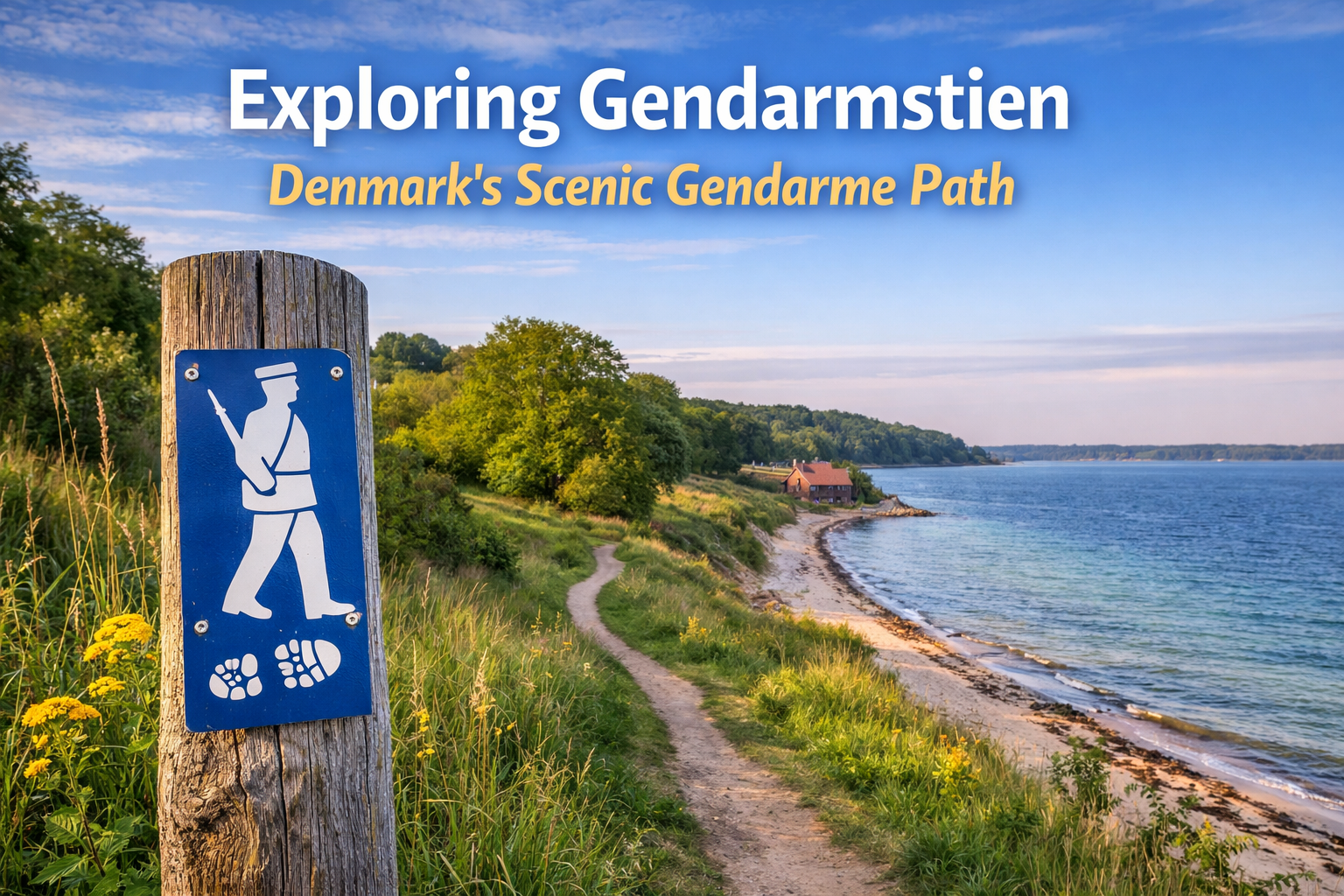
Nestled along the picturesque southern coast of Denmark, Gendarmstien—or The Gendarme Path—is a hiking trail that offers adventurers a unique blend of natural beauty, rich history, and diverse landscapes. Stretching 84 kilometers, the trail traces the footsteps of Danish border guards, known as gendarmes, who patrolled the frontier between 1920 and 1958 [1]. This coastal route not only invites hikers to immerse themselves in the tranquil surroundings of Flensburg Fjord but also to explore the cultural heritage embedded within the region’s forests, beaches, and historic sites. Certified as a European Quality Trail, Gendarmstien promises a rewarding experience for those eager to combine outdoor adventure with historical intrigue [5].
The Trail and Its Setting
Gendarmstien winds its way through Denmark’s southernmost tip, from the town of Padborg to Høruphav, adjacent to the German border. The trail’s location along the Flensburg Fjord—a body of water shared by Denmark and Germany—means hikers are treated to spectacular views of the fjord’s shimmering waters on one side and lush woodlands or rolling farmland on the other.
The region itself is steeped in history, having been a contested border area for centuries. The trail follows the historic patrol routes of Danish border guards, or gendarmes, who monitored the delicate boundary after the reunification of Southern Jutland with Denmark in 1920 until the border’s militarization ended in 1958.
Today, the path allows visitors to traverse a route once vital for maintaining peace and order, giving a sense of the vigilance and endurance required by these border patrols.
Route Description: Terrain and Scenery
The 84-kilometer Gendarmstien is elegantly segmented into five distinct stages [2]:
1. Mountain Stage (Bjerg etape)
Despite Denmark’s famously flat terrain, this stage offers gentle elevations and coastal bluffs with sweeping fjord views.
2. Brick Stage (Mursten etape)
Named after historic brickworks, this section moves inland through forests and rural farmland dotted with industrial remnants.
3. Crow Stage (Kråge etape)
This stage combines coastal cliffs and dense woodland, offering dramatic scenery and birdwatching opportunities.
4. Beach Stage (Strand etape)
A relaxing segment along sandy beaches and shallow coves, perfect for breaks and enjoying the shoreline.
5. Mill Stage (Mølle etape)
The final stretch passes historic mills and pastoral landscapes before reaching Høruphav.
Practical Information
Gendarmstien is considered a moderate difficulty trail and is typically completed in 4–5 days [3].
- Total Distance: 84 km
- Stages: 5
- Duration: 4–5 days
- Difficulty: Moderate
- Best Season: May to September [4]
Tips for Hiking Gendarmstien
- Plan your stages based on fitness level
- Take time to explore historical landmarks
- Watch for wildlife along coastal and forest areas
- Enjoy beach breaks along the route
- Stay on marked trails and respect nature
Map Information
Starting Point: Padborg
GPS Coordinates: 54.8360° N, 9.4280° E
The trail follows the coastline north along Flensburg Fjord with clear signage throughout.
Conclusion
Gendarmstien is more than just a hiking trail—it’s a journey through Denmark’s natural beauty and historical heritage. Whether you’re a seasoned hiker or a casual explorer, this trail offers a memorable experience along one of Denmark’s most scenic coastal routes.
References
- [1] European Ramblers Association – Gendarmstien
- [2] Visit Denmark – Gendarmstien
- [3] Danish Nature Agency
- [4] Flensburg Fjord Tourism
- [5] European Quality Trails
