

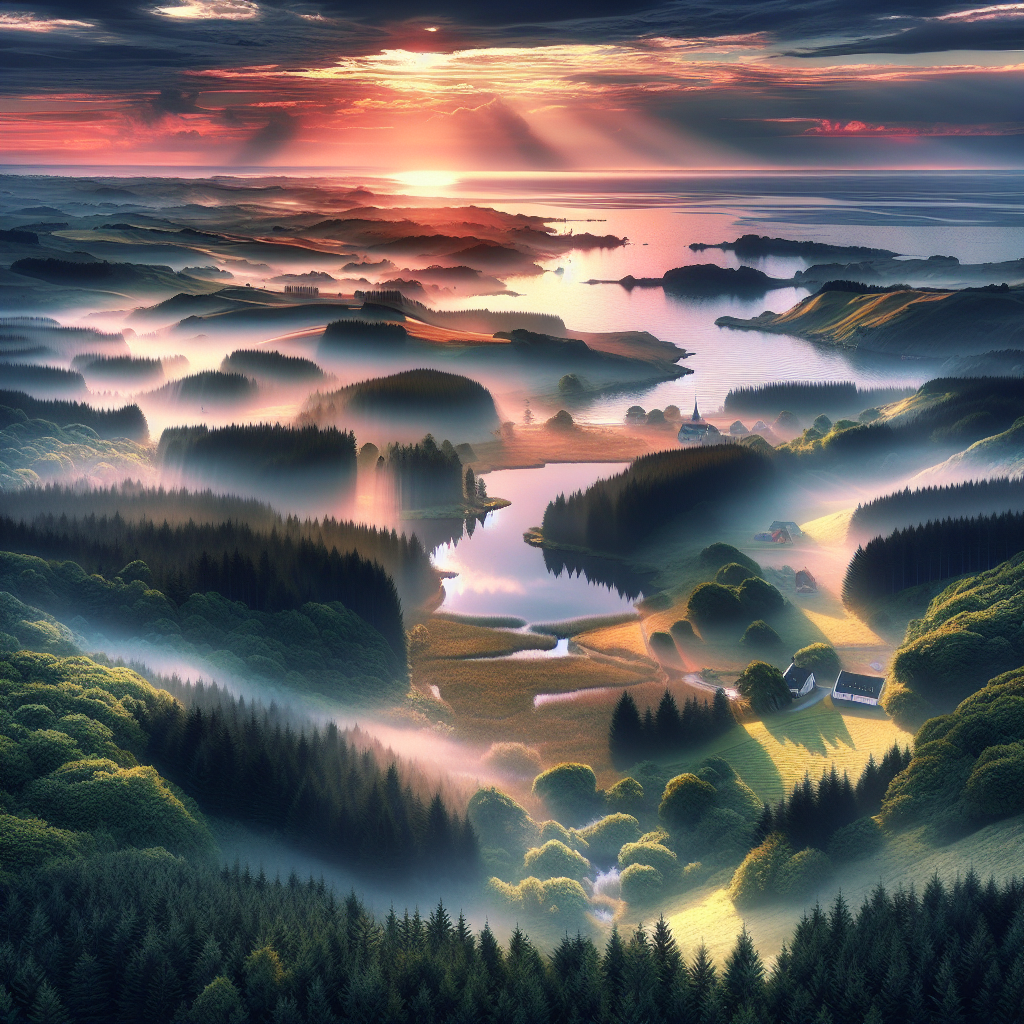
In prehistoric times, before the land was transformed for agriculture, vast expanses were blanketed by a rich deciduous forest, teeming with oak, elm, lime, and beech trees. Although that original forest has long since vanished, certain prized areas were reforested to break the monotony of the agricultural landscape that now defines much of Denmark. Situated on the edge of the coniferous belt, the country has embraced the cultivation of spruce and fir plantations, particularly in Jutland, where extensive wastelands of dune vegetation and heather have been reclaimed for forestry. Today, approximately one-tenth of Denmark’s land is covered by forests.
The postglacial era saw an abundance of large mammals—elks, brown bears, wild boars, and the now-extinct aurochs roamed freely, but as human activity intensified and agriculture expanded, these majestic creatures gradually disappeared. Nevertheless, roe deer thrive in Denmark’s countryside, while the forests of Jutland are home to stately red deer sporting large antlers. Smaller mammals such as hares and hedgehogs also populate the landscape.
Birdlife flourishes here, with over 300 species recorded, around half of which breed within the country. Once common summer residents, storks have become almost extinct, their annual migrations from Africa now a rarity. Meanwhile, Denmark’s waters teem with fish like cod, herring, and plaice, underpinning a robust fishing industry that remains vital to the nation’s economy.
In a remarkable twist of fate, wolves made headlines in 2017 when they were spotted in Denmark for the first time since 1813. This return marks a significant moment in the country’s ecological history and highlights the ongoing changes in Denmark’s wildlife landscape.
