

Advertisement collaboration with Momondo
This guide outlines a six-day itinerary for exploring São Miguel, the largest island in the Azores. From stunning hot springs to essential travel tips on flights, accommodations, and how to navigate the island, you’ll find everything you need to plan your perfect Azorean getaway.
The Azores first drew my attention with their breathtaking landscapes and dynamic volcanic activity. Stunning photographs showcasing rainforest-like hiking trails and spectacular lookout points over deep blue crater lakes sparked my curiosity. The prospect of luxuriating in natural hot springs, with steam swirling around me just like in Iceland—albeit in a more temperate climate—was undeniably appealing.
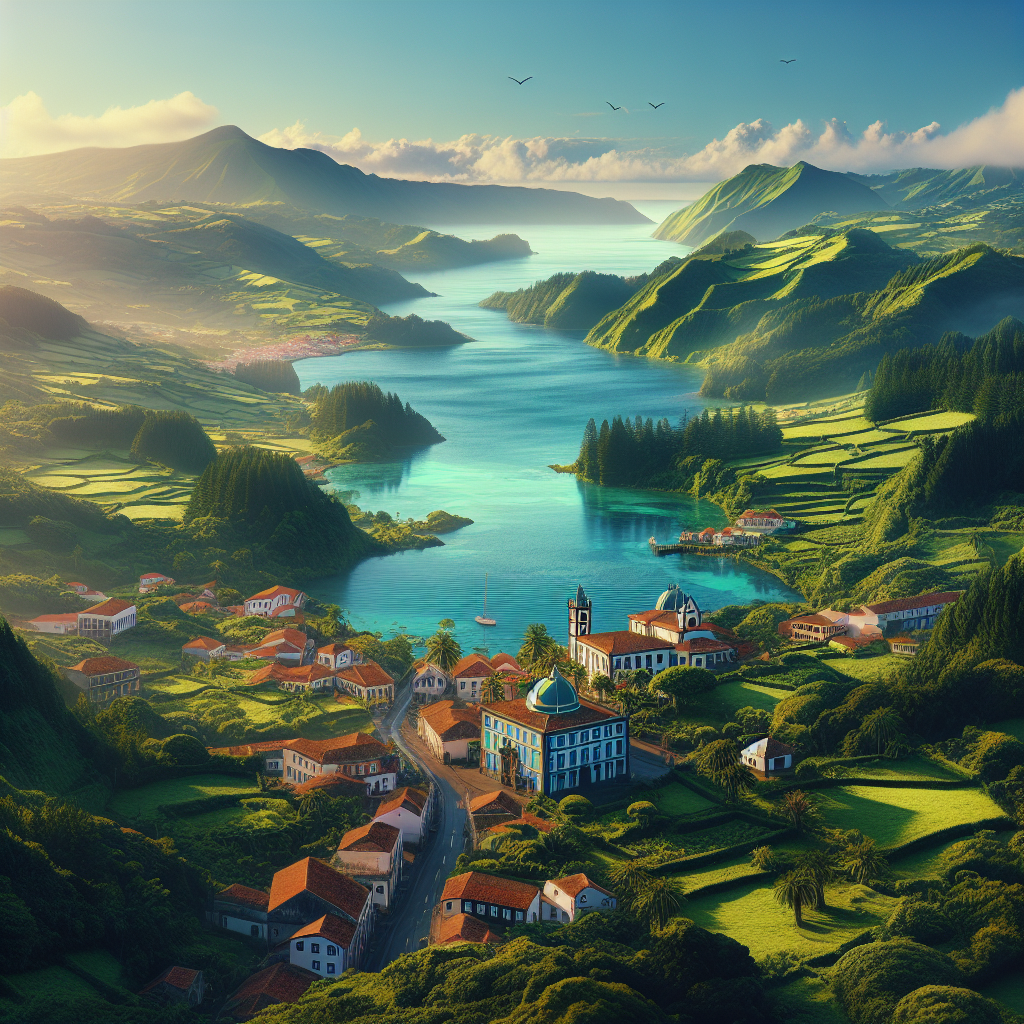
Often dubbed “Europe’s Hawaii,” the Azores differ significantly from that tropical paradise. Here, sandy beaches are scarce, and bustling tourist crowds are all but absent. Instead, the islands offer lush greenery and serene rural landscapes, where you’ll encounter more grazing cows than luxury resorts. It’s a true haven for adventurous travelers seeking an authentic experience in nature.
One of the Azores’ most breathtaking viewpoints – Miradouro Da Boca Do Inferno
Where Are the Azores?
Nestled in the Atlantic Ocean, the Azores are located approximately 1,360 kilometers west of Portugal’s mainland, constituting an autonomous region of the country. Alongside islands like Madeira (Portugal), Gran Canaria (Spain), and Cape Verde (Africa), they form the archipelago of Macaronesia, which shares numerous ecological similarities.
The elegant entrance to our Airbnb in Vila Franca Do Campo, where we stayed in a cozy apartment tucked just behind this charming façade.
Getting Around
Our adventure led us to São Miguel, approximately 20 kilometers wide and 70 kilometers long, making it accessible for exploration within a week. The island’s main city, Ponta Delgada, houses the international airport. While bus services are limited, we found that renting a car was the most effective way to navigate the island. We managed to secure a rental for just 90 EUR over six days, arguably one of the best deals we’ve encountered.
For those with more time, consider exploring the other eight islands in the Azorean archipelago: Flores, Corvo, Graciosa, Terceira, São Jorge, Faial, Santa Maria, and Pico, home to Portugal’s highest mountain, Mount Pico. Azores Airlines offers flights between islands, and ferry services are also available.
Accommodation in the Azores
Most accommodations can be found in Ponta Delgada, but I personally preferred to immerse myself in the countryside and connect with nature. Thus, we opted for two different Airbnb apartments: one in Ginetes on the western side and another in Vila Franca Do Campo further east. This arrangement minimized driving time and allowed us to explore nearly the entire island at a leisurely pace.
For more options on where to stay in São Miguel, check this out.
The Azores remain lush and green throughout the year.
Attractions and Activities: A Six-Day Itinerary
Here’s a detailed guide to the enchanting attractions of São Miguel, based on our six-day adventure.
Day 1: The Twin Lakes from Miradouro Da Boca Do Inferno
We arrived midday at our cozy abode in Ginetes, just a stone’s throw from the iconic twin lakes, a must-see highlight of the Azores. As the weather was picture-perfect, we decided to time our visit for sunset.
We drove north along the coast toward Sete Cidades, a charming town nestled between the two lakes. A steep ascent led us to the renowned Vista Do Rei viewpoint, though we soon discovered an even more spectacular spot nearby: Miradouro Da Boca Do Inferno, which can easily be found on Google Maps.
There’s a parking area where the pathway begins, and a leisurely 15-minute stroll past an iron gate down a wide dirt path will lead you to the outlook. Here, a set of stairs takes you to the crater’s edge.
Arriving just as the sun began to dip below the horizon was serendipitous. Bathed in golden light, the twin lakes—Lagoa Verde (Green Lake) and Lagoa Azul (Blue Lake)—unfolded beneath us, flanked by two smaller crater lakes, Lagoa Santiago and Lagoa Rasa.
Later, we dined at Lagoa Azul restaurant in Sete Cidades, where we enjoyed delicious, budget-friendly meals among the locals.
Day 2: A Visit to a Pineapple Plantation
The following morning greeted us with rain, prompting a search for sheltered activities. Our first stop was the pineapple plantation, A Arruda, in Ponta Delgada. Rows upon rows of pineapple plants thrive inside greenhouses, taking over a year to reach full maturity. We sampled refreshing pineapple juice at a quaint outdoor café on-site.
Entry to the plantation is complimentary, and you can find it on this map.
Exploring the Gruta Do Carvão Lava Grotto
Next on our agenda was the Gruta Do Carvão, an intriguing lava tunnel located right beneath the city. Formed by ancient volcanic activity, this underground marvel stretches for several kilometers, with sections having collapsed under the city’s weight. Guided tours allow visitors to walk through certain areas, with longer excursions for those eager to venture further into the caves. It was truly a unique experience!
For directions to the cave and tour times, you can visit their website. A ticket costs around five euros per person.
The Rocky West Coast: Ponta Da Mosteiros and Whale Watching Point
As the rain finally ceased on our return to our accommodation, we explored São Miguel’s rugged west coast. A narrow, winding road took us to Ponta Da Mosteiros, where towering Atlantic waves crash against dramatic cliffs. Continuing through the quaint town of Mosteiros, we arrived at Ponta Do Escalvado, better known as the Whale Watching Point. Though luck is often required to spot whales, the panoramic view alone was more than worthwhile.
Ponta Da Ferraria Hot Springs
What we had eagerly anticipated was the hot spring at Ponta Da Ferraria, where thermal waters converge with the ocean in a natural harbor. Our host cautioned us that conditions might not be ideal for swimming due to strong winds. It wasn’t until we arrived that we fully understood—immense waves threatened the pool, making it look rather formidable. Despite being unable to swim, we were treated to a mesmerizing sunset, which proved to be just as fulfilling.
For those eager to take a dip, there’s an artificial spa pool nearby for your enjoyment, which can be found on their website.
While we noted the stairs leading to the natural pool, swimming there certainly requires favorable weather.
Day 3: Caldeira Velha – Hot Springs in a Forest Setting
The next day, we journeyed into the heart of the island, ascending towards old volcanic craters. As we climbed, the landscape grew more vibrant and lush. After paying a modest entrance fee at the charming wooden hut, we followed a well-marked gravel path to Caldeira Velha.
Stepping into this enchanting area felt like entering a prehistoric realm reminiscent of Jurassic Park, surrounded by towering ferns and dense foliage. The small visitor center features changing stalls, and at the top, a stunning pool with a gentle waterfall boasts the most vibrant blue water. Following the rain, the water was refreshingly cool—a perfect 25 degrees. Further down, warmer pools await, offering a soothing temperature of 38 to 40 degrees, inviting visitors to unwind amid the tranquil forest ambiance.
With its carefully crafted paths and facilities, Caldeira Velha allows you to enjoy nature without sacrificing comfort. I can’t recommend this hidden gem enough! The entrance fee is only 4 EUR per person, and you can find it on Google Maps.
Dining with Volcanic Flair
The tranquil experience of Caldeira Velha held us captive for much of the day, and once hunger struck, we made our way to Restaurante Bar Caldeiras. Here, a delightful buffet of local specialties awaits, including the Azorean classic—food cooked underground using volcanic heat!
Venturing along the path to Caldeira Velha felt like stepping back in time to Jurassic Park.
The upper pool showcases crystal-clear water in a refreshing green-blue shade.
The two lower pools are delightfully warm – the perfect setting for relaxation.
Day 4: The Viewpoint at Lagoa Do Fogo – The Lake of Fire
We awoke on day four ready to explore one of the Azores’ finest attractions—the viewpoint Miradouro da Lagoa Do Fogo. The trail leading to the lake’s shore was rather muddy, preventing us from walking the entire path. However, the views from the peak made the effort worthwhile.
The viewpoint can be located on Google Maps.
The Chá Gorreana Tea Plantation
In the afternoon, we visited Chá Gorreana, Europe’s sole tea plantation. Rows of tea plants stretch endlessly around the estate and even across the road. We meandered through the plantation and toured a quaint factory, which operates with vintage machinery. The drying loft is particularly charming, where tea leaves are prepared before packing. At the end of the visit, we were invited to sample varieties of tea in the delightful café that also offers sandwiches and cakes.
Admission is free, and you can find the plantation on Google Maps.
Day 5: Furnas – Hot Springs and the Historic Spa Village
On day five, we set off for the historic spa village of Furnas. A leisurely walk around Lake Furnas led us to the botanical garden, Terra Nostra. One of the area’s peculiar wonders is the Fountain of Youth—a large yellow lake filled with mineral-rich hot springs. Although the hue might surprise you, the temperature is a balmy 37 degrees—truly a delight. Legend has it that a soak in its waters can rejuvenate you by a decade.
Changing rooms and outdoor showers are conveniently situated at the lake’s edge to help rinse off the distinctive yellow hue. The botanical garden itself is a treasure trove of jungle-like flora and is equally worth exploring. Admission to Terra Nostra is 8 EUR, granting you access to the spring.
Though the color of this hot spring may seem unusual, the water feels absolutely wonderful.
Caldeiras Vulcânicas – 25 Boiling Springs
Nearby, the Caldeiras Vulcânicas boast 25 bubbling springs that are best admired from a distance. The water here boils, sending steam billowing into the air, creating an otherworldly atmosphere. As we meandered through the area, the subtle aroma of sulfur reminded us of the volcanic forces simmering just below the surface.
You can find the 25 Caldeiras on Google Maps.
Day 6: A Hike to the Salto Do Prego Waterfall
After indulging in all those hot springs, the time had come to stretch our legs on an exhilarating hike to the Salto Do Prego waterfall.
The trail commences in the quaint town of Faial Da Terra. After parking, we embarked on a path that ascended steeply through lush forests and past several small waterfalls. The Azorean landscape felt almost like a rainforest, making it easy to forget we were still in Europe. It wouldn’t have been surprising to encounter monkeys or colorful toucans along the way.
The hike spans approximately 2.5 kilometers and takes around two hours to complete.
Weather and Climate in the Azores
The Azores’ mid-Atlantic location ensures moderate temperatures year-round, with winter averaging around 16 degrees Celsius and summer reaching about 25 degrees. This climate makes the islands ideal for outdoor activities at any time. However, visitors should be prepared for changeable weather, particularly in winter; our February trip experienced everything from sunny skies to unexpected storms. Summer offers a higher chance of pleasant weather, though it is also the busiest tourist season.
When to Visit?
The Azores maintain their vibrant greenery and mild climate throughout the year, making them an appealing destination no matter the season. During our February visit, we often felt like we were among the few tourists. The summer reveals stunning flora, yet my inclination is to return in the spring when the largest whales, such as blue and fin whales, grace the waters around the islands. However, whale-watching is possible throughout the year, provided the weather cooperates. Many species, including sperm whales and dolphins, are permanent residents.
Flights to the Azores
Direct flights to the Azores are available from numerous cities including New York and Boston in the U.S., Montreal and Toronto in Canada, and various European hubs like Frankfurt, Belgium, the Netherlands, Denmark, and Finland. If a direct flight isn’t available from your local airport, consider flying to Lisbon first, where multiple daily flights connect to the Azores.
We enjoyed a delightful stopover in Lisbon, allowing us to soak in the culture before continuing our journey.
To piece together our travel plans, we relied on Momondo’s search engine, helping us maximize our time in the Azores.
Is It Expensive?
Portugal is known for its affordability compared to many other European destinations—especially Scandinavia. Our round-trip flights from Copenhagen cost us 250 EUR per person. Our Airbnb was just 40 EUR per night for two, and car rental set us back 90 EUR for six days (without insurance). Generally, a meal can be enjoyed for 10-15 euros. Our total trip cost around 500 EUR per person for six days—a budget-friendly getaway!
Save This Post on Pinterest
SarahintheGreen is proud to be an ambassador for Momondo. Read more about our collaboration here.
