

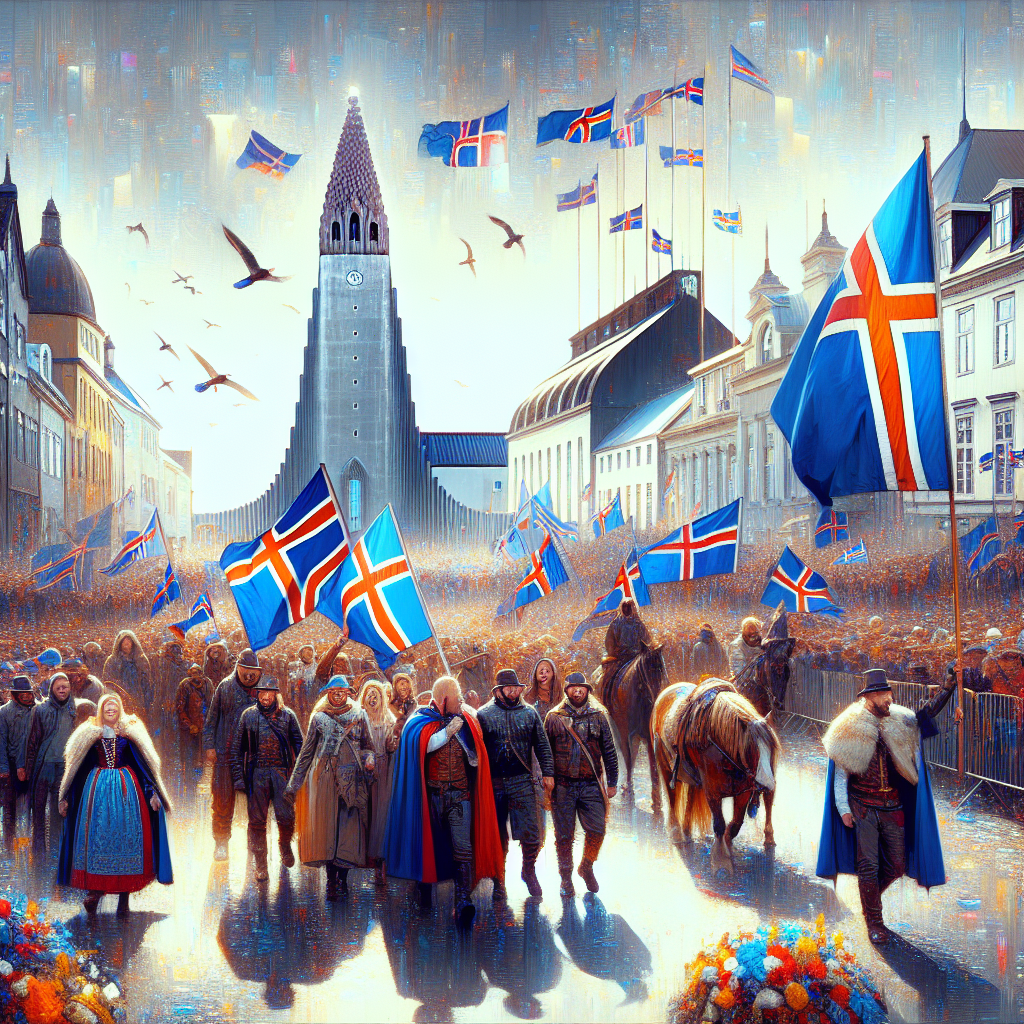
Iceland’s Journey to Independence
The story of Iceland’s path to independence is one marked by patience and resilience. Settled by Nordic seafarers in the late 9th century, Iceland enjoyed a brief period of autonomy until 1262, when it entered into a union with the Norwegian crown. This shift came amidst the tumultuous Age of the Sturlungar, a time defined by political strife and violence, leading many to view the agreement as a beacon of hope for peace.
For those eager to delve deeper into this intriguing chapter of Icelandic history, the 1238 Battle of Iceland Exhibition in the North offers a captivating experience — including a virtual reality reenactment of a Viking battle.
By 1380, Iceland had shifted from Norwegian rule and become a Danish colony, a status that would endure until it was declared a sovereign state in 1918. The journey culminated on June 17, 1944, when Iceland proudly declared full independence from Denmark at the historic Thingvellir, the site where the Icelandic parliament, the Althingi, was founded in 930.
Thingvellir is both a national park and a UNESCO World Heritage Site, a must-visit for anyone exploring Iceland, particularly as part of the popular Golden Circle tour.
The significance of June 17 was not arbitrary; it coincides with the birthday of Jón Sigurðsson (1811-1879), revered as a champion of Icelandic independence, even though he did not live to see it realized. A statue of this national hero stands proudly in front of the Icelandic parliament building in Reykjavík.
Among the locals, reflections on the historical ties between Iceland and Denmark often reveal a sense of struggle. You might hear light-hearted curses directed at Denmark while discussing their shared past. However, today, the bond between the two nations is warm and familial. Many Icelanders have moved to Denmark for work or education, and a weekend in Copenhagen is a popular getaway for those from Iceland.
Presidents of Iceland
Bessastadir serves as the official residence of the president of Iceland.
Notably, Jón Sigurðsson is often affectionately dubbed “Jón forseti” (Jón the President) despite never holding the office; he was, however, the President of the Althing, serving as the parliamentary spokesperson. Since gaining independence in 1944, Iceland has had just six presidents:
- Sveinn Björnsson: 1944–1952
- Ásgeir Ásgeirsson: 1952–1968
- Kristján Eldjárn: 1968 – 1980
- Vigdís Finnbogadóttir: 1980 – 1996
- Ólafur Ragnar Grímsson: 1996 – 2016
- Guðni Th. Jóhannesson: 2016 – 2024
- Halla Tómasdóttir: Took office on August 1, 2024.
Vigdís Finnbogadóttir stands out as a pioneering figure, becoming the world’s first democratically elected female head of state in 1980. Her tenure spanned 16 years, and she remains a celebrated figure in Icelandic history.
Halla Tómasdóttir, the current president as of August 2024, has quickly garnered public approval. Previously, she ran for the presidency in 2016, finishing second to Guðni Th. Jóhannesson, who served two terms.
Before stepping into the presidency, Halla led a global non-profit, The B Team, focused on climate issues and responsible business. Her leadership philosophy emphasizes kindness, honesty, and collaboration, values she prioritizes in her interactions across the nation.
Celebrations on June 17th
Independence Day, June 17, is a vibrant celebration throughout Iceland, with towns organizing their own unique festivities.
In Reykjavík, the streets come alive with parades, children’s playgrounds offering carnival rides and games, and vendors selling everything from cotton candy to hot dogs. Stages dotted around the city feature music, dance, and circus performances, creating a lively atmosphere.
Each year, a woman is chosen to portray “Fjallkonan,” or the Lady of the Mountain, a national symbol clad in the traditional costume. In Reykjavík, she leads the parade and recites a poem honoring Jón Sigurðsson at Austurvollur Square, where the festivities conclude.
Sporting events, including strongman competitions, reflect Icelanders’ pride in their strength, while vintage car enthusiasts exhibit their prized vehicles throughout the festivities. A short drive from Reykjavík, the town of Hafnarfjordur hosts a Viking Festival in Vidistadatun park, featuring hand-crafted goods, sword fights, and music.
If the weather permits, streets brim with jubilant crowds, although it’s somewhat of a tradition for rain to linger over the celebrations. Be sure to dress accordingly!
Music on June 17th
Music is a cornerstone of Iceland’s Independence Day celebrations, with street performances and formal concerts filling the air with joy. As you stroll through Reykjavík, you’ll likely encounter brass bands and choirs providing cheerful soundscapes.
To truly immerse yourself in the celebration, familiarize yourself with the “National Celebration Song,” a catchy tune sung repeatedly throughout the day. You can also enjoy Iceland’s national anthem, “Lofsðsongurinn,” to deepen your musical experience.
Over the years, the music scene at these national festivities has evolved. While earlier celebrations showcased impressive live acts in the evening, today’s events largely cater to families and children. Many revelers opt to celebrate the night before Independence Day, making the 16th of June a prime night for those seeking Reykjavík’s nightlife.
Numerous cultural events and festivals now fill the void left by the fading evening concerts, with Culture Night in August attracting thousands for a variety of free entertainment encompassing dance, theater, and music. Other summer festivals across the country also offer rich experiences, culminating in the Iceland Airwaves Music Festival in the fall, showcasing both emerging and established artists.
Summary of Iceland’s Independence Day
Iceland’s Independence Day is a vibrant celebration of the nation’s rich history and cultural heritage. With events happening across the country, it’s an excellent opportunity to immerse yourself in this festive atmosphere.
So, pack your bags, learn the National Celebration Song, and join the locals in celebrating Iceland’s Independence Day on June 17. As they say in Icelandic, felðilega þjóðhátíð! Happy Independence Day!
Will you join in the celebrations this summer? What aspects of Icelandic culture excite you? Have you visited this beautiful country before? Share your thoughts in the comments below!
