

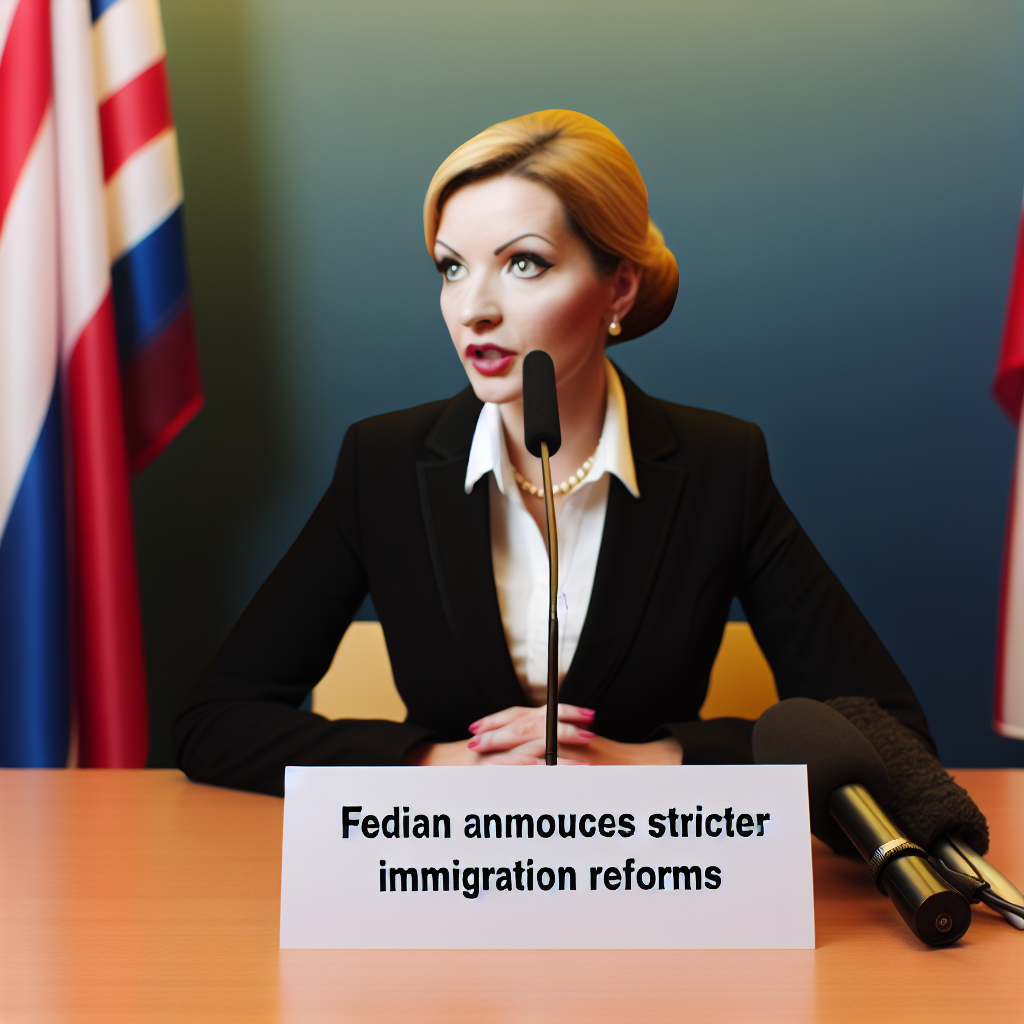
Prime Minister Mette Frederiksen Unveils Plans for Stricter Deportation Policies
In a bold declaration during her New Year’s speech, Prime Minister Mette Frederiksen (S) announced her intention to spearhead a significant reform aimed at facilitating the deportation of more foreign nationals convicted of serious crimes.
“Before long, the government will roll out a comprehensive deportation reform,” Frederiksen stated, emphasizing the urgency of addressing crimes committed by foreigners in Denmark. “This will ensure that those guilty of serious offenses must leave our country.”
Specifically, the proposed reform aims to expel non-Danish citizens who receive prison sentences of one year or longer for serious crimes, irrespective of their ties to Denmark. “Let it be clear: if you are convicted of crimes such as rape, severe violence, or other grave offenses, you will no longer have a place in Denmark,” she asserted.
This initiative may mark a departure from the current interpretation of European human rights conventions. Frederiksen expressed the government’s readiness to push boundaries, revealing that Denmark has garnered the support of 27 nations for a revised interpretation of these conventions in the lead-up to Christmas.
“Our priority must be the safety of the population and the protection of victims, not the rights of the perpetrator,” Frederiksen declared, underscoring her commitment to proactive measures. She warned that Denmark is prepared to implement its new approach even before any potential changes solidified by human rights courts come into effect. “Rather than waiting for years for judicial rulings, we will advance this legislation by summer.”
On a more inclusive note, the Prime Minister assured that those who have come to Denmark and contribute positively should not feel threatened by these policies. “You can be a Dane even if meatballs aren’t your favorite dish or if mackerel bait isn’t your thing,” she remarked. “We may not all look the same, and that diversity should be celebrated, but mutual respect is what we must strive for.”
Frederiksen concluded with a firm message regarding violent foreigners: “You do not belong in Denmark. We reject your reckless behavior and the domineering culture it brings.”
As the debate on this reform unfolds, it is evident that the Danish government is taking a resolute stance on crime, aiming to reshape its approach to immigration and public safety for the months—and years—ahead.
