

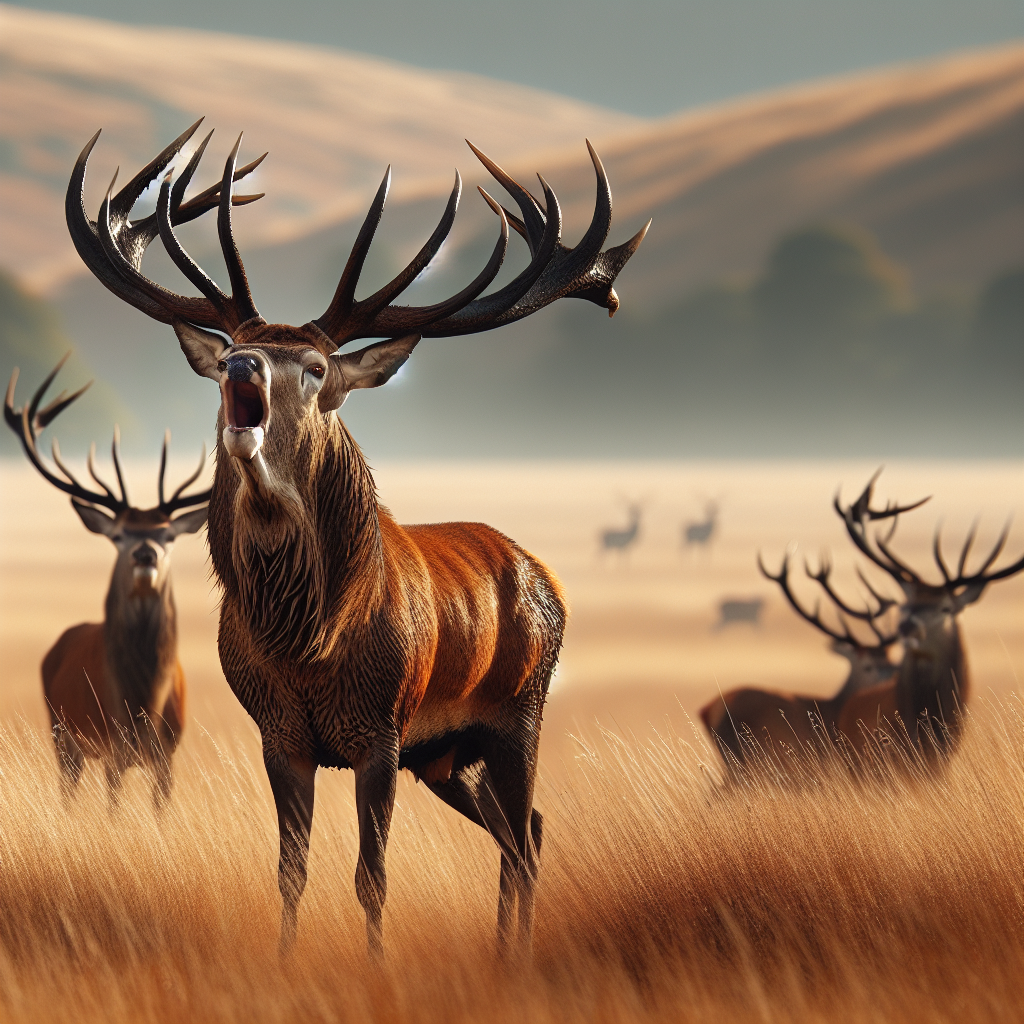
The red deer (Cervus elaphus) holds the title of Denmark’s largest land mammal, although the gray seal takes the crown as the nation’s largest land-breeding mammal. Each late summer, the red deer commands attention during one of nature’s most spectacular events: the rutting season. From early August through late September, the forests and wetlands resonate with the powerful roars of stags—a wild symphony that heralds their struggles for dominance and the opportunity to form a harem of hinds.
A Crowned King of the Forest
The Danish term for red deer, krondyr (“crown deer”), is rich in historical significance. Some believe it reflects the creature’s former status as a prized target in royal hunts, while others attribute it to the crown-like formation of the antlers in older males. Regardless of the origin, the red deer undeniably embodies a majestic presence in the forest.
An Earlier Rutting Season
Interestingly, the rut for red deer has shifted significantly in recent years. Just a generation ago, this event kicked off in October. Today, the first roars of stags can be heard as early as August. In the Vejlerne Nature Reserve, positioned between Thy and Hanherred in Northern Jutland, the booming calls of stags echo over the reed beds, marking late summer’s arrival. The reasons behind this earlier onset remain unclear, though some scientists suspect a connection to climate change.
During the rut, stags and hinds reunite after spending months apart. To entice potential mates, a stag will wallow in muddy puddles, applying a powerful scent derived from his own urine. Unlike the roe deer, red deer do not establish fixed territories; instead, dominant stags compete for harems, earning the title of “master stags.”
But the roaring isn’t merely a declaration of desire; it’s also a challenge. The sound conveys strength and determination, warning rivals of their presence. If another stag approaches, a display of bravado ensues, characterized by antler scraping and resonant bellows. Only if neither stag yields does the confrontation escalate to a fierce clash of antlers. By the rut’s end in October, many stags emerge exhausted, having shed as much as 20% of their body weight.
A Striking Appearance
Red deer possess a robust build, with compact bodies and long, slender legs. Their heads are more elongated compared to those of roe or fallow deer. In summer, their coats radiate a rich reddish-brown hue, fading to a grey-brown in winter. Notably, their rump patch stands out as a distinctive yellow, a stark contrast to the white markings found on other Danish deer.
Only male red deer grow antlers, which are shed each spring and regrown by summer. The oldest males typically shed first, sporting fully developed antlers by mid-summer. In West Jutland, stags can reach weights of up to 230 kg—roughly ten times that of a full-grown roe deer—though a more typical weight hovers around 150 kg, while females can weigh up to 90 kg.
Life Through the Seasons
Red deer have inhabited Denmark since the close of the last Ice Age, roughly 10,000 years ago. Most of the Jutland population retains characteristics of the ancient native stock, although occasional interbreeding occurs with farmed deer that have escaped captivity.
These social creatures thrive in herds known as “rudlers.” Stags and hinds live apart outside the rut, but calves remain with their mothers for about two years, guided by a lead hind—typically the oldest female—who navigates the herd.
In summer, red deer primarily feed on grasses and herbs, while winter brings a more challenging diet of heather, conifer shoots, and even tree bark. When food becomes scarce, they may turn to cultivated crops, at times causing significant agricultural damage.
Where to Find Them
Often associated with dense forests and plantations, red deer are equally comfortable roaming open heathlands and meadows. By day, they tend to stay hidden, mostly emerging at dusk and during the night to graze. They are also adept swimmers, easily crossing rivers and lakes, and favor large wetlands with dense reed beds, which provide ideal cover.
Despite their formidable strength and adaptability, red deer typically avoid mingling with livestock in grazed pastures, even though standard fences pose little challenge. They prefer wilder landscapes—settings where their ancient behaviors can unfold in serene isolation.
✨ Wildlife Tip: For those eager to witness the rut, venture out at dawn or dusk in late summer to spots like Vejlerne or expansive West Jutland plantations. Listen for the deep, resonant roars echoing across the landscape—it’s a natural spectacle that promises to be unforgettable.
