

Amna Nawaz:
Today marks the conclusion of Dark Sky Week, a global initiative celebrating the beauty of the night and advocating for a reduction in light pollution.
Across the world, cities are exploring innovative lighting solutions that aim to better support both fragile wildlife ecosystems and human needs.
Malcolm Brabant:
As twilight descends on Gladsaxe, a municipality just north of Copenhagen known for its blend of urban development and environmental stewardship, a significant transformation is underway.
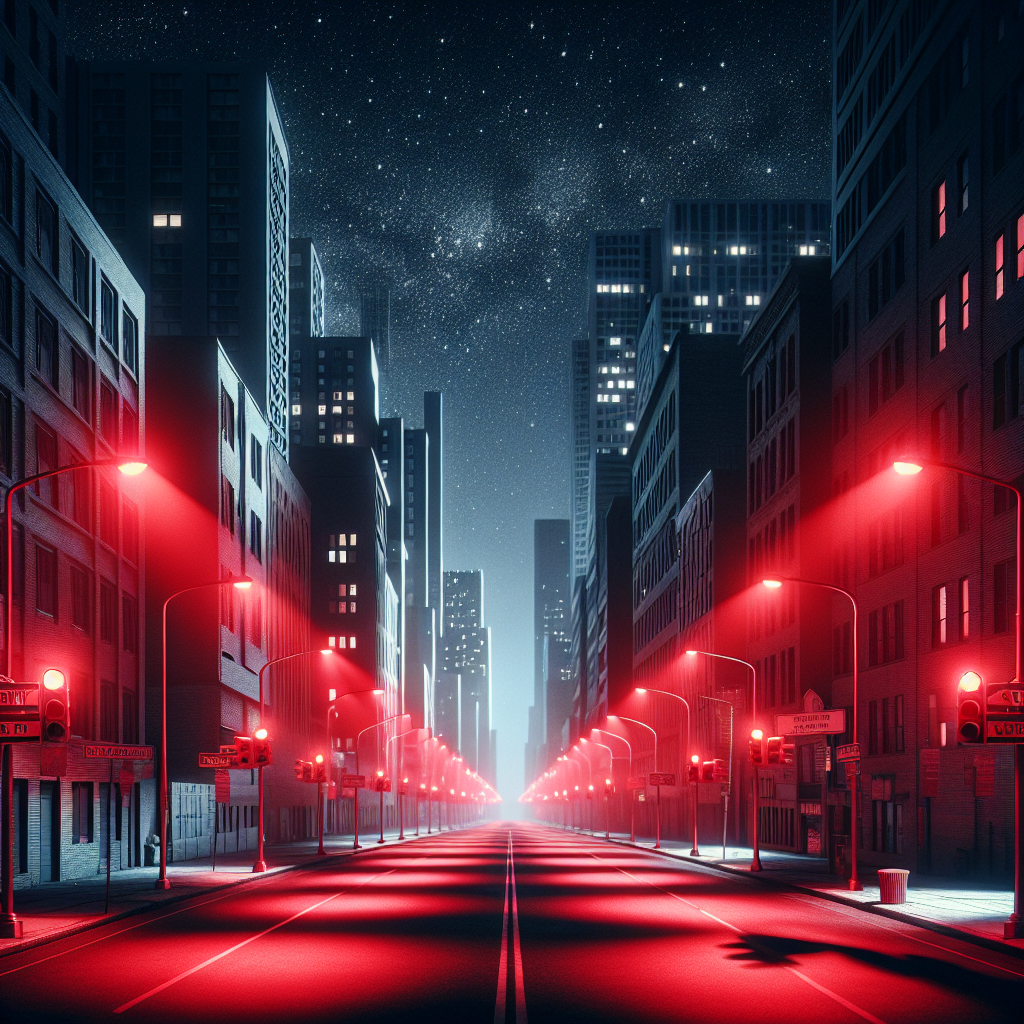
Gladsaxe made history as the first Danish municipality to install red street lighting, a decision made to restore the delicate balance between humans and wildlife. The local council replaced harsh white street lamps along a road adjacent to a thriving bat colony nestled in nearby trees.
The adverse effects of artificial white light on various species is well-documented. For instance, bees experience a form of jet lag, frogs lose their mating drive, and bats struggle to find food in the glare. In contrast, red lighting allows bats to navigate the darkness, enhancing their vision where white light proves blinding. This straightforward fix has been embraced in cities like Metz, Worcestershire, and across several regions in Germany, the Netherlands, and Belgium.
And the trend is catching on.
Rune Brandt Hermansson, Lighting Consultant:
“Every light source we introduce shifts the balance of the ecosystem, making it easier for some animals to thrive while complicating life for others.”
Malcolm Brabant:
Rune Brandt Hermansson played an instrumental role in the design of Gladsaxe’s red lighting initiative.
Rune Brandt Hermansson:
“We need to be mindful and minimize our impact on the environment. Much of the lighting we have is unnecessary. While I believe we should have lighting for safety, we must also aim for darkness where nature can flourish.”
Malcolm Brabant:
Biologists stress the critical importance of bats in our ecosystem. Despite their resemblance to flying rodents, they play an essential role in safeguarding human health.
Mikkel Stener Moeller, Senior Biologist, Danish Sustainable Development Consultancy:
“We often underestimate the significance of bats.”
Malcolm Brabant:
Mikkel Stener Moeller, a senior biologist, emphasizes their ecological role.
Mikkel Stener Moeller:
“Bats are voracious predators, consuming an equivalent of half their body weight in insects each night. They act as a natural pest control, essential for maintaining a balanced insect population.”
Malcolm Brabant:
When bats struggle to fulfill their role, farmers often resort to chemical pesticides, which have been linked to health risks, including cancer and other diseases.
Mikkel Stener Moeller:
“We must be cautious about how our actions impact ecosystems, as it ultimately affects our health.”
Malcolm Brabant:
Stener Moeller collaborates with lighting consultant Lisa Dam Trapp to design efficient lighting solutions for areas adjacent to sensitive wildlife habitats.
Lisa Dam Trapp, Lighting Consultant:
“People are adapting to this new technology and style of lighting. We’ve grown accustomed to bright streets at night, but there’s a gradual shift in mindset that many are embracing. In Denmark, there’s a deep care for nature, and people are eager for change.”
Malcolm Brabant:
In Odense, Denmark’s third-largest city, biodiversity lighting is being rolled out. These orangey-red lamps soften and warm as night unfolds, aligning with the natural rhythms of nocturnal wildlife.
Yet, as resident Michael Groenbaek notes, the quieter, darker pathways can be daunting for some.
Michael Groenbaek, Resident, Odense, Denmark (through interpreter):
“For those who fear darkness, these muted paths can feel unsafe. Preferences vary; some want more light while others are fine with less. Personally, it doesn’t bother me.”
Malcolm Brabant:
Gladsaxe aims to serve as a beacon for other cities worldwide, demonstrating that the switch to red lamps is not only environmentally conscious but also cost-effective. This new system requires less energy and maintenance than traditional street lighting.
Serdal Benli, Mayor (through interpreter):
“I hope our example inspires other municipalities to follow suit. It’s vital that we prioritize sustainability and biodiversity for future generations. We owe it to our planet and to all living beings.”
Malcolm Brabant:
Rune Brandt Hermansson remains optimistic about technological advancements that can foster a harmonious coexistence between humans and wildlife.
Rune Brandt Hermansson:
“We stand on the brink of exciting technological innovations that can allow us to benefit without harming the environment. We shouldn’t have to sacrifice the needs of society, as light can coexist with the darkness that nature requires.”
Malcolm Brabant:
Conventional lighting contributes to approximately 5% of global carbon dioxide emissions and 15% of total electricity consumption. Experts argue that transitioning to red street lights could be a key step in mitigating climate change while ensuring that bats maintain a healthy diet of insects.
Reporting for the “PBS News Hour,” I’m Malcolm Brabant in Gladsaxe, Denmark.
