

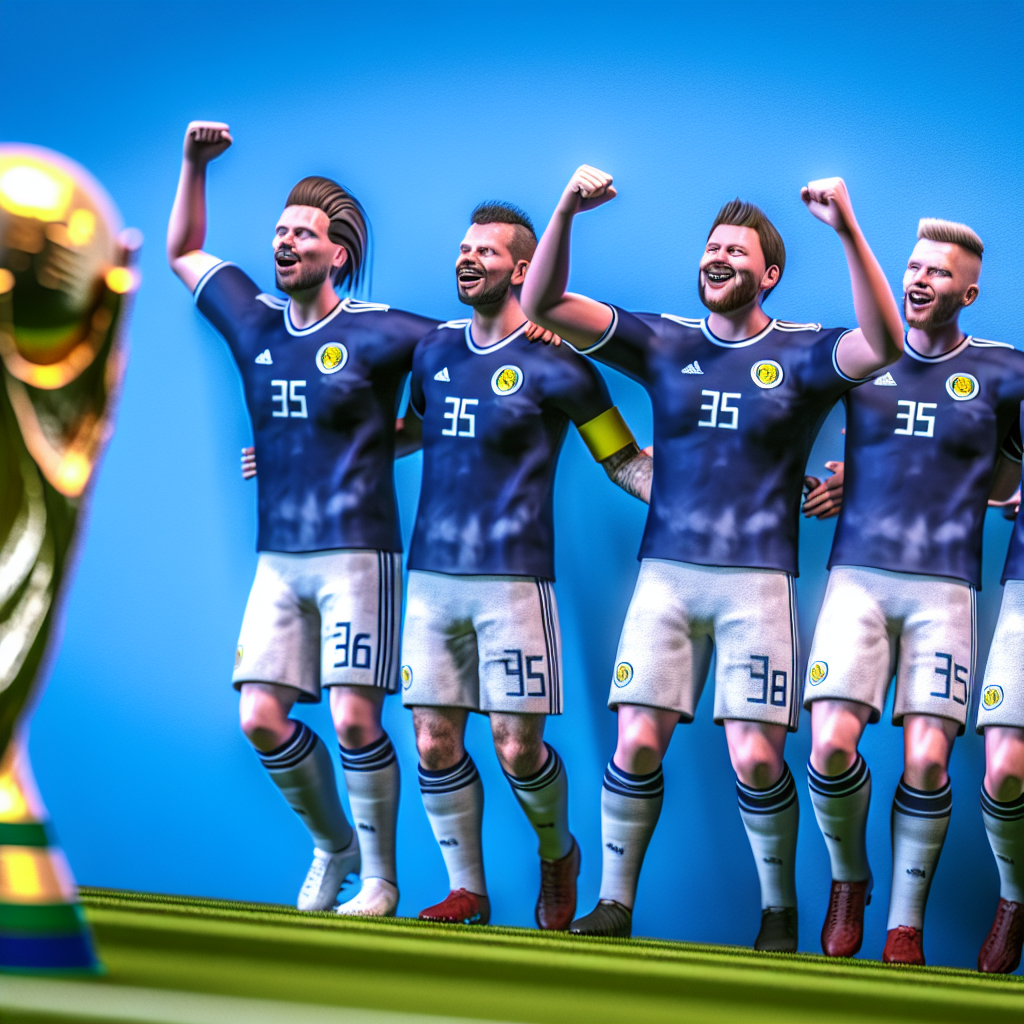
It was not a moment for quiet contemplation. Kenny McLean had just executed a stunning lob over Kasper Schmeichel from the halfway line, igniting a wave of unrestrained, euphoric celebration.
On that unforgettable night at Hampden Park, McLean, alongside Kieran Tierney and Scott McTominay, redefined Scottish football history, relegating Archie Gemmill’s iconic solo effort against the Netherlands in 1978 to merely the fourth best goal Scotland has ever seen. Compared to Zinedine Zidane’s famous volley for Real Madrid at Hampden’s 2002 Champions League final, McLean’s audacity was in a league of its own.
What unfolded on that pitch will be etched in the memories of generations to come—families recounting the moment as McLean transformed from “the Mayor of Norwich” to a figure of pride in places like Nairn, North Berwick, and Newtongrange.
While some argue that international football has diminished in significance amid the relentless focus on club competitions, Scotland’s triumph has proven otherwise. The fervor and pride attached to their World Cup qualification have been palpable. The opportunity to represent the nation on the world stage in 2026 has ignited a fierce sense of pride that resonates deeply with fans across the country.
That Scotland not only scored four times against Denmark—three of those goals of remarkable caliber—speaks volumes about their qualifying journey. After a long, 25-year wait since last appearing on football’s grandest stage, the team decided that simplicity was overrated. Coach Steve Clarke now stands as the country’s finest manager, securing three tournament berths in four attempts, with only a playoff denying him a flawless record.
At 62, the reserved yet determined Clarke has navigated challenging times, often facing skepticism regarding his resources. Remarkably, Scotland triumphed with a 42-year-old goalkeeper, Craig Gordon, who isn’t even a regular starter at his club. This readiness to embrace unconventional choices is emblematic of a team defined by an indomitable spirit and tireless work ethic—a true reflection of Scottish character.
Had this squad failed to qualify for the World Cup, it might have elicited a shrug. After all, that has long been the fate of Scottish teams. Yet this group was resolute in breaking that cycle.
As qualifying began, whispers of discontent loomed over the team after disappointing home defeats to Greece and Iceland. However, a solid scoreless draw against Denmark in Copenhagen and a straightforward victory over Belarus provided early promise. Yet, things turned chaotic; Scotland struggled to beat Greece in Glasgow and scraped by Belarus, leading a visibly frustrated Clarke to fear his players might squander this golden opportunity.
One of the most peculiar episodes in Scottish football history unfolded in Athens—a game where Scotland fell behind, three goals down, only to learn that Belarus was giving Denmark a surprise tough outing. In a stunning turnaround, the Scots nearly snatched a draw, and Belarus’s unexpected equalizer placed Scotland’s fate firmly in their hands. It’s fair to argue that Greece may have been the strongest in Group C.
The high-pitched clash between Scotland and Denmark at Hampden was nothing short of a captivating spectacle. Denmark can rightly feel aggrieved for not securing at least a draw, having dominated various stretches of the match. But they were ultimately undone by Rasmus Kristensen’s reckless foul, leaving them a man down against a resurgent Scottish side eager to seize the moment. Denmark’s inability to overcome Scotland twice, coupled with their slip against Belarus, means they can only look inward for blame.
Complications arose as John Souttar suffered an injury during warm-ups and Ben Gannon-Doak exited early in the match. Yet, key players like McTominay, John McGinn, and Andy Robertson stepped up commendably. Clarke continues to place immense faith in the 33-year-old McLean, a midfielder facing struggles at Norwich, because he trusts him implicitly.
Gordon’s emotional acknowledgment of the World Cup as a crowning achievement of his career was palpable. Tierney, typically a left-back but deployed on the right by necessity, soared through the game—his earlier fitness challenges a distant memory. Injuries have disrupted the careers of talents such as Aaron Hickey and Lewis Ferguson, not to mention the tumultuous season endured by Lawrence Shankland. And then there’s Lyndon Dykes, heartbroken when ankle injuries kept him from Euro 2024. Grant Hanley apologized to Clarke following a lackluster display in Greece, but the manager reassured him: “You don’t have to apologize to me. I know you give everything every time you step onto the pitch.”
This team’s success is a collective triumph, but each player’s journey is a testament to the unique challenges they have faced. Now, they can bask in the glory of what they have achieved.
Of course, the ever-present Scottish humor means supporters are already playfully speculating about potential World Cup defeats to teams like Cape Verde or Jordan. The last time Scotland celebrated a victory at the World Cup was back in 1990, a sobering memory from an era when Costa Rica handed out a shock defeat. For now, however, anticipation and excitement overshadow fears. This is a moment to embrace—a pivotal chapter in Scotland’s football story that will not simply be defined by results but by the thrilling journey that led to it.
