

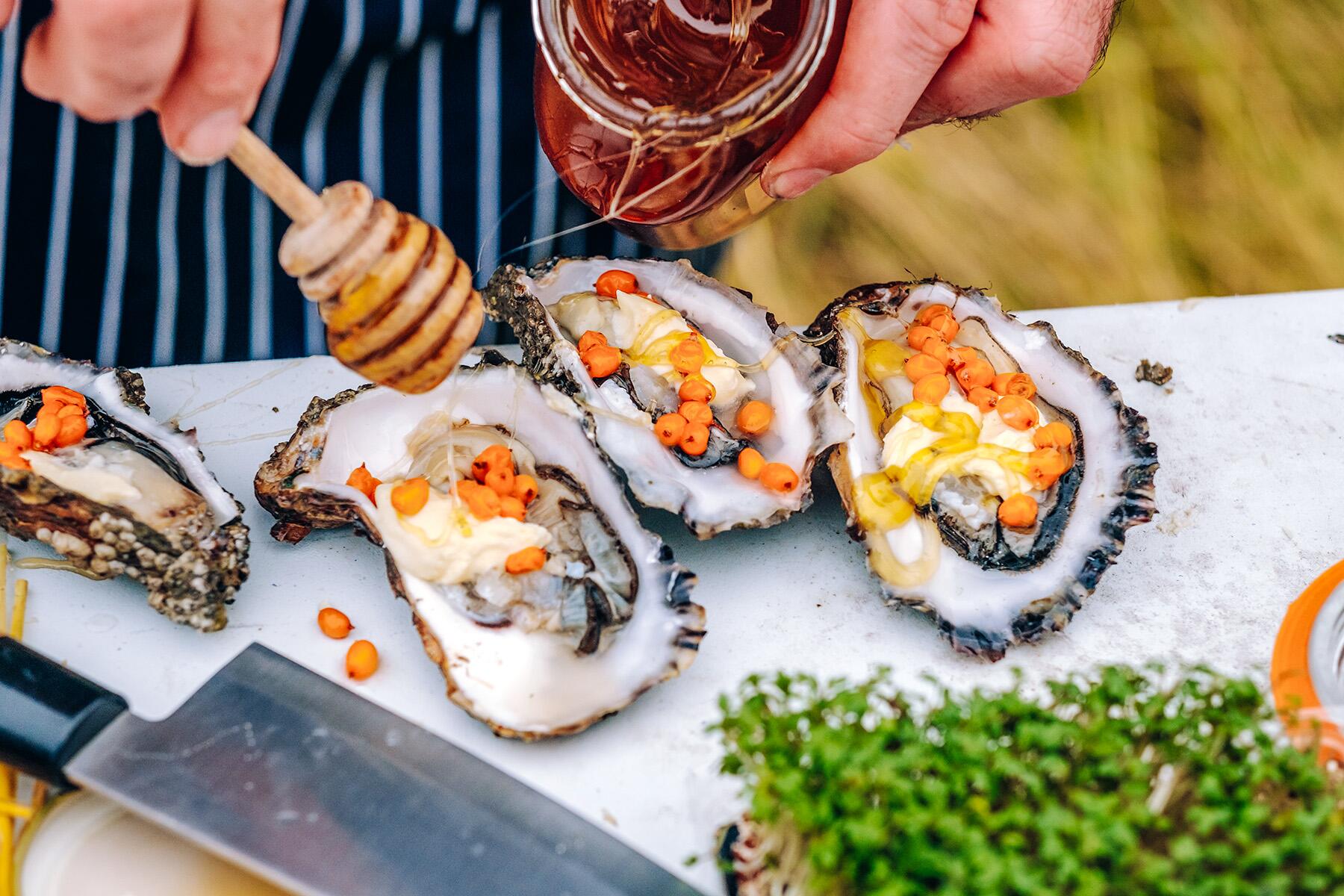
Prepare for a brisk walk and a splash of chilly weather, but soon you’ll be indulging in a bounty of oysters at the stunning Wadden Sea National Park.
The morning air is crisp at Wadden Sea, and truth be told, it remains cold throughout the day. Nestled along the coastline where Denmark meets Germany, this region’s climate is typical for the season. However, what awaits me is anything but ordinary: the Oyster Tour, a unique way to explore the Wadden Sea National Park, recognized as one of Northern Europe’s vital wetlands and a UNESCO World Heritage site. Spanning approximately 300 miles from Blåvandshuk in Denmark to Den Helder in the Netherlands, the park encompasses nearly 3,500 square miles of ever-changing landscapes including salt marshes, mudflats, and wind-swept dunes.
Our journey begins at 9:30 a.m. at the Vadehavscentret Nature Center, a striking modern facility designed by the acclaimed architect Dorte Mandrup. Opened in 2017, the center is a tribute to the local landscape and traditions, featuring a striking structure with a thatched roof. Its large windows flood the white-walled interiors with light, creating an inviting atmosphere. The center itself is worth a visit, showcasing an engaging exhibition on migratory birds and the diverse environment that makes this area so unique.
Continue Reading Article After Our Video
Recommended Fodor’s Video
Eating Oysters for a Greener Tomorrow
Our guide is a gentleman of distinction; if not for the giant binoculars slung around his neck, he might easily be mistaken for a civil servant. The group assembles, a colorful mix of travelers: a Dutch couple, a Swedish man, and numerous Danes. The guide outlines the day’s adventure, emphasizing the most enticing part: we can pluck as many oysters as we desire to eat and take home.
Interestingly, our indulgence serves an environmental purpose. The “Pacific oysters” thriving in these waters weren’t meant to be here. Originally imported from Japan and Southeast Asia for an aquaculture project, they were inadvertently released four miles off the coast. They quickly multiplied, becoming an invasive species that poses a threat to the local habitat. What is a culinary delight for us is a growing concern for the ecosystem of the Wadden Sea—by 2018, scientists estimated nearly 79 tons of these oysters were present, with new beds forming continuously.
Since 2008, oyster harvesting has turned into a seasonal draw, attracting enthusiasts from October through March—consumption in summer is risky due to potentially toxic algae. Aside from the tours organized by the Vadehavscenter, various excursions are available, such as a boat trip on the *Mandøpigen*, where participants can gather oysters and then enjoy them accompanied by sparkling wine aboard the vessel.
Observing the eager faces of my fellow adventurers, I sense their shared anticipation for this eco-friendly experience, and we set off.
Picturesque Coastlines and Avian Wonders
A short drive brings us to the coastal dunes, dusted with snow and glistening with frost-coated reeds. Before us stretches the Wadden Sea, or *Vadehavet* in Danish, translating to “the sea where you walk.” This area, sculpted by nature post-glaciation around 10,000 years ago, experiences dramatic fluctuations in water levels. Each day, the tides displace an astounding 530 trillion gallons of water, revealing vast expanses of muddy flats and prime oyster habitats that are accessible on foot.
As the tide recedes, our guide gauges the moment we can safely venture out. It’s crucial to rely on knowledgeable guides to navigate the tides safely. The residents of the tiny Mandø island, with just 27 inhabitants, possess an intimate understanding of these rhythms, using their expertise to traverse the muddy paths connecting them to the mainland, submerged twice daily. An elderly woman at the local grocery can often offer advice to uncertain tourists on when to cross.
The soft seabed of sand and mud, known colloquially as *candy*, makes walking a bit tricky, yet the breathtaking scenery captivates. The endless flat landscape sparkles in the sunlight, with the sky mirrored in shallow pools covered with a delicate ice layer—an illusion of countless reflections stretching towards the horizon.
During both fall and spring, flocks of geese, ducks, and various bird species pass overhead, with as many as 12 million migratory birds traversing this vital ecosystem. According to the Ramsar Convention, it plays a crucial role in supporting populations of 41 migratory waterbird species. For nearly a million of these birds, the Wadden Sea offers the best winter refuge in Europe, thanks to an abundance of food sources like mussels and snails devoid of threats from hunters.
Birdwatching here is a sheer delight; up to 80 species can be spotted, including redshanks, cranes, diverse ducks, and majestic white-tailed sea eagles.
An Oyster Lover’s Paradise
If I were a bird, I might view this landscape as a never-ending feast. For humans, the Wadden Sea offers a culinary treasure, especially for those with a passion for oysters.
After some effort, we arrive at the oyster beds, and around 40 enthusiastic gourmets clad in high boots joyously dive into the oyster harvest. Many bring along sparkling wine and lemon for an added zest. The oysters here can be impressively oversized, measuring 6 to 8 inches, with the largest recorded at nearly 14 inches back in 2013. As we learn to expertly shuck the shells, we indulge to our hearts’ content; had we been in a restaurant, our bill would certainly have numbered in the hundreds. As we head back, we leave behind a trail of opened shells, their iridescent interiors shining in the weak sunlight, a beautiful contrast against the gray reefs.
As we gather to share thoughts, compare the sizes of our catch, and decide on recipes for our oysters at home, I learn that the options are plentiful. Although I’ve always relished them raw, many prefer cooking them, perhaps grilled with butter and parsley. A Danish couple shares that this tour has become an annual tradition for them, often resulting in close to 45 pounds of oysters returned home. But they emphasize it’s not just about the oysters; they cherish the beauty of the winter landscape, the boundless flatlands, the chorus of birdsong, and the satisfying fatigue in their legs. Walking back in the fading light, I can’t help but agree with that sentiment.
