

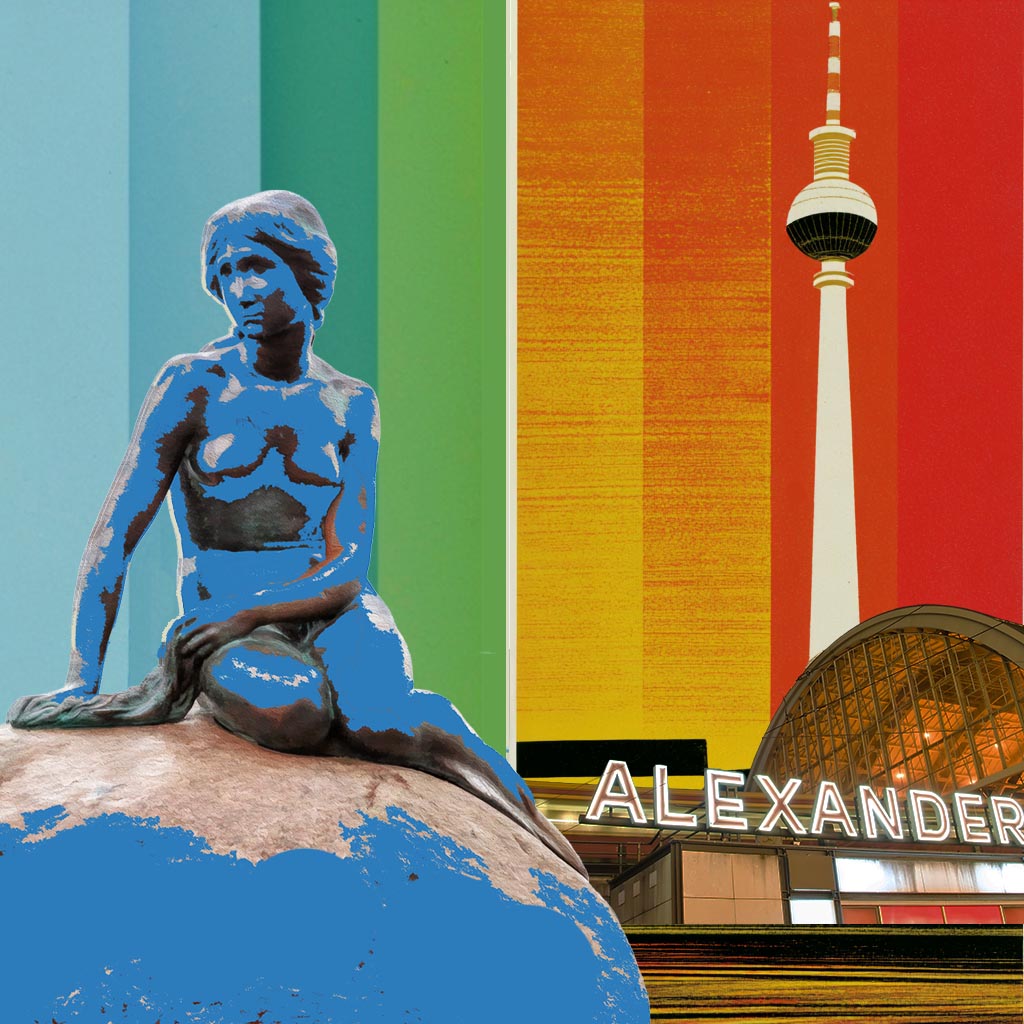
During a recent stay in Berlin, I stumbled upon a quaint shop called Have Fun, nestled right next to my hotel. This Danish-themed store offered an array of items—from plush pillows and flickering candles to whimsical wooden figurines—each crafted to evoke the snug ambiance of Copenhagen, all while situated in the gritty charm of the German capital.
It’s not unusual for one city to pay homage to another, yet this particular juxtaposition got me thinking about the two cities—Copenhagen and Berlin. Although they are less than an hour apart by plane, they embody distinctly different spirits.
In my younger days in Berlin
Those who have followed my journey will recall my time in Berlin, years before I found my way to Copenhagen. Back then, the city was a demilitarized zone, which meant military draft notices were a rarity. This unique status attracted many young German men hoping to dodge conscription, resulting in a party scene that favored the female experience.
Copenhagen vs. Berlin
Berlin has always thrummed with excitement, and that vitality endures today. It boasts a nightlife scene that far outshines Copenhagen’s, firmly established as a global capital of techno music and classical culture alike. The city is home to eight symphony orchestras and three opera houses—legacies of the Cold War, when each side offered its own cultural touchstones.
Meanwhile, Copenhagen can tout just one opera house and one zoo.
Poet or Punk
Berlin’s size accounts for part of its vibrancy. With a population that is nearly twice that of Copenhagen’s—around 84 million in Germany compared to 6 million in Denmark—it’s fascinating to see how Copenhagen manages to punch above its weight culturally.
Living in these cities feels worlds apart. Copenhagen presents itself as a clean, safe, and meticulously organized city, where early mornings are the norm and the hustle is palpable. Here, the opportunities to embrace a bohemian lifestyle are limited, especially as recent reforms have reduced unemployment benefits from four years to two.
Long-Term Low-Income Lifestyles
On the flip side, Berlin encourages more diverse lifestyles, including long-term low-income living. Numerous government grants support artists, and until recently, housing remained relatively affordable compared to Copenhagen—a situation that is shifting.
Yet, Berlin comes with its own set of challenges. It can be scruffy and unkempt; overflowing rubbish bins, abandoned furniture on sidewalks, and neglected parks are part of the landscape. The sight of rough sleepers is significantly more common here than in Copenhagen, where such scenes are a rarity.
Traditional Lunchtime Foods
Both Copenhagen and Berlin stand as modern cities steeped in history. Copenhagen maintains its medieval street layout, with brightly colored buildings that date back to the 1700s and 1800s, imparting a fairy-tale warmth. In contrast, Berlin has largely moved on from its medieval roots, scarred by the devastation of World War II. Evidence of that tumult remains, seen in the bullet holes of the old National Gallery and the stark reality of post-war architecture that can be decidedly unappealing.
A Friendly Balance
Despite their differences, the residents of both cities hold a mutual respect for one another. Danes flock to Berlin for its vibrant nightlife, while Berliners often journey to Copenhagen, captivated by the charm of Tivoli Gardens and, notably, to get married in the city hall’s beautiful ceremony rooms, where the paperwork is far less cumbersome than in Germany.
Though the two nations have faced their share of conflicts, their capitals today exist in a harmonious balance—where even shop names echo the other’s spirit.
