

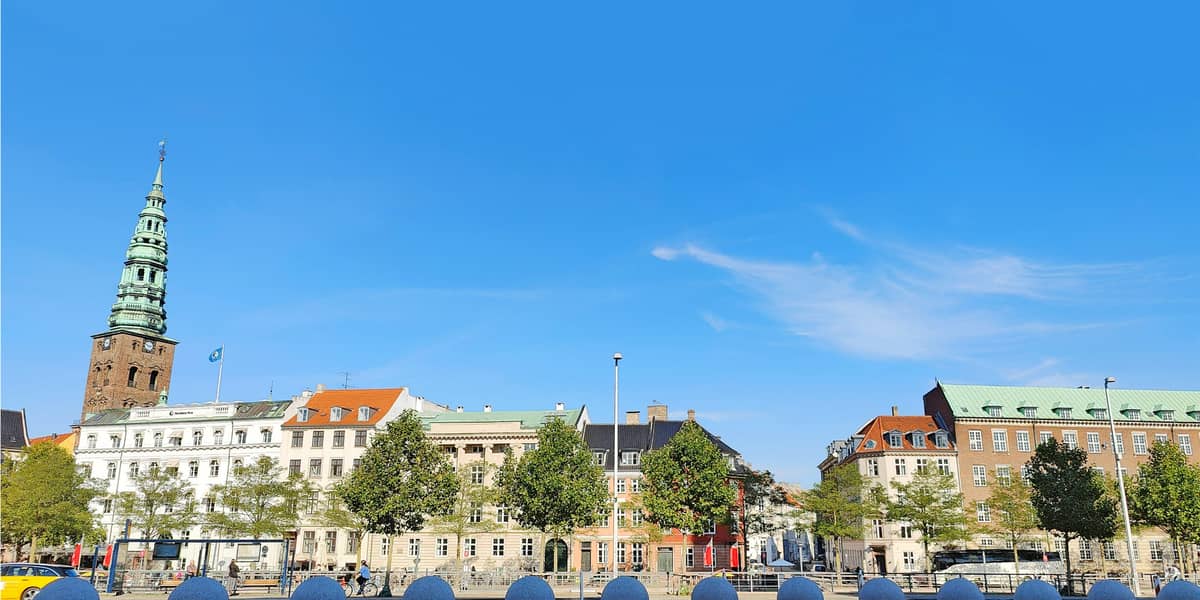
Denmark, consistently celebrated as one of the happiest nations worldwide, has recently claimed the top spot for offering the best quality of life. Adding to this remarkable reputation, the Greater Copenhagen Region has unveiled an innovative initiative: the world’s first ‘Life Quality Insurance’ for newcomers. This campaign beautifully encapsulates the region’s friendly atmosphere and the enviable work-life balance it provides.
During my recent visit to Copenhagen, I couldn’t help but absorb this uplifting vibe that envelops the city. From its charming castles and picturesque canals to its emphasis on cycling and clean energy, Copenhagen is a tapestry of experiences. It effortlessly melds the historic with the modern, offering a rich cultural landscape that feels both vibrant and uniquely contemporary.
Royal City
With its roots tracing back to Viking times, Denmark boasts one of the oldest monarchies in the world. Thus, it’s no surprise that the capital is adorned with an array of palaces, castles, and royal landmarks. Eager to dive into this royal history, I set out to explore some of the city’s most significant sites.
The Christiansborg Palace is an ideal starting point for anyone interested in royalty. I was fortunate to join a free guided tour that unveiled the palace’s storied past; today, it houses the Danish Parliament, the Supreme Court, and the Ministry of State. The tour led me through opulent rooms like the Tower Room, the Oval Throne Room, and the Alexandra Hall, each a testament to the grandeur of Danish history and the ceremonies still held within their walls.
Among these, the Great Hall stands out as a must-see, showcasing tapestries woven by Bjorn Norgaard. This breathtaking series of eleven pieces captures centuries of Danish history and is truly awe-inspiring.
Next, the Amalienborg Palace complex, featuring four identical Rococo-style palaces, serves as the residence of the Queen and the Crown Prince’s family. A leisurely stroll here offers a glimpse into royal life and the daily ritual of the Royal Danish Guard’s changing of the guard.
Another historical gem, Rosenborg Castle, dating back to the 17th century, offers a treasure trove of paintings, royal artifacts, and crown jewels, making it a must-visit for anyone intrigued by Denmark’s rich past.
Kaleidoscope of Sights
Once a bustling hub for fishermen and merchants, Copenhagen’s harbor has transformed into a beloved recreational, shopping, and dining destination. Nyhavn, with its iconic rows of colorful facades, is perhaps the most striking spot along the harbor—a perfect setting for capturing memories over a delightful meal in one of its many cafes or eateries.
Spanning about 13 kilometers, the Copenhagen harbor features dedicated walking and biking paths. Alternatively, a canal tour or a ride on one of the 100% electric harbor buses offers a unique perspective of the city. For those looking to cool off or partake in activities, options abound from kayaking to harbor bathing. Don’t miss the chance to see the cherished Little Mermaid statue, inspired by Hans Christian Andersen’s fairytale, while strolling along the waterfront.
A visit to Tivoli Gardens, one of the world’s oldest amusement parks, is a delightful experience, especially for families. This enchanting space, which has inspired figures like Hans Christian Andersen and Walt Disney, features seasonal themes, beautiful gardens, stunning architecture, and exhilarating rides—ensuring there’s something for everyone. For fans of historic architecture, the Round Tower, standing since 1642, offers breathtaking views from its spiral staircase, making it Europe’s oldest functioning observatory.
Local Attractions
Copenhagen’s vibrant neighborhoods, such as Østerbro and the Carlsberg district, provide plenty of opportunities for exploration. Copenhill, a remarkable structure perched atop a waste-to-energy plant, boasts an artificial ski slope, hiking trails, and climbing walls. It’s no wonder Copenhagen has been designated as UNESCO’s World Architecture Capital until 2026.
Freetown Christiania is yet another local highlight, known for its bohemian atmosphere. Once a military base, this vibrant enclave is now home to residents who embrace a colorful, alternative lifestyle. Strolling through its streets, adorned with quirky art and cafes, is an experience in itself—though be mindful that photography is not permitted here.
Nestled close to Christiania is the notable Church of Our Saviour, famed for its spiral tower and Dutch Baroque architecture. Adventurous visitors can ascend the serpentine steps for a panoramic view of the city below.
For a taste of local culture, Torvehallerne, a bustling market, is a must-visit. Here, an abundance of vendors offer fresh produce, flowers, gourmet cheeses, and a variety of delectable snacks, including the much-loved Danish pastries that are not to be missed.
Beyond Copenhagen
For history enthusiasts and culture seekers alike, there are numerous day trips to delve into, all easily accessible by road or train.
The historic city of Roskilde, just a 25-minute train journey away, beckons with the Viking Ship Museum. Here, visitors can uncover the treasures of yesteryear, including five original Viking ships retrieved from the Roskilde Fjord. The experience is further enriched by the option to sail on one of these ancient vessels!
The Roskilde Cathedral, a UNESCO World Heritage site, is also well worth a visit as the final resting place of many Danish royals.
Literature lovers should not miss the scenic town of Helsingør (Elsinore), famed as the setting for Shakespeare’s Hamlet, thanks to the illustrious Kronborg Castle.
Lastly, Odense, Denmark’s third-largest city, invites you to discover the Funen Village, an engaging open-air museum depicting 18th and 19th-century Danish life. As the birthplace of Hans Christian Andersen, visitors can also explore his childhood home and dedicated museum.
As your journey concludes, be sure to swing by Storms Pakhus, a once-industrial warehouse now bustling with eateries serving diverse street food from around the globe.
Pictures by the author.
