

Restaurant Aure: A Culinary Gem in Copenhagen
Two years ago, a remarkable transformation took place in Copenhagen when Restaurant Aure opened its doors in a repurposed announcement storage facility. Just 81 days after its debut, the restaurant earned its first Michelin star—a testament to its ambitious vision. Following that accolade, a significant remodel, fueled by a new investor, further elevated Aure’s dining experience.
Upon entering the historic building, guests are greeted by the imposing two-meter-thick walls and original wooden beams, all framing an elegant open marble kitchen. The ambiance radiates both charm and luxury, a reflection of the thoughtful investment in the space.
Head chef and owner Nicky Arentsen, who honed his skills at renowned establishments like Jordnær and Bandholm Badehotel, has clearly influenced Aure’s initial offerings. On my recent visit, I was eager to discover how the menu had evolved over these two years.
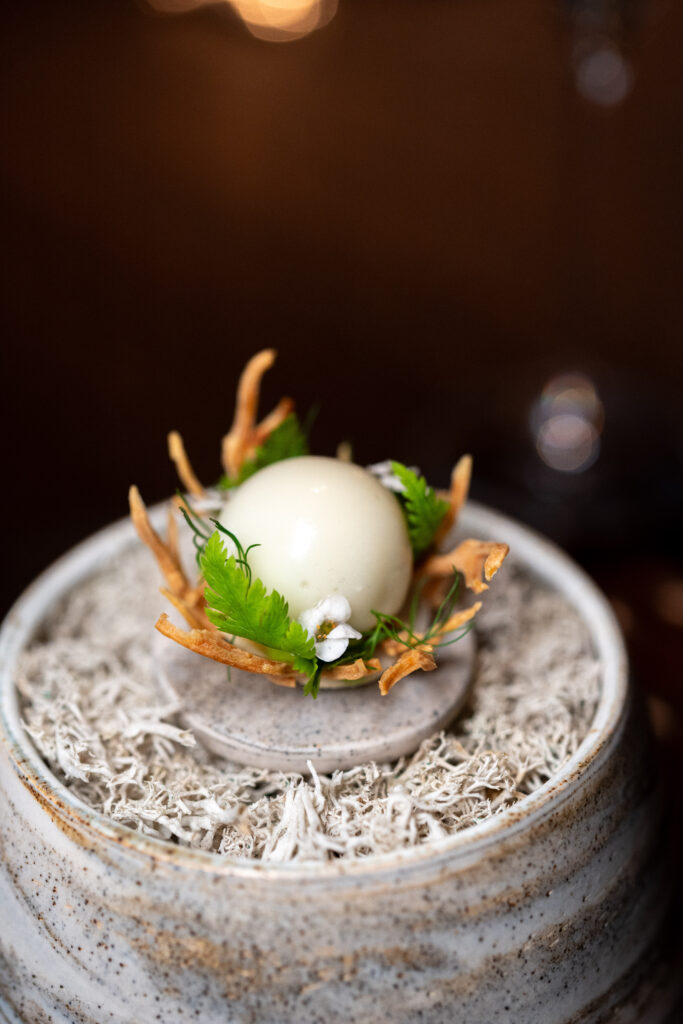
Typically, a chef’s creative flair shines in their snacks, and Aure was no exception. From the outset, the attention to detail was evident. One memorable bite heralded the arrival of summer with a refreshing burst of flavors; here, the artistry extended even to the nasturtium leaves, meticulously cut with a stencil.
Aure embraces traditional Nordic culinary elements, yet with a distinct flair. The menu featured a stunning tart with caviar, inspired by Japanese sensibilities. At first glance, it resembled a familiar dish, yet it surprised with a minimalist base of fried rice, elevated by smoked soy, delicate wasabi flowers, hamachi, and Gastrounika Platinum caviar. This dish signified a leap in the kitchen’s capacity—a complex creation achievable only through skill and confidence.
As the tasting menu progressed, the kitchen shifted its focus from technical prowess to the sheer quality of ingredients. Danish wagyu paired with nori and onion purée delivered a profound umami punch, requiring little embellishment.
Next came a dish considered a palate cleanser—an exquisite harmony of lime, elderflower, and ginger, paired with sweet shrimp and a touch of vanilla. The balance of sweetness and acidity was impeccable.
Aure’s approach to bread also speaks volumes about its ethos. While many high-end restaurants pride themselves on homemade bread, Aure chose a fluffy milk bread, rich with butter and finished with a dip in herb-infused brown butter. This indulgent offering left fingers deliciously sticky—an early indication of the culinary journey ahead.
After establishing its technical foundation, the menu’s rhythm slowed, allowing pristine seafood to shine. First up was raw hamachi, artfully arranged with pear, coriander, and smoked vinegar for added depth. Followed by ordered and horseradish snow, accented by shiso leaves and quince oil, these dishes were a study in elegance.
Among my favorites was a preparation of white asparagus, invitingly paired with a buttery sauce and finished with fermented squid and heatless habanero. The delicate microgreens and flowers underscored the restaurant’s ambition and commitment to aesthetics.
Then came the evening’s biggest surprise: a giant langostine, presented with a sauce that echoed a similar dish from Jordnær but ventured into new territory with its blend of grilled and pickled tomatoes, fermented chili, and a surprising spice-laden purée. This marked the first time spices featured prominently that night, adding a delightful twist.
As the savory courses drew to a close, the comforting flavors of clay-cooked turbot arrived, paired with a tangy and floral beurre blanc and finished with finger limes and salted lemon. A drizzle of truffle sauce provided the perfect complement, though the dish bore a resemblance to a favorite from Jordnær.
Dessert brought a refreshing trio; I particularly enjoyed the first: a citrus cream paired with mandarin sorbet and white currant berries, a vibrant interplay of richness and acidity. The following dessert—a melon with oolong tea ice cream—was light and invigorating, while the final offering, a beautifully unadorned sticky toffee pudding, broke from the Instagram mold, relying solely on its flavor.
Wine pairings at one-Michelin-star restaurants can often disappoint, but Aure excelled in this regard, particularly with a captivating Marsala served with the spicy langostine. This was the first time I’d seen Marsala presented purely as a drinking wine rather than relegated to a sauce.
The dining room is a visual delight, exuding both historic charm and modern elegance, enhanced by the waitstaff’s newly upgraded suits.
Since my initial visit, Aure has undeniably advanced. The visible investment permeates every aspect—from the dining room’s aesthetics to the kitchen’s deft executions and the wine program’s confidence. It feels significantly closer to a two-Michelin-star status than a solitary star.
Yet, a lingering question remains about Aure’s culinary identity. Arentsen’s style, clearly influenced by his time at Jordnær, occasionally echoes in the dishes, prompting a consideration of how similar is too similar. In an era dominated by social media, restaurants are inevitably sharing stylistic traits, a fact that may serve them well commercially.
If Aure continues along its current path while carving out a more distinct culinary voice, I have no doubt that a second Michelin star is within reach. Competing for three stars, however, will depend not just on technique—a hallmark already established—but on developing a style that diners will immediately recognize as unmistakably Aure.
Practical Information
Location: Copenhagen, Denmark
Head Chef: Nicky Arentsen
Menu: 15-course tasting menu DKK 1850 ($280)
Website: www.restaurantaure.dk
