

When it comes to the finest dining establishments, the essence of a restaurant is often intertwined with its surroundings and the seasons. This connection weaves a rich thread through every facet of the culinary experience.
Nestled in the rugged beauty of the Faroe Islands, situated between Denmark and Iceland, Paz is shaped by its remote environment and challenging conditions. Here, preservation becomes a central theme, giving rise to distinctive ingredients like dried fish, lamb, and even seabirds, a testament to culinary ingenuity in harvesting local resources. Chef Paul Ziska, who has dedicated the past 15 years to celebrating Faroese gastronomy—first at the prestigious Michelin-starred Koks and now at the more approachable Paz in the heart of Tórshavn—continuously explores this culinary landscape. Unlike Koks, which was set amidst pristine nature over 15 kilometers outside the city, Paz offers a different kind of ambiance. I found myself intrigued to see if this simpler venue could provide a similarly remarkable dining experience.
The journey commenced in the lounge, where a series of traditional snacks were presented. This segment of the menu leaned into international flavors, as seen in the delightful pairing of scallop, caviar, and buttermilk, accentuated by a hint of kelp oil, which lent a distinct character to the dish. The star of the next course was the revered sea urchin from the Faroe Islands, renowned for its exquisite taste, served with a rich triumvirate of egg yolk, egg white, and dashi. The interplay of flavors was nothing short of stunning. This layered approach continued with king crab from Greenland, caramelized onion, elderflower, and seaweed, showcasing how Paz, though less formal than Koks, still invites remarkable depth into each creation. The snack course concluded with a cod skin cracker—meticulously prepared through steaming and dehydration, paired with cod head terrine, and elevated by fresh herbs that balanced the richness beautifully. From the outset, the harsh beauty of the surrounding nature was palpable, reflected in both the ingredients and the artistry on the plate.
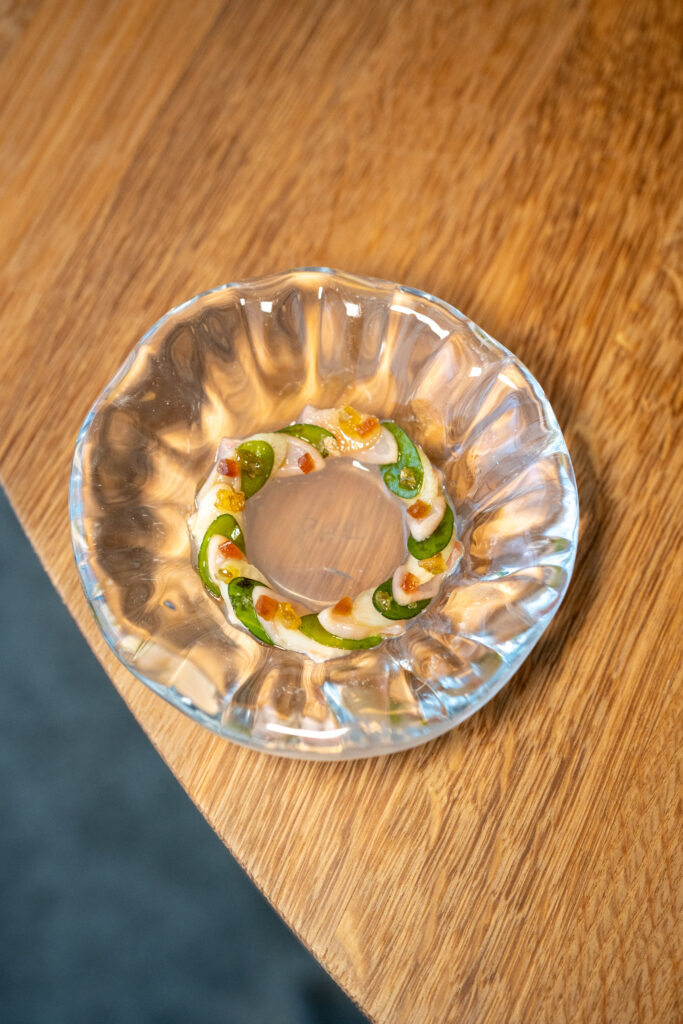
The final tidbit before the main courses featured thinly sliced mahogany clams artistically arranged with a delicate floral jus. This dish was a vision, and its meticulous presentation stood in stark contrast to the more primitive expression of the preceding snacks.
Traditional Faroese cuisine carries a certain weight, and Chef Ziska’s approach to the menu exemplified this. I found it in the flounder dish, accompanied by fermented sweet potato and carrots, where trout roe added a delightful accent. This was yet another testament to Ziska’s ability to conjure powerful flavors from a handful of ingredients. The trend continued with a lightly steamed cod, bathing in a robust mussel, seaweed, and parsley sauce, enriched with a whisper of butter. Yet one of the meal’s crowning moments arrived with the grilled langoustine. I’ve had langoustine in myriad settings, yet this preparation was a revelation. First sautéed in its shell, the shell itself was later transformed into a paste and spread onto the tender flesh. This method produced an extraordinary intensity of flavor, beautifully complemented by the buttery sauce that embraced the langoustine, fostering a profound connection between the diner and the dish.
The three final savory courses paid homage to Faroese culinary traditions, bursting with flavors even greater than their predecessors. The first presented quite the surprise: a blend of fresh and mashed potatoes mixed with two local delicacies—fish dried in the brisk ocean air and garnatálg, a lamb fat that has been rendered. The dish packed a flavorful punch, but surprisingly, it didn’t overwhelm, with notes reminiscent of blue cheese—a taste that, while intriguing, might not resonate with every palate. Next was a seabird preparation, accompanied by beetroot, confit mushrooms, and a sumptuous sauce that was both visually stunning and layered in taste.
The islands’ abundance of lamb—outnumbering the human population—was evident in the next course. Fresh lamb is a staple, but dried lamb is woven more deeply into the fabric of local traditions. Cured in open sheds, exposed to the salty air, it boasts a character akin to cured meat and aged cheese. Traditionally served on rye with butter, Paz recreated this pairing using mushroom paste, lamb garum, and a hint of lingonberry for sweetness. While enjoyable, this dish, though thoughtful, didn’t quite reach the heights of the preceding offerings.
The final main course, however, proved to be a slight letdown. Though pleasant, the braised lamb with burnt leeks and pickled celery lacked the elegance I had anticipated; the braising concealed the lamb’s inherent quality when a brief grilling could have showcased its rich flavor more effectively.
Before dessert, a bright palate cleanser of rhubarb and chervil was served, refreshing the senses. The main dessert was yet another revelation: bladderwrack seaweed reinvented as a crisp flan, its unexpected sweetness paired brilliantly with blackcurrant and liquorice. This innovative dish highlighted the exceptional technical skill of Paz’s kitchen team.
Paz embodies a true sense of place. Rooted in the spirit of the Faroe Islands, its menu encapsulates not just local ingredients but the very identity of its culture. While it may not possess the grandeur of Koks, its essence speaks with equal clarity. What I sought was a unique dining experience, and in that respect, Paz exceeded my expectations.
Practical Information
Location: Tórshavn, Faroe Islands
Head Chef: Poul Ziska
Menu: 8-course and 10-course tasting menus available, priced at DKK 3,400 (approximately $500)
Website: www.paz.fo
