

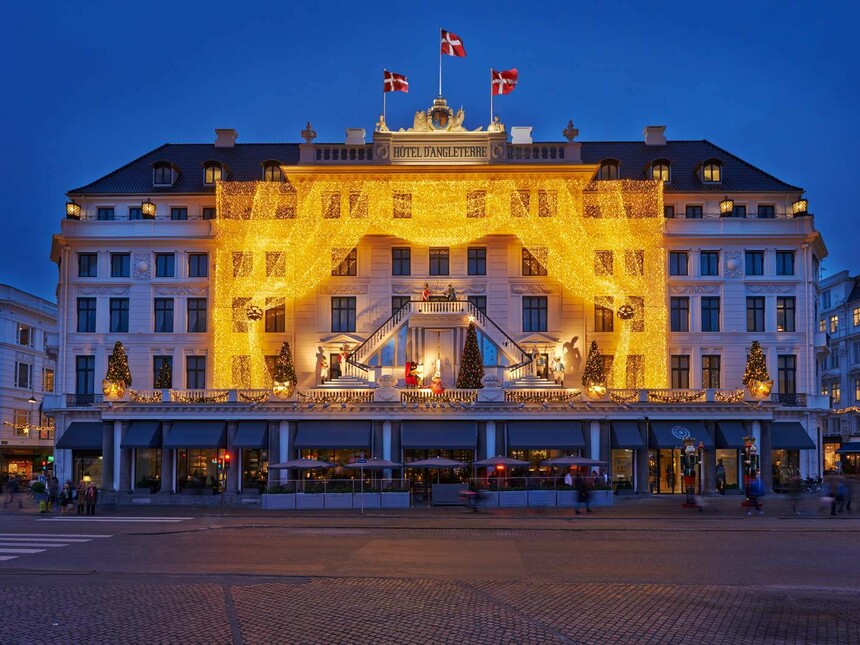
From the festive warmth of the d’Angleterre to day trips that reveal Denmark’s rich historical tapestry, my recent journey unveiled scenes previously known only through art and literature.
Until this November, my understanding of a Danish winter was shaped solely by the tales of Hans Christian Andersen and atmospheric paintings where snowy Copenhagen streets shimmered with candlelight, evoking a sense of tranquil joy. These imagery felt almost mythical, like snippets from a well-loved storybook that hinted at Denmark but never unraveled its full essence. Everything shifted when I stepped into the heart of Copenhagen’s Christmas celebrations, warmly welcomed by the elegant ambiance of the Hotel d’Angleterre.
During the holiday season, the d’Angleterre transforms into a realm of pure festive enchantment, the very embodiment of a holiday home away from home.
The timing of my arrival was serendipitous: I reached just in time for the much-anticipated reveal of the Christmas lights adorning the hotel’s façade—an event that attracts crowds each year. As we gathered in the square outside, the lights flickered to life, draping the hotel in a dazzling display that radiated seasonal cheer. The Copenhagen Boys Choir performed from the balcony during the tree-lighting ceremony, their harmonies enveloping the night sky with familiar seasonal melodies. Surrounded by locals and fellow travelers in Kongens Nytorv, with the aroma of mulled wine wafting from nearby stalls and skaters gliding gracefully on the rink set up for the season, I felt the true essence of a Danish Christmas enveloping me.
Inside, the d’Angleterre sparkled with holiday spirit. This storied hotel, founded in 1755 by a Frenchman and his Danish wife, has witnessed the passage of centuries. While it boasts modern comforts, it maintains an enduring charm that radiates warmth during the festive season. Flames flickered invitingly in the lobby, with soft lights and garlands adorning every room, and a majestic Christmas tree standing as the centerpiece in the main hall. The holiday decorations, whimsically themed around gingerbread houses and toy soldiers, infused the space with a delightful charm. Yet, even with such festive detailing, the d’Angleterre feels like a friend’s home—one with exquisite taste, reminiscent of a designer like Christian Liaigre. It expertly balances a personal, inviting atmosphere without veering into the impersonal territory of a chain hotel.
The hotel features 92 rooms and suites, and I couldn’t resist exploring the variety available. The Junior Suites, with balconies offering views over the historic town, are complemented by a diverse selection of Superior Rooms that reflect the hotel’s original charm and newer sections. And while we didn’t have the occasion to use it, the grand ballroom beneath a glass roof—once an entrance courtyard for arriving carriages—speaks to the opulence and history embedded in the architecture.
Our suite served as a tranquil sanctuary, boasting high ceilings, rich fabrics, and a captivating view over Kongens Nytorv. The marble bathroom, stocked with luxurious Diptyque toiletries, added a touch of indulgence, while the muted color palette created an atmosphere of serene retreat.
Each morning began with an extravagant buffet breakfast, showcasing eggs cooked to order alongside an array of enticing Danish pastries. The culinary delights continued at Marchal, the hotel’s Michelin-starred restaurant, where we enjoyed lobster sliders and warm apple slices—small, fluffy pancakes traditionally dusted with powdered sugar.
The hotel’s fitness center, equipped with modern machines, was impressively uncrowded during our visit. For those wishing to unwind, the only large indoor swimming pool in the old city awaits, featuring wet and dry saunas—a perfect haven following a day of exploration.
Later in our trip, we ventured to the Carlsberg Museum, a fascinating repository of history that chronicles the ascent of one of Denmark’s most renowned exports: Carlsberg beer. The museum also houses an esteemed collection of Rodin sculptures, including “The Burghers of Calais,” a poignant centerpiece that resonates with themes of despair and resilience. Exploring the exhibits was eye-opening, illuminating how Carlsberg’s founder, J.C. Jacobsen, not only influenced the brewing industry but also enriched Denmark’s cultural and artistic landscape.
Our cultural journey continued at the National Museum of Denmark, where the Viking exhibit provided a glimpse into the nation’s fierce, independent spirit. Yet the museum offered much more, weaving together a rich narrative of Denmark’s past through medieval art, 19th-century culture, and personal stories that made history resonate deeply.
Returning to the d’Angleterre each evening felt almost like entering a sanctuary. Whether it was enjoying an intimate drink at the Champagne bar, indulging in festive tea at Marchal, or simply basking in the glow of the fire, the hotel provided ample opportunities for reflection and respite amidst the seasonal hustle.
As my stay drew to a close, I realized that Denmark had gracefully stepped out from the shadows of Andersen’s tales, revealing a vibrant side that was far more intricate than I had ever imagined. The d’Angleterre, with its blend of rich history, warmth, and understated luxury, served as the perfect backdrop—one where holiday lights and fireside moments transformed each evening into a quiet celebration of the season’s magic.
