

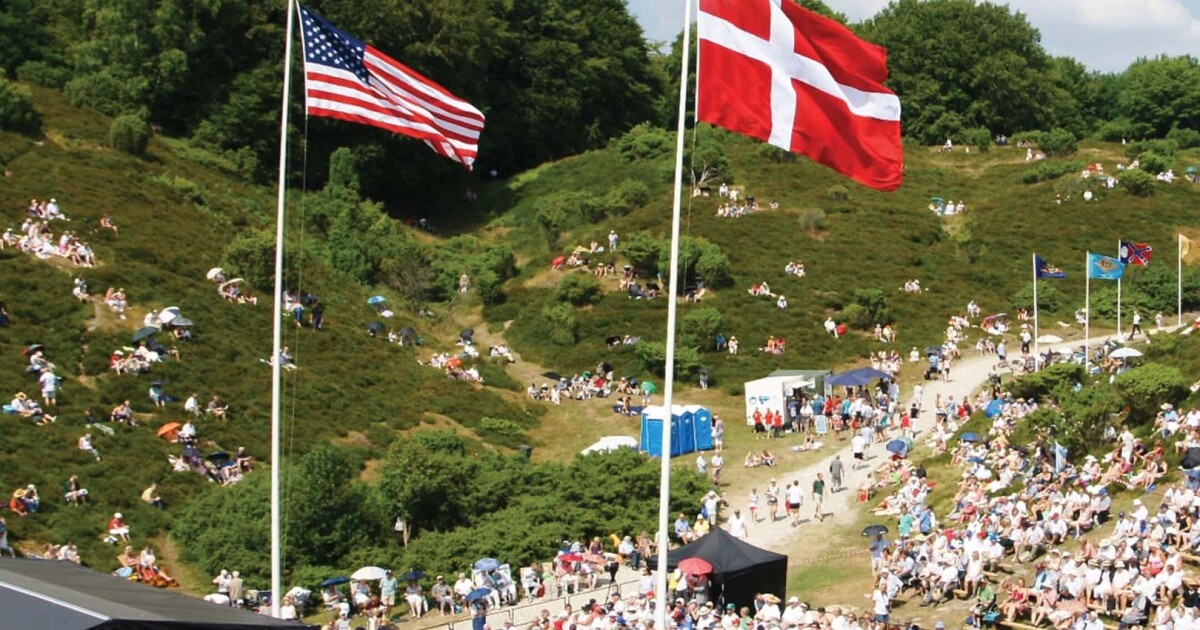
The Fourth of July has come and gone, but celebrations for America’s 250th anniversary continue. Earlier this month, our special correspondent James Niiler covered the annual Rebild Festival in Denmark, an event steeped in tradition that honors the democratic ties between Denmark and the United States. This year’s festivities felt particularly complex, given the heightened political tensions between the two nations. James attended the Rebild Festival to witness firsthand how these dynamics played out.
As I sit here in the enchanting, heather-draped hills of Rayfield National Park in North Jutland, Denmark, I am about to partake in what many consider the oldest and largest Fourth of July celebration outside the United States. The Rebild Festival, which has been running since 1912, draws together Danes, Americans, and friends from both countries for an afternoon filled with speeches, music, and patriotic fervor.
“Especially after World War II, it was massive. At one point, nearly 40,000 people gathered to celebrate liberation from the Nazis,” shared Sune Frederiksen, a representative of the Rebild National Park Society. We had previously spoken with him for APR.
“Only the World Wars and COVID have briefly interrupted this tradition,” he said. “A decade ago, we may have seen around 4,000 to 5,000 attendees; today, that number has dwindled to about 1,200.”
Sune, originally from Denmark but now residing in Kentucky, returned home to celebrate Independence Day in Rebild. He emphasized the significance of the festival’s founding, noting that the men who established Rebild National Park had one important condition for their donation to the Danish government: they wished to use the facility for this celebration annually.
“There was one condition,” he recounted. “They wanted to ensure that they could use the grounds here once a year.”
The Rebild Festival follows a simple format: it kicks off with a tent lunch featuring classic Danish dishes, followed by two hours of public speeches and performances. Spectators sit on the surrounding hills, immersed in the festivities below. Our previous coverage at APR highlighted former President Donald Trump’s controversial views on Danish territory, particularly regarding Greenland. This has undoubtedly shaped Danish sentiments toward him and the U.S. Yet, Sune believes that enduring personal connections between Danes and Americans have allowed the festival to rise above these political controversies, especially this year.
“People feel a sense of liberation by coming together. There have been political pressures, but we are here for the right reasons: to build bridges and friendships,” he said.
This pressure manifests in various ways, sometimes symbolized by provocative art. One notable figure is a statue created by Jens Galschiot, an artist from Odense, depicting President Trump as a large golden figure seated atop a vulnerable man, embodying criticism of U.S. policies—particularly in relation to climate change.
“He (President Trump) stands in opposition to nearly everything we value in Europe and Denmark,” Galschiot explained, describing his statue as a critique of the former president’s environmental policies and an homage to the Danish fairy tale, The Emperor’s New Clothes. The statue has protested Trump’s stance on various issues, including his view on Greenland.
Despite initial concerns about being excluded from the festival, Jens asserted his right to protest as a citizen, aiming for his installation to serve as a poignant reminder for festival-goers without disrupting the celebration.
We reached out to both the U.S. Embassy in Copenhagen and the White House Press Office for comments on the Rebild Festival, but did not receive a response.
Despite the statue’s presence outside the main festival tent, Sune continues to believe that the Rebild Festival plays a crucial role in redefining Denmark’s relationship with the U.S.
“I believe there are individuals in our society who will work hard to continue this legacy. Sharing this space and time together, that’s what matters,” he remarked.
“In 2025, it’s going to be bigger than ever,” declared Jørgen Bech Madsen, president of the Rebild National Park Society.
“The U.S. accounts for more than 20% of our international trade. Flights between Denmark and the U.S. are at capacity, suggesting that despite any tariffs or trade issues, everyday life flows positively. It’s essential to differentiate between geopolitical tensions and the productive interactions people maintain,” he noted.
Jørgen, who is also the CEO of Fibertex Nonwovens—operating in both Denmark and the U.S.—is optimistic not just about the future of the Rebild Festival but the overall U.S.-Danish relationship, especially from a business angle. While he sees a resilient connection, artist Jens Galschiot holds reservations.
“Once trust is damaged, it’s hard to restore,” he lamented, reflecting on a shifting cultural relationship between Denmark and the U.S.
“It’s saddening for our partnership,” he continued. “While Europe and the United States share historical ties, I sense we are drifting apart, even if our lives still hold comparable significance.”
Attendees at the Rebild Festival shared their thoughts on the event as well. “It felt like they were attempting to sweep the Trump-Greenland issue under the rug,” noted Daniel Walus, a language teacher from Aarhus and a friend of mine who joined me for the festival.
“Yet ultimately, it was quite wholesome. It was heartwarming to see people celebrating a tradition that holds deep meaning for them.”
As the speeches concluded, attendees joined in singing the old Scottish tune “Auld Lang Syne,” a timeless ode to friendship that poses a poignant question: will Denmark remember its longstanding bond with the United States, or has that connection been overshadowed by recent events?
