

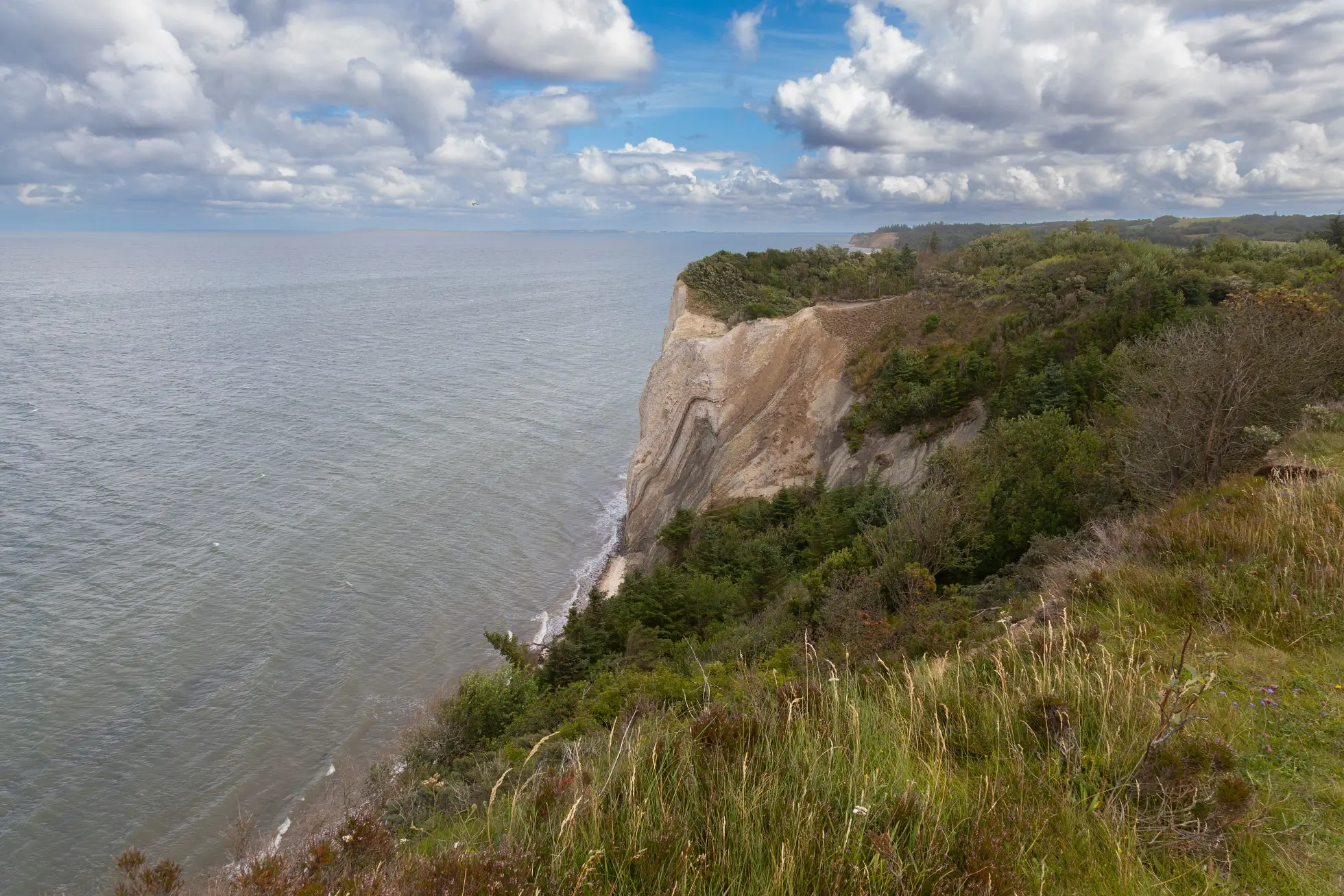
Knudeklint and Hanklit: A Geological Marvel in Northern Jutland
Knudeklint on the island of Fur and Hanklit on Mors Island, both situated in the picturesque Limfjord region of Northern Jutland, have recently earned a distinguished place on the UNESCO World Heritage List. These remarkable sites are not just cliffs; they are a window into one of the best-preserved sequences of moler—a rare marine diatomite formed around 54 million years ago during the Early Eocene epoch. Interlaced with over 180 layers of volcanic ash from monumental eruptions in what is now the North Atlantic, these cliffs serve as an extraordinary geological archive, capturing a time when the Earth’s climate was in flux.
Moreover, Knudeklint and Hanklit are celebrated internationally for their spectacular fossil records. From fish and birds to insects and turtles, these well-preserved specimens offer invaluable insights into ancient ecosystems and the evolutionary trajectory following the dinosaurs’ extinction. This rich trove of discoveries solidifies their status as essential reference points for geological and paleontological research around the globe.
In a formal assembly, delegates recognized the outstanding universal value of these twin cliffs situated in the western Limfjord. Together, they safeguard a unique narrative of our planet’s history, revealing crucial evidence of geological processes, climate change, and biodiversity that dates back over 50 million years—a legacy of immeasurable importance that must be preserved for future generations.
With this recent recognition, Knudeklint and Hanklit join a prestigious list, marking the tenth time Denmark’s rich heritage has been honored in this way. Other notable Danish UNESCO World Heritage Sites include:
- The Jelling Monuments
- Roskilde Cathedral
- Kronborg Castle
- Stevns Klint
- The Wadden Sea
Visiting both sites in a single day is feasible, but taking two days allows for a more leisurely exploration of the stunning scenery, museums, and numerous walking trails.
Exploring Knudeklint (Fur)
Knudeklint graces the northern coast of the island of Fur.
Getting there:
- Drive to Fur via a brief ferry ride from Branden, which takes about four minutes.
- Free parking is available near the cliffs.
- A short walk from the parking area leads you to the cliff’s edge and viewpoints.
What to expect:
- Gentle walking trails offering breathtaking views across the Limfjord.
- Clearly visible layers of moler and volcanic ash.
- Exceptional photography opportunities, especially in the morning and late afternoon.
- Fossil collecting is only allowed in designated areas, so please adhere to local regulations and protect these precious cliffs.
Unveiling Hanklit (Mother’s)
Hanklit is situated on the northern coast of Mors Island.
Getting there:
- Accessible by car via the bridges linking Mors to the mainland.
- Parking is conveniently located nearby.
- A well-maintained staircase and paths guide you down toward the beach for close-up views of the magnificent cliff face.
What to expect:
- A stunning 60-meter-high cliff exhibiting alternating light moler and dark volcanic ash layers.
- Recognized as one of Denmark’s most iconic geological landscapes.
- Fantastic hiking possibilities along the coastline and cliff tops.
Suggested Itinerary
For those visiting both sites:
- Start your day at Hanklit.
- Pay a visit to the nearby Fur Museum, which houses an exceptional collection of fur fossils while explaining the geological history that led to this UNESCO status.
- Take the quick ferry ride to Fur.
- Spend a leisurely afternoon at Knudeklint, soaking in the panoramic views as day turns to dusk.
Visitor Tips
- Wear sturdy footwear, as paths can be uneven and slippery, especially after rain.
- Bring a windproof jacket; the cliffs often face strong coastal winds.
- Allocate 1–2 hours for each site, or longer if you fancy a good hike.
- Stick to marked trails and respect barriers to help safeguard this newly designated UNESCO World Heritage Site.
- For the best photography light, visit Hanklit early in the morning and Knudeklint late in the afternoon, although both sites are impressive at any time of day.
Together, Knudeklint and Hanklit present one of Northern Europe’s most extraordinary geological experiences, where you can literally stroll through a 54-million-year-old chapter of Earth’s unfolding story.
