

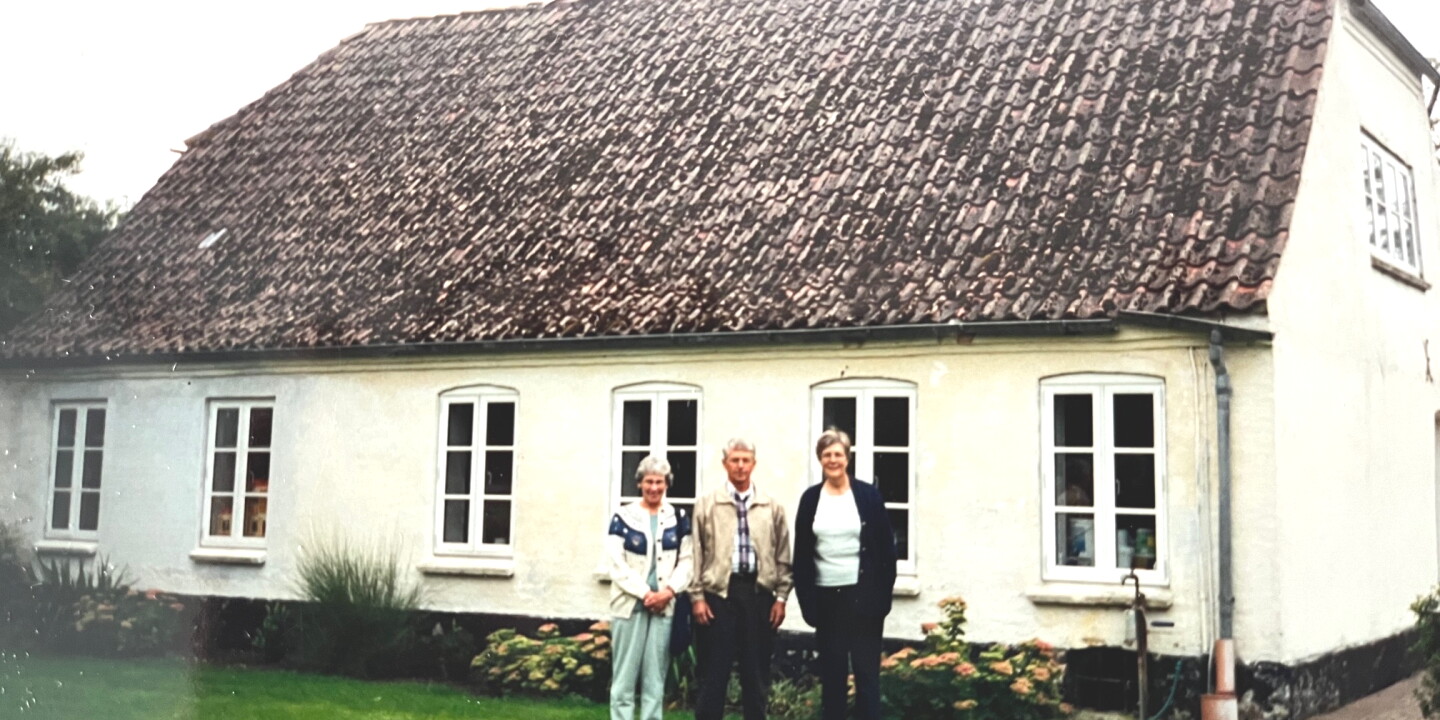
I’m not sure there’s a more quintessentially American experience than arriving at a stranger’s home and awkwardly requesting to use their bathroom—especially when you’re accompanied by two wide-eyed ten-year-olds, nervously maneuvering through outdated plumbing. It felt like a scene straight from National Lampoon’s European Vacation, and yet this moment encapsulated our quest: to delve into the family history that connects us to Denmark’s rural heartland.
Our journey began in Lintrup, a small town on Jutland’s western shores, just a stone’s throw from Germany. My husband, Nick, had only visited Denmark once before—during his teenage years for a soccer tournament—but our exploration of his family’s roots began when we unearthed a treasure trove of genealogical documents. Nick’s great-grandfather, Nis Sønderup, made the momentous journey from Denmark to Minnesota around the dawn of the 20th century.
Several years ago, Nick’s parents had casually handed over a folder filled with family history, unaware that it would ignite a profound curiosity. About 25 years back, several of Nick’s relatives had reconnected with a Danish cousin, Brigit, and her husband, Leif. Their later engagements culminated in a visit to the ancestral Sønderup farmhouse, lovingly known as Little Fuglbaekgaard, where Leif diligently chronicled family histories that spanned the globe—from Nebraska to Texas.
Notably, in the late 18th century, five out of eight of the Sønderup siblings emigrated to the U.S., followed by several others in the next generation. In our quest for understanding, we thumbed through photographs of the house, its sturdy stone structure, and the barn forming a welcoming L-shape at the entrance. These images piqued my interest: why not visit Lintrup ourselves? As we pieced together Nick’s family story, I imagined our children, alongside the tales of their heritage, grasping the essence of Danish culture as we retraced the steps of their history. Moreover, discovering the correct pronunciation of our last name seemed a small yet delightful prize.
With that thought, we reached out to Thomas, Brigit and Leif’s son, with whom Nick had connected on Facebook, and arranged to meet at Little Fuglbaekgaard—a nearly 165-mile journey from Copenhagen. In preparation, I gathered children’s books about Vikings and Hans Christian Andersen, keen to integrate some literary magic to fuel their excitement.
Our adventure began in earnest as we set off on a four-day road trip through Denmark. Our itinerary included stops in Funen—where Andersen hailed from—along with visits to Ribe and LEGOLAND Billund, ensuring that even if our family explorations fell flat, the allure of LEGOLAND and Tivoli Gardens would enchant our girls.
As we settled into our rented car, the immaculate roads of Denmark unfolded before us—two lanes bordered by bike paths, flower-filled verges, and lush greenery. Our first destination was the Viking Ship Museum in Roskilde, just a short drive from Copenhagen. The girls abandoned their earlier skepticism and enthusiastically clambered over replicas of ancient ships, finally declaring, “Cool, Mom!”
Next, we arrived at Odense, the birthplace of Hans Christian Andersen. The town was a green oasis, where even tram lines were lined with wildflowers. At Andersen’s House, an experiential museum bridging the gap between the old and new, our children were captivated by colorful displays showcasing the beloved fairy tales. The museum’s design elegantly wove together nature with storytelling, affirming our connections to the past.
Our next stop was to find the farmhouse nestled near Lintrup. As the day arrived, Thomas directed us to the small hamlet of Foldingbro, buzzing with anticipation and a tinge of nervousness. Just a short walk from our parking spot was the farmhouse—a striking white building surrounded by lush greenery, its exterior bearing a striking resemblance to the photos we had viewed.
With a burgeoning need for a bathroom, an unexpected but pressing situation unfolded. As we stood there, eager to explore our family’s past, the owners—who did not speak English—graciously allowed us to step inside. Surprisingly, we learned we weren’t the only Sonderups to pay a visit in recent months. Earlier this year, other American descendants had knocked on the same door, and a decade prior, three elderly sisters from Nebraska had embarked on a similar pilgrimage.
As we revelled in the experience, Thomas detailed how the farmhouse’s location had shifted from Denmark to Germany post-1864 after the Second Prussian War. It was a poignant reminder of the accidental twists of history shaping our families.
Our trip deepened further into history with a stay at the 16th-century Hotel Dagmar in Ribe—the oldest town in Scandinavia. Over dinner with Thomas and his girlfriend Trine, we poured over a collection of family documents that unveiled the farmhouse Jens had owned back in Stavsø. What followed was a series of hilariously failed attempts to pronounce “Sonderup” correctly following Thomas’s expert rendition, our laughter echoing through the evening.
The next morning, we ventured to Stavsø, hoping to unearth more roots. A cheerful waitress pointed us toward a nearby school. Yet, despite our efforts, the original farmhouse had disappeared, replaced by a newer structure. However, we learned about Henne Kirke, a medieval church nearby, where Nis had been baptized. Though we found no direct relatives, a few Nissens lay buried there—Kirsten’s family—linking us back to the past.
Inside the church, the architectural beauty struck our senses, and as the girls traced their hands over the baptismal font, the connection to their ancestor felt tangible. Later that day, enshrined in the thrills of LEGOLAND, we found ourselves shouting with joy on a roller coaster, the reverberations of our family trip swirling in new directions.
As we returned home, our laughter and love, wrapped in stories of our family’s past, felt like a legacy worth cherishing. We might struggle with the pronunciation, but we had unearthed a richer narrative than we could have ever imagined.
