

Trump Threatens to End Iran Ceasefire Amid Ongoing Tensions
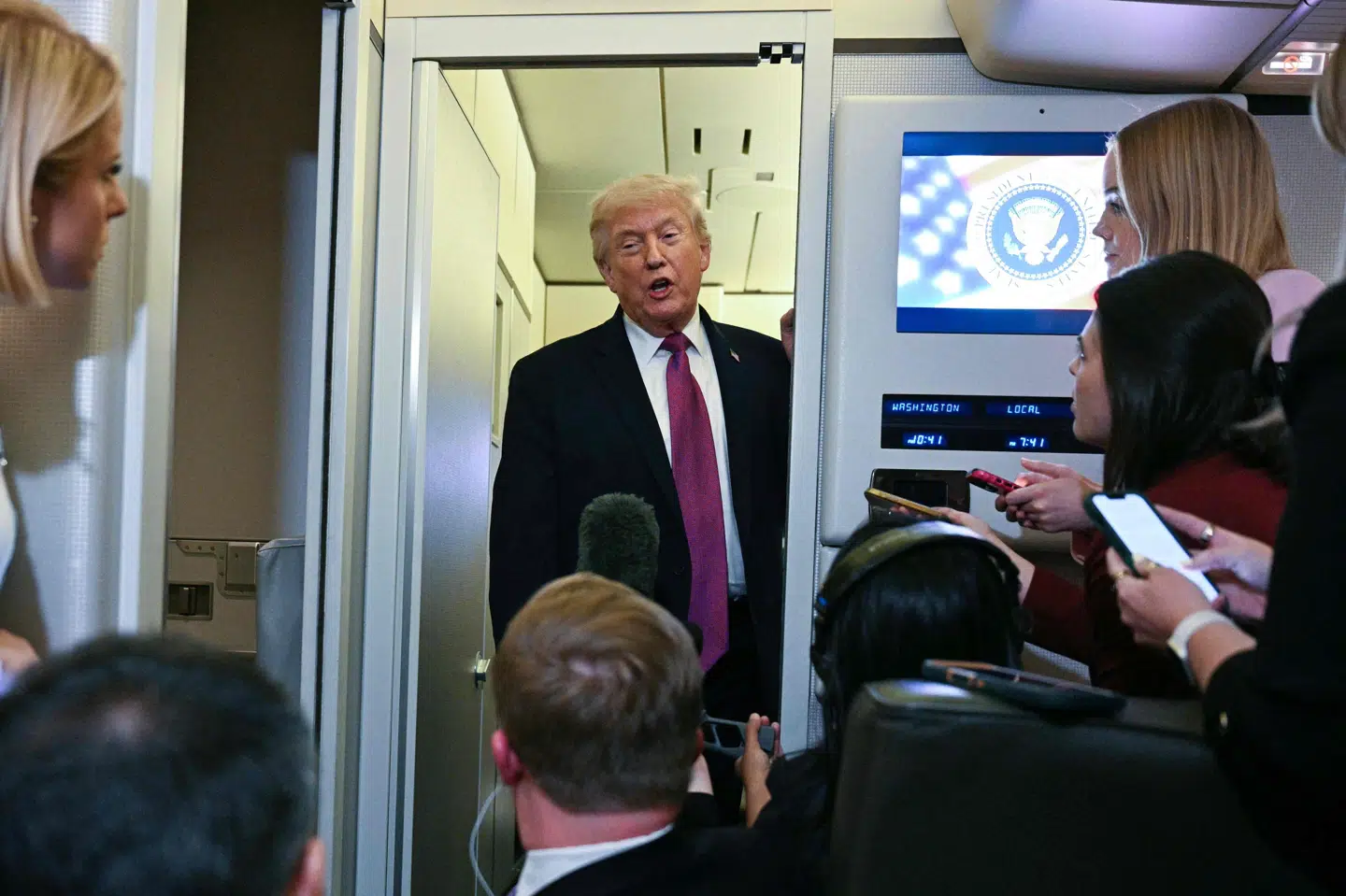
In a striking statement early Saturday morning Danish time, US President Donald Trump hinted at the possibility of terminating the current ceasefire with Iran if a long-term agreement isn’t reached by Wednesday. Speaking to journalists aboard Air Force One, he expressed significant concerns about the ongoing conflict.
Just last week, the United States and Iran reached a two-week ceasefire, a temporary peace that is set to expire Wednesday night. Trump conveyed his intentions clearly: “Perhaps I will not extend it, but the blockade on Iranian ports will remain in effect.” He added ominously, “So there is a blockade, and unfortunately, we will have to start dropping bombs again.”
As the presidential aircraft made its way to Washington, Trump also shared a note of optimism regarding Iran, stating, “We got some pretty good news about 20 minutes ago. Things seem to be going pretty well in the Middle East with Iran.” While reporters pressed for details on this “good news,” Trump remained vague but confident, suggesting that positive developments were on the horizon.
The backdrop to this tense dialogue is the major conflict that erupted following the US and Israeli assault on Iran on February 28, which significantly escalated hostilities in the region. In response to the violence, Iran effectively instituted a blockade of the strategically vital Strait of Hormuz, a crucial passage through which 20 percent of the world’s oil is transported.
Amidst these continuing tensions, Iran’s Foreign Minister Abbas Araghchi announced on Friday that the Strait of Hormuz would be reopened for commercial shipping. Trump welcomed this news but reiterated that the US Navy would sustain its blockade aimed at vessels navigating to and from Iranian ports.
In a provocative countermeasure, Mohammad Baqer Qalibaf, Iran’s parliament speaker, warned on Saturday evening that Iran would close the Strait of Hormuz entirely if the US persisted with its blockade.
As the situation unfolds, the international community watches closely, awaiting developments that may reshape the geopolitical landscape of the Middle East.
