

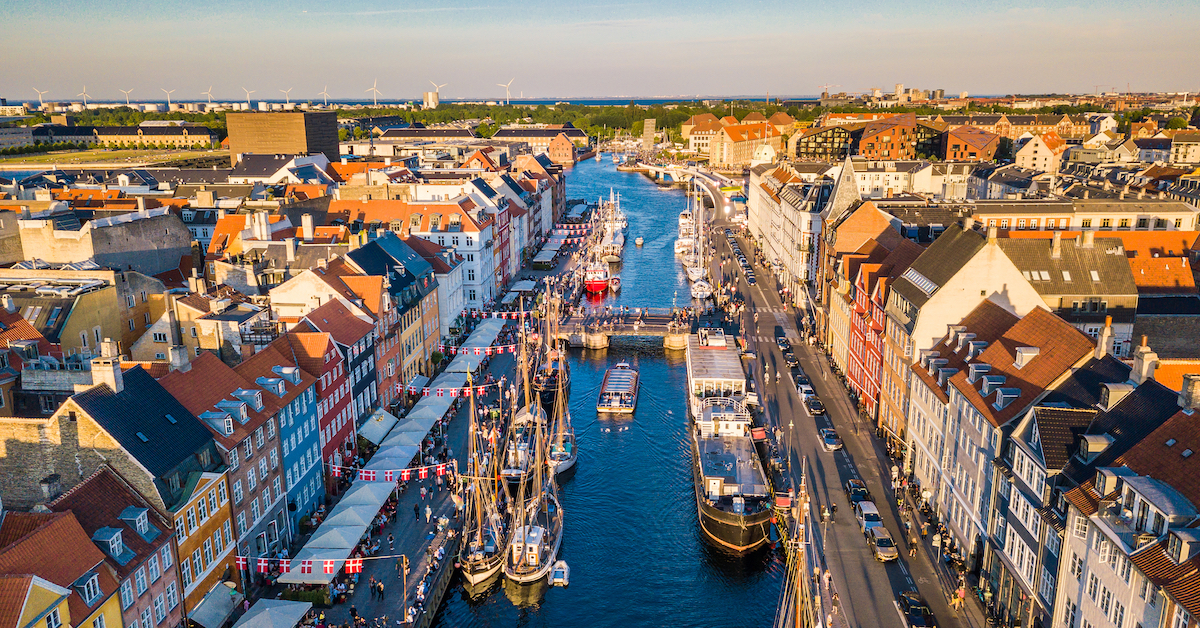
Copenhagen, the capital of Denmark, is a city rich in culture and history, offering a tapestry of lovely architecture, including regal castles, charming cobblestone streets, and an extensive canal system. Beyond the picturesque facade lies a world of unique quirks and surprises, each waiting to be uncovered.
Videos by TravelAwaits
During my recent trip to Copenhagen—my first ever—I anticipated the iconic sights: the enchanting Tivoli Gardens, the stately Christiansborg Palace, and, of course, those stunning canals. Yet, my explorations led me to delightful revelations that made my visit unforgettable.
Here are nine lesser-known facets of Copenhagen that captivated my heart.
1. A Unique Off-Grid Community
In the early 1970s, a group of Copenhagen’s free spirits—hippies, anarchists, and other nonconformists—set up a community in an abandoned military barracks. They named it Christiania, and it thrives today with around 1,000 residents. These self-sufficient individuals constructed their own homes and established their own laws, opting out of the tax system. While vibrant street art and eclectic cafés fill the area, cannabis sales have largely vanished from Pusher Street following violent crackdowns. Christiania presents a colorful and intriguing contrast to the more buttoned-up atmosphere of the capital.
Pro Tip: Visitors to Christiania are urged to observe community rules, such as refraining from running, which locals associate with promoting fear. So, save your jog for another locale.
The Old Stock Exchange building in Copenhagen
Photo credit: Sina Ettmer Photography / Shutterstock.com
2. Dragon Tails for Protection
Among Copenhagen’s oldest structures, the Old Stock Exchange dates back to 1625 and possesses a rather quirky backstory. Originally surrounded by water, the building allowed ships to dock right at its front door. Its standout feature— a towering spire formed of four intertwined dragon tails crowned by three regal crowns— is steeped in legend, believed to ward off enemies and blazes. Remarkably, the Old Stock Exchange has escaped destruction from several fires that have ravaged nearby areas, including Christiansborg Palace. Though it remains closed to the public, it’s a sight worth pausing to admire.
3. A Passion for Gospel
While many know Copenhagen for its vibrant jazz scene, a lesser-known love flourishes here: American gospel music. For over ten years, Tivoli Gardens has hosted a weekend gospel festival, featuring local choirs bringing gospel classics to life. Additionally, near the city, the international school of gospel music draws hundreds of singers each year for intensive training. This enthusiasm for gospel might stem from morgen sang, a cherished Danish custom of morning sing-alongs among friends and neighbors.
Coffee Collective in Copenhagen
Photo credit: EQRoy / Shutterstock.com
4. An Old Phone Booth Turned Coffee Oasis
Danes’ affection for coffee harmonizes beautifully with sustainable design at Coffee Collective, located near Nørreport, the busiest train station. Here, a stunning 19th-century hexagonal phone booth has been transformed into a cozy coffee shop. Once ringing with the sounds of voice calls, it now buzzes with the energy of skilled baristas operating espresso machines, all while retaining its endearing, turn-of-the-century charm.
5. A Snail-Shaped View from Above
Dating back to the 17th century, Copenhagen’s Round Tower stands as Europe’s oldest functioning observatory, still embraced by amateur astronomers. Visitors are rewarded with breathtaking views of the city after winding their way up the snail-shaped spiral ramp to its summit. This design was not just for aesthetic appeal; it once facilitated the ascent of horse-drawn carts laden with books to the university library at the top. Legend has it that during a summit in 1716, Russian Tsar Peter the Great and his wife, Catherine I, made quite a dramatic entrance, with him riding his horse up the ramp while she followed in a carriage.
Michelin-starred Noma restaurant in Copenhagen
Photo credit: Northfoto / Shutterstock.com
6. Michelin Magic
Copenhagen brims with culinary talent, sporting over a dozen Michelin-starred restaurants—14 to be exact—with a collective total of 23 stars. Among them is the world-renowned Noma, often deemed one of the finest—as well as most extravagant—dining establishments on the planet. However, it’s not just haute cuisine that shines here; the beloved Danish hotdog stands elevate street food to new heights. Surprisingly, even black licorice, a notoriously divisive treat, becomes delightful thanks to Lakrids By Bülow, a Copenhagen confectioner who has mastered the art of chocolate-covered licorice, converting even skeptics like me into admirers.
7. The Little Mermaid… Is Just That
No visit to Copenhagen would be complete without a pilgrimage to one of its most iconic figures: The Little Mermaid. Based on the tale by Hans Christian Andersen, this bronze statue has graced the city since 1913. Perched on a rock along the bustling Langelinie promenade, one might almost overlook her among the throngs of selfie-seekers. At a petite four feet tall, her stature is undeniably modest, yet her charm cannot be understated. Despite my initial disappointment over her size, I wouldn’t have missed the chance to see her.
Statue of Frederick IX, King of Denmark, in Copenhagen
Photo credit: Birute Vijeikiene / Shutterstock.com
8. What’s in a Name?
Copenhagen’s royal lineage is rich and consistent, with the names Christian and Frederik echoing through history. Since 1513, these two names have been the sole choices for Danish kings, alternating in succession. A constitutional shift allowed King Frederik IX’s daughter to ascend the throne in 1972, introducing Queen Margrethe II as the first female ruler since the late 1300s, when Denmark, Norway, and Sweden were united under Queen Margrethe.
While undeniably beloved, the Danish royal family displays a notable lack of creativity in their royal nomenclature.
9. Skiing Down a Hill of Waste
Copenhagen is celebrated for its commitment to sustainability, powered primarily by wind and solar energy, with an ambitious goal of achieving carbon neutrality by 2025. A notable symbol of this effort can be found at CopenHill, a state-of-the-art waste management facility located just east of the city. This facility burns non-recyclable trash to generate power for over 170,000 nearby homes, all while boasting a sleek architectural design. To top it off, the facility features a 1,500-foot ski slope coated with crunchy green turf, allowing outdoor enthusiasts to enjoy skiing all year round.
Pro Tip: Adventurous climbers can also tackle the world’s tallest climbing wall (standing at 278 feet) that graces one of CopenHill’s sides.
