

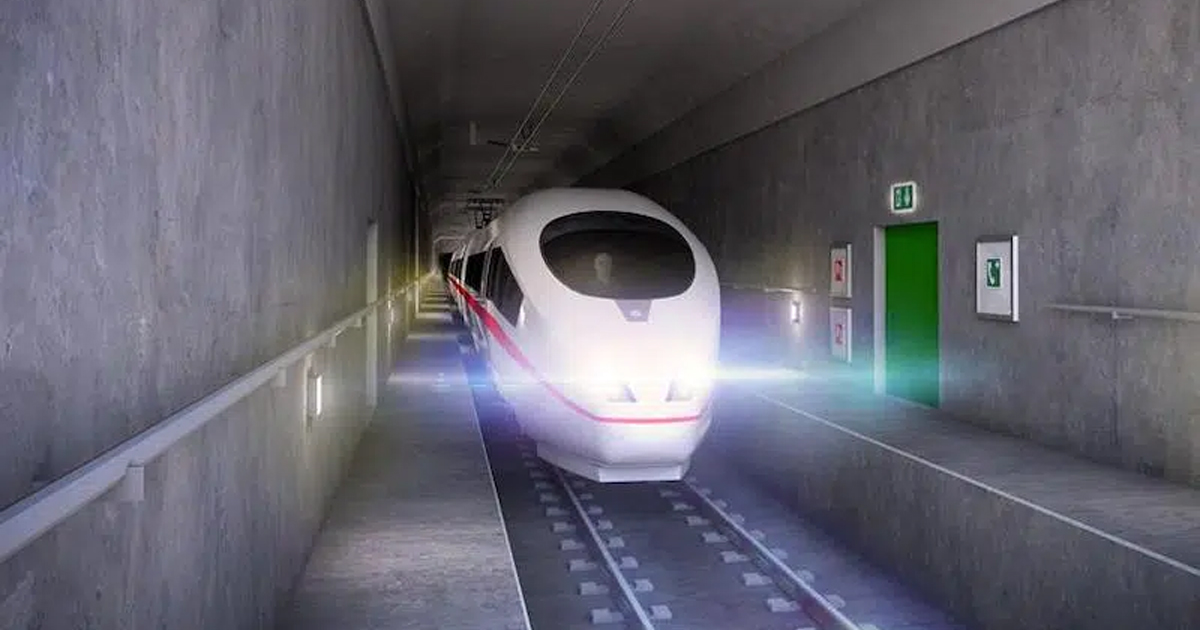
The geographic proximity of Denmark and Germany hasn’t always translated into easy travel connections. In an effort to bridge this gap, both nations have embarked on a groundbreaking project: the Fehmarnbelt tunnel. Slated to be the longest immersed tunnel in the world at an impressive 11 miles, this ambitious infrastructure endeavor aims to revolutionize transportation between major cities such as Copenhagen and Hamburg.
Construction commenced in Denmark in 2020, followed by German efforts in 2021. When it opens in 2029, the Fehmarnbelt tunnel will reduce the travel time between Hamburg and Copenhagen from five hours to a swift two and a half hours. For those accustomed to the ferry ride that currently takes 45 minutes, this project will transform that journey into a mere 10-minute drive or a seven-minute train ride.
“By significantly reducing travel time, we are making Denmark more accessible than ever for visitors from central Europe,” noted Mads Schreiner, international market director at VisitDenmark, in remarks to CNN.
This tunnel is monumental not only in its purpose but also in its engineering. It will feature dual two-lane highways and two electrified rail lines. Uniquely, the Fehmarnbelt is an immersed tunnel, meaning it is constructed using prefabricated concrete sections. These massive structures will be lowered into a specially dug trench on the seafloor of the Baltic Sea, each weighing an astonishing 73,000 tons—equivalent to the weight of ten Eiffel Towers and stretching an impressive 712 feet in length.
To accommodate such colossal components, a dedicated assembly factory near Rødbyhavn on Denmark’s Lolland island sprawls across 300 football fields. Each section takes approximately nine weeks to fabricate, equipped with specialized gaskets and secondary seals that allow them to float as they are maneuvered into position at sea. Once in place, they will be carefully lowered into the pre-prepared trenches.
“There will be no test run for the immersion,” emphasized Denise Juchem, a spokesperson for Femern A/S, the Danish company spearheading the project. “It must work the first time. We will not compromise on quality and safety, which is why we are taking the necessary time to ensure we are perfectly prepared.”
Last month marked a significant milestone as the first two elements of the Fehmarnbelt tunnel were moved closer to the work harbour. Crews are now gearing up for the immersion of the project’s first section off the Danish coast. This monumental venture has received substantial funding from the European Union, with an estimated cost exceeding €7.4 billion (about $8 billion).
For ongoing updates about the Fehmarnbelt tunnel and its latest developments, visit the official Fehmarn website.
Construction is underway for the Fehmarnbelt tunnel, which will connect Denmark’s Rødbyhavn and Germany’s Puttgarden, drastically reducing travel time between these neighboring countries.
Map showing the route of the Fehmarnbelt tunnel. (Photo: Bowzer, via Wikimedia Commons, GNU Free Documentation License)
Once completed in 2029, the Fehmarnbelt tunnel will be the world’s longest immersed tunnel, featuring dual two-lane highways and two electrified rail lines.
This infrastructure will provide unprecedented access between bustling urban centers like Hamburg and Copenhagen, enhancing connectivity across northern and central Europe.
Femern A/S: Website | Instagram
All images via Fehmarn.
Sources: Fact sheet on the Fehmarnbelt tunnel; Fehmarnbelt Tunnel – The world’s longest immersed tunnel; A vast undersea tunnel is being built that will change the road and rail map of Europe
Related Articles:
London’s Mile-Long Kingsway Exchange Tunnels to Receive $268M Renovation
Artist Uses Magnetic Tape to Transform Historical Chapel into an Energetic Tunnel
World’s Deepest Pool Includes Underwater Tunnel and Hotel Rooms
