

Amid the vibrant optimism of Queen Mary and King Frederik’s visit to Australia, a serious message underscored the significance of their journey into the heart of Australian democracy.
“In times of uncertainty, trust is everything—not just within our societies but also between nations,” intoned Lars Aagaard, Denmark’s Minister for Climate Change, speaking on behalf of the royal delegation at an event with Australian politicians. “We recognize that in this challenging world, we must forge even deeper friendships among nations that share our values and interests.”
Though names like Trump, Iran, and Greenland were left unspoken, their implications loomed large. This visit, rich with ceremonial splendor and public goodwill, carried within it the weight of serious diplomacy—a side often overlooked by the cheering crowds.
The excitement outside Canberra’s war memorial was palpable. This marked Mary’s first visit as a Danish monarch, and she and Frederik arrived just as the capital was shaking off an unusual chill. Their impressive 11-car motorcade glided up Anzac Parade, and onlookers were treated to a royal display unimaginable just a generation ago. Fresh from a bushwalk at Uluru-Kata Tjuta National Park and an elegant state dinner with Governor-General Sam Mostyn, the royal couple honored the Tomb of the Unknown Soldier, paused at the memorial for a Tasmanian-born officer killed in action in 1944, and placed a poppy at the dedication for a serviceman who lost his life over Denmark the same year.
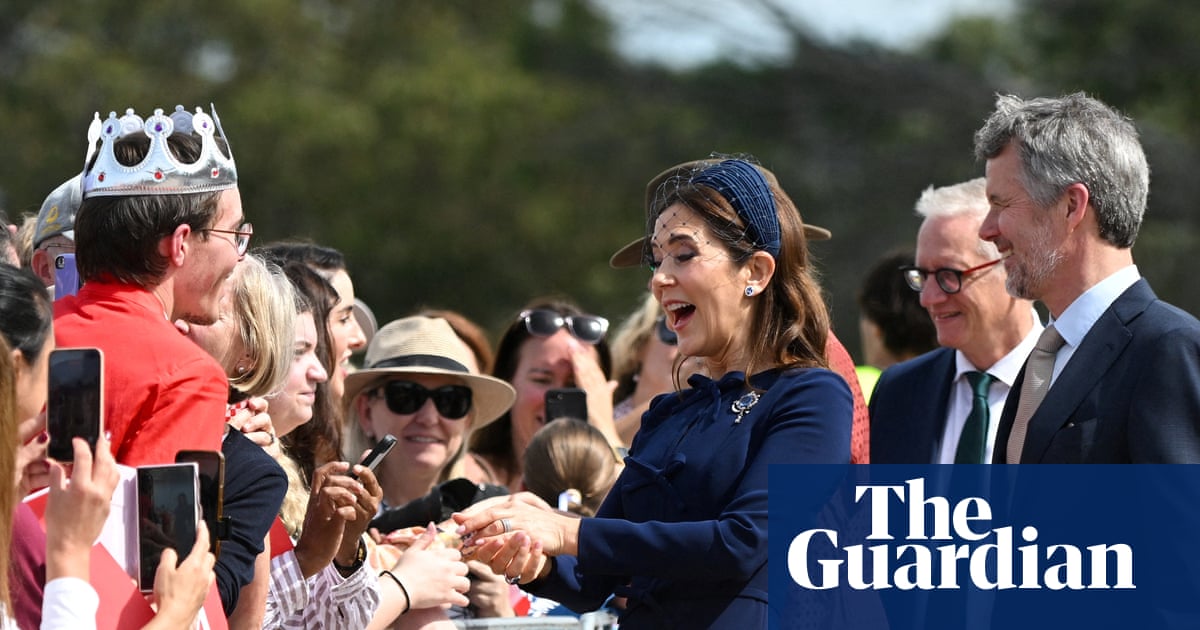
The public, eager for a glimpse, packed the forecourt of the memorial. Families, older couples, and school groups formed a lively scene, waving Danish flags and creating a festive atmosphere. One enthusiastic fan donned a shirt emblazoned with logos from the 2000 Sydney Olympics—the charming backdrop to King Frederik and Queen Mary’s meeting when Frederik, then a prince, first encountered Hobart-born Mary at the Slip Inn during the Games. “I wanted to see if they remember Sydney,” she told a Danish TV reporter, drawing a smile from the journalist who responded, “They will never forget the Sydney Olympics.”
Moving elegantly along the fenceline, the King and Queen greeted as many fans as possible. Frederik led the way, but it was clear that many had come to see Mary. Dressed in a navy ensemble complete with a fascinator and matching jewelry, she was all smiles as she chatted, expressed her gratitude, paused for selfies, and even took a moment to pet a dog.
Expressions of affection filled the air. “We love you, Mary!” one fan called out, while another shouted, “Welcome home!” Among the crowd was Rochelle, who was celebrating her daughter Anna’s 10th birthday. The duo had created a large blue sign, hoping to catch the royal couple’s attention. They succeeded, much to Rochelle’s delight, as they received both a handshake and a photo with the royal duo.
At the same time, Lynton Martin, a young man from Melbourne, turned heads in a striking royal red blazer adorned with pins of the Danish flag and images of the royal couple. Although he claimed no Danish heritage, Lynton’s enthusiasm for the monarchy had driven him to travel solo from Melbourne for just this moment. He engaged Mary in conversation about the Tasmanian AFL team, playfully suggesting, “Maybe Copenhagen could become their home away from home.”
Beneath the festive exterior, the visit also carried a grave message. During a meeting with Prime Minister Anthony Albanese, Frederik emphasized the climate insecurity that many nations face in these uncertain times. He expressed a desire to walk “hand in hand towards the sunset” in tackling this pressing issue together.
At a parliamentary reception, House Speaker Milton Dick highlighted the mutual commitment of Australia and Denmark to democracy, cultural exchange, and sustainability. Liberal MP Angie Bell, who delivered a portion of her speech in Danish, spoke of the inspiration Australians draw from their Nordic counterparts in community welfare and sustainability. “Denmark and Australia may lie far apart on the world map, but we find ourselves close in values,” she noted.
This shared affinity resonates even amidst international tensions—Denmark standing firm against tensions over Greenland and Australia navigating its complex role in the Middle East. In the face of such global challenges, Aagaard praised Australia as a kindred spirit to Denmark.
Despite the physical distance between the two nations, the values and concerns that bind them seem closer than ever.
