

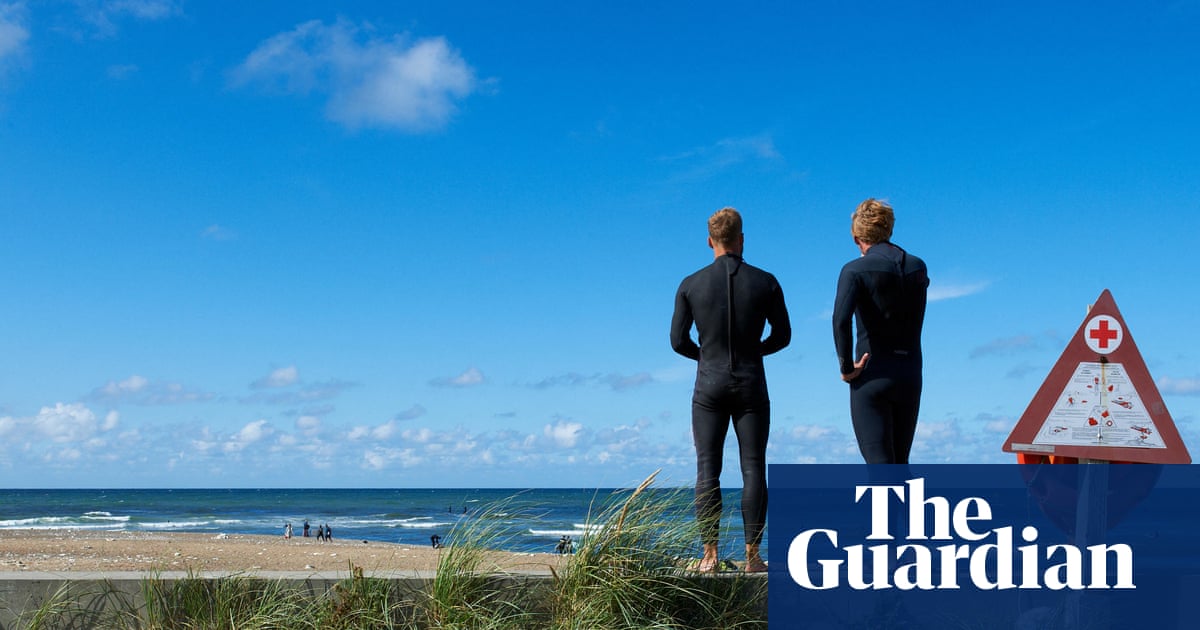
The North Sea wind hits me like a refreshing splash of cold water, stirring me from a six-hour journey on buses and trains from Copenhagen. Standing atop the grassy dunes, I gaze out at the seemingly endless sea, where the silhouettes of a few surfers dance on the foamy waves.
This stretch of north-west Jutland, affectionately dubbed “Cold Hawaii,” attracts surfers, windsurfers, and paddleboarders alike. The term was coined in the 1990s by the international surfing community and popularized by world champion windsurfer Josh Stone, capturing the essence of this laid-back shoreline—which boasts 31 official surf spots along nearly 30 miles (50 km) of coast, from the industrial harbor of Hanstholm to the sandy beaches of Agger.
Yet, unlike its tropical counterpart, this European version is wrapped in the charms of heathlands, dunes, and the forests of Thy National Park. The climate is decidedly brisk—you wouldn’t want to linger in the water here for long without a wetsuit!
The untamed beauty of this coastline feels strikingly different from the agricultural landscape I’ve come to know over my years in Denmark. Cold Hawaii often surfaces in conversations as a hidden gem, a welcome alternative to the bustling resorts of Zealand or the picturesque tip of Skagen. Accessible by public transport but with a local bus service that leaves much to be desired, Thy remains a well-kept secret among locals, nurturing a sense of community that persists even through the chill of winter, when summer houses stand empty.
On a sun-soaked afternoon in early spring, the quiet atmosphere hints at the forthcoming tourist season. As I drive into Klitmøller—often regarded as the unofficial heart of Cold Hawaii—I can see how this region has evolved into a surfer’s sanctuary over the decades. From surf shops to schools, a cozy wine bar, a spa, and a co-working space, the main street buzzes with a sense of vibrant possibility. Among the artists who call this area home is the internationally acclaimed Jeppe Hein.
Just a stone’s throw away in Vorupør, where I find my lodgings at the Vorupør Badehotel, the transformation continues. Originally part of the Vø Surfshop, which opened its doors in 2011, the hotel debuted in 2023, thanks to the collaborative vision of Peter Joseph Jensen, Sigrid Bruun Jakobsen, and their partners. My bubblegum-pink room, nestled under the eaves, boasts vast windows that frame the sea, along with a freestanding bathtub—an indulgence for someone like me, used to urban Copenhagen. In true Danish fashion, a shoes-off-at-the-door policy makes the stay feel even cozier.
As I stroll along Vorupør beach, flanked by anchored fishing boats, families join me, reveling in the crisp wind and dappled sunlight—truly, the season for Denmark’s outdoor resurgence. Once a tranquil fishing village, Vorupør has recently seen an influx of tourists from Denmark, Germany, and Belgium, prompting the establishment of hotels, restaurants, and boutique shops.
One standout addition just down the coast is the restaurant Tri. Established by founder and head chef Nicolas Min Jørgensen, it garnered a Michelin star within a year of its opening in 2022, celebrated for its hyperlocal approach to ingredients and menu design. The offerings reflect the abundant flavors of the sea, Thy National Park, and the nearby Limfjord, showcasing dishes like mussel broth enriched with seaweed, smoked beet butter, and delicate magnolia flowers.
During my dinner, Jørgensen waves to fisherman René, who harvested the season’s first shrimps from the Limfjord that very morning, and acknowledges farmer Niels, who is relishing his own berries at the restaurant.
The following day, I set out for SMK Thy, the new satellite of the National Gallery of Denmark that opened just last year in the village of Doverodde. A short 30-minute drive from Vorupør takes me toward the banks of the Limfjord, weaving through the dune plantations of Thy National Park.
This striking 42-meter former grain silo, dating back to the 1960s, overlooks a collection of warehouses that now house exhibitions like Living Landscapes, showcasing works from Claude Lorrain to Edvard Munch alongside emerging Danish talents like Rasmus Myrup. Inside, a serpentine staircase connects three floors and offers breathtaking views across the Limfjord. A designated “Nature Village” serves as a hub for outdoor education and exploration.
It is indeed puzzling how a National Gallery found its way to this quiet stretch of Jutland, yet it has quickly captured the attention of those who might otherwise feel distanced from the collection housed in Denmark’s bustling capital, far across the country.
On the opposite side of the Limfjord lies another cultural gem—Kunsthal Thy, established in 2023 by artist Rasmus Søndergaard Johannsen within a barn on the grounds of the medieval manor estate of Boddum Bisgaard. Here, one can explore the works of both international and Danish avant-garde artists, whose sculptures, videos, and installations surprise visitors in this typically serene corner of Denmark, contrasting beautifully with SMK Thy’s efforts to engage the region with its collections.
This alluring sense of the unexpected fuels the region’s burgeoning appeal, attracting outdoor enthusiasts who might otherwise flock to well-trodden surf destinations like Biarritz in France or Ericeira in Portugal. Of course, this, coupled with an unmistakable touch of Scandinavian style, further enhances its charm.
The trip was supported by Visit Denmark and Visit the Northwest Coast. Doubles at the Vorupør Badehotel begin at £178 B&B. Multiple trains depart from Copenhagen Central Station to Sjørring in the Thy district, connecting with local buses operated by Nordjyllands Trafikselskab. The cost of a ticket from DSB, covering travel from Copenhagen to Vorupør—including two trains and a bus—starts at 516 kroner (approximately £60).
