

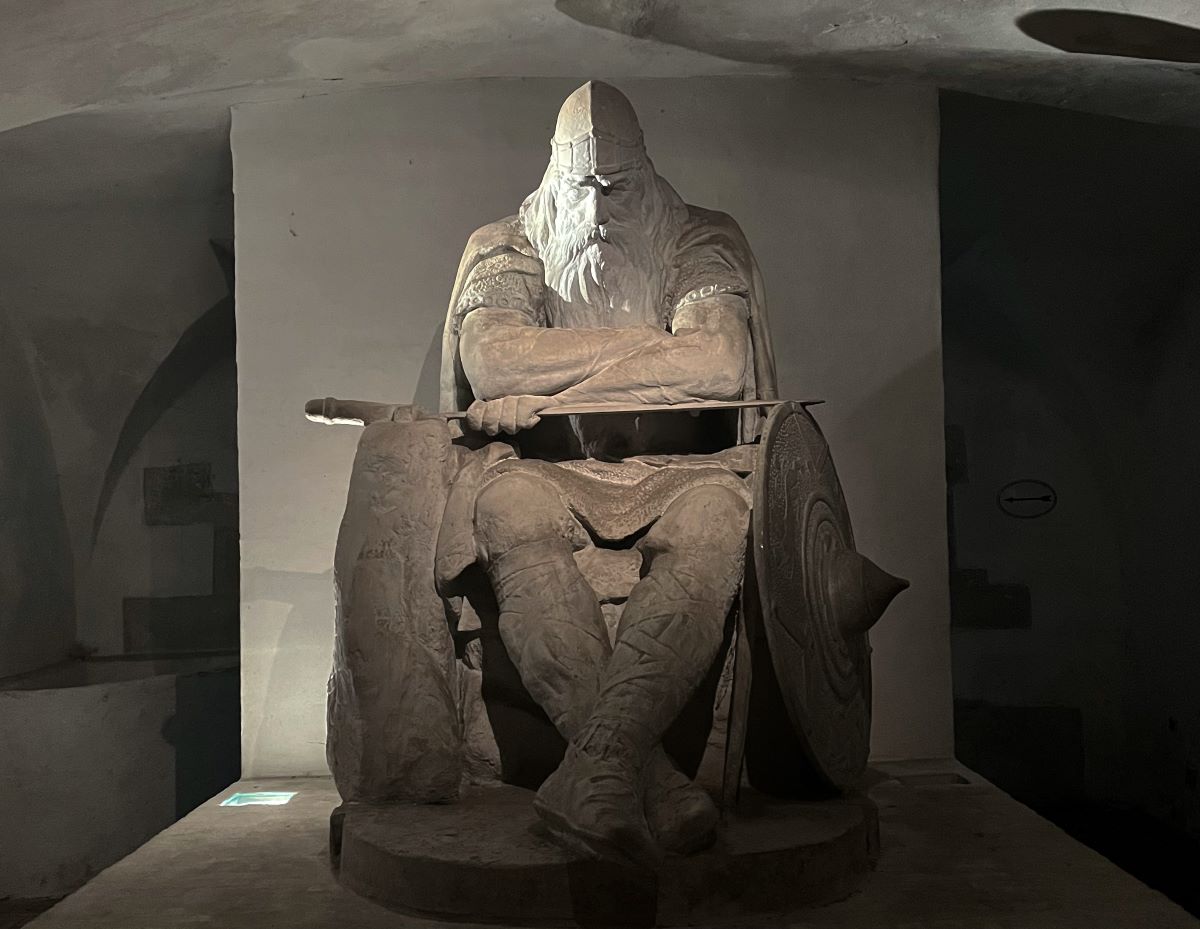
The legend of the sleeping Viking beneath Kronborg Castle, known as Holger Danske, resonates deeply within Danish history. It’s a tale woven into the fabric of every Danish household, a narrative that finds its way into the hearts of children raised in the shadow of this storied site. Today, the imposing statue of Holger has transformed into a popular attraction for both tourists and locals alike.
Why It’s Newsworthy: Since the 13th century, Holger Danske has symbolized Danish national pride, drawing visitors from around the globe eager to connect with Denmark’s rich heritage while reflecting on their own backgrounds.
For some, the exploration of historic Denmark is a fresh adventure; for Marjorie Moss, an American tourist among the hundreds of thousands who visit Kronborg each year, it’s a journey into the echoes of the past. “Walking in the footsteps of those who came before is essential for tourists,” she reflects. Yet, her visit had an additional layer of significance.
“My college major was English, and I later earned a master’s in the same field. It fascinates me that Shakespeare drew inspiration from Kronborg for Hamlet,” Moss shared, her eyes sparkling with the thrill of literary connection.
Kronborg Castle, often dubbed “Hamlet’s Castle,” stands as a testament to this intersection of history and literature—its tales of Holger the Dane intertwining seamlessly with Shakespearean lore, creating a rich tapestry that attracts numerous visitors.
Danish Upbringing
Ulrik Engel, a devoted husband and father from Copenhagen, embodies the essence of Danish culture. From preparing a special pork dish during Christmas to brewing beer for Easter, Engel is immersed in traditional practices, eager to pass these customs on to his three children.
“We don’t overthink it; we just do it,” he notes, emphasizing that for many Danes, these traditions are a natural part of their identity.
Engel believes in the importance of teaching his children about their heritage, pointing to family gatherings centered around these time-honored customs. “This is something my parents instilled in me,” he explains.
His commitment to celebrating Danish culture extends to folklore; by recounting the story of Holger Danske and taking his children to Kronborg, he actively preserves their heritage. “The history stretches back so far, and it’s vital to acknowledge it,” he expresses.
The Sleeping Viking
“The Viking Age is a source of immense pride for Danes,” Engel states. But another emblem that resonates with nearly every Dane is Holger Danske. More than just a national identifier, he encapsulates the spirit of Denmark.
A visit to Kronborg Castle in Helsingør offers an encounter with this legendary figure. Nestled in the casemates—historically a bomb shelter for soldiers—an imposing statue of Holger Danske awaits discovery.
Dark and atmospheric, the casemates feature small windows that once allowed soldiers to defend against approaching threats. These maze-like corridors are the perfect backdrop for the tale of the sleeping hero.
Within the cold, dark recesses, spotlights illuminate Holger’s face, shield, and sword in a haunting display.
Moss recounts her visit to the casemates: “It was dramatic… so quiet down there, yet you can sense he’s this conqueror.” The statue is not merely a feast for the eyes but a striking embodiment of history that invites contemplation. The intricate details portray strength and an aura of intimidation.
Poul Grinder-Hansen, a senior researcher at the National Museum of Denmark, lends his expertise to the narrative of Holger Danske.
“The idea is that an ancient hero resides underground, dormant but ever-watchful, ready to awaken in times of peril,” Grinder-Hansen elaborates, noting that such motifs are common in folklore across Europe.
Within the casemates, a chamber adjacent to Holger’s statue showcases reflective images of similar legendary figures from various cultures. Each iteration of the tale varies, yet Denmark’s portrayal, complete with Viking imagery, reverberates with national pride.
“Folklore is relatable for people,” Moss reflects. “It allows visitors to discover cultural connections that enrich their travels.”
Holger’s History
Holger Danske was initially thought to hail from France, owing to the name in early French tales, but over time, he emerged as a quintessential Danish hero.
“Stories and songs were crafted to keep Holger alive in the public consciousness, tying him to great deeds,” explains Grinder-Hansen.
Although his legacy spanned centuries, it wasn’t until 1757 that Kronborg became intertwined with Holger’s narrative.
“Strategically located, the castle commanded the waters through which all ships passed. For Danes, Kronborg morphed into a national symbol, naturally aligning Holger the Dane with this iconic fortress,” Grinder-Hansen elaborates.
Holger became a beacon of strength and national pride, so much so that a resistance group during World War II adopted his name. “Holger the Dane” emerged as one of the most significant factions during the conflict, whose members honored the statue with their trademark armbands in gratitude for his enduring inspiration.
Present-Day Kronborg
Today, Kronborg serves as a vibrant tourist attraction, complete with gift shops and photo opportunities. Though tailored for modern visitors, the castle retains its imposing grandeur and rich history.
“I highly recommend visiting Kronborg to appreciate its formidable structure and learn about its role as a fortress,” Moss asserts. “There’s immense value in understanding the stories of another culture.”
With its connections to literature, history, folklore, and national pride, Kronborg stands as a must-visit destination for travelers and locals alike. Yet, the legend of Holger the Dane remains at the forefront, a reminder to all who visit: beware of waking the sleeping Viking.
Leighton Dancy is a junior majoring in journalism.
