

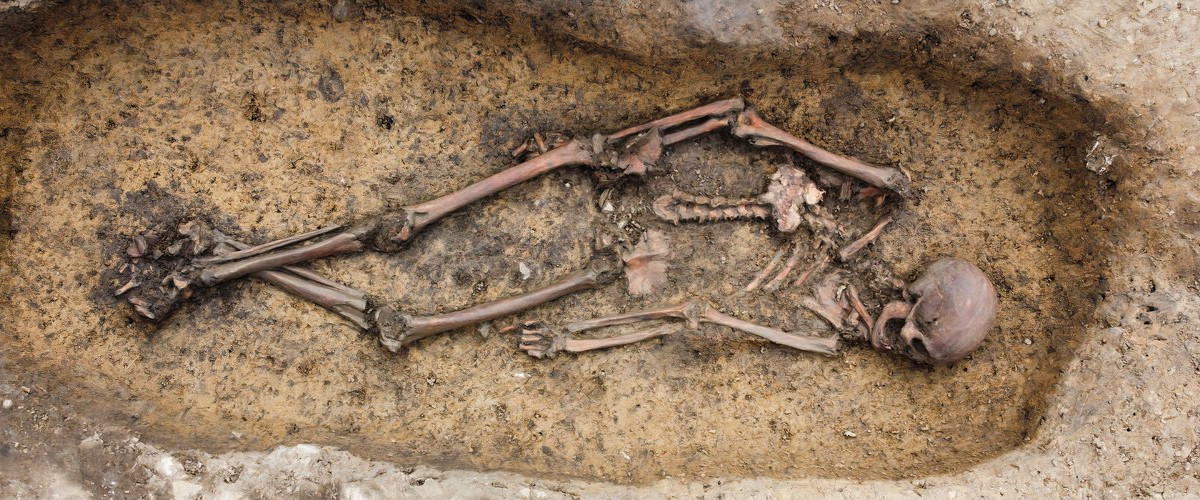
In the realm of ancient civilizations, few narratives evoke as much intrigue as those shrouded in mystery. Recently, a groundbreaking archaeological discovery has added a vibrant chapter to the Viking saga. A dedicated team of Danish researchers has unearthed 50 astonishingly well-preserved Viking skeletons at a burial site near Odense, Denmark.
This remarkable find not only promises to illuminate the everyday lives and customs of the Norse people during the Viking Age but also offers a fresh perspective on a pivotal era in European history.
Six months of meticulous excavation near Denmark’s third-largest city have yielded a treasure trove of Viking-era artifacts alongside the skeletal remains. While Odense remains less traversed by tourists compared to other European locales, this discovery could soon change the city’s status, positioning it as a key destination for those seeking to delve into the Viking past.
Situated in the village of Aasum, just 5 kilometers northeast of Odense, this burial ground has quickly emerged as one of the most significant archaeological finds in recent memory.
Unearthing Viking History
The Burial Ground Provides a Window into Norse Life
This burial site, nestled in a region rich with Viking heritage, offers an extraordinary glimpse into the lives of ordinary Norse individuals. Unlike previous discoveries that frequently spotlighted warrior burials or the elite, this site appears to represent a more comprehensive cross-section of Viking society.
The exceptional preservation of the skeletons provides an unparalleled opportunity to examine Viking physiology, health, and lifestyle with remarkable detail. Although Odense may not currently rank among the top destinations for exploring Norse history, this excavation has the potential to elevate its profile.
|
Excavation Duration |
Six months |
|---|---|
|
Site Location |
Aasum village, 5km northeast of Odense, Denmark |
|
Most Standout Feature |
Exceptionally well-preserved skeletons |
Significance of the Discovery
The 50 Skulls Found Have Changed Archaeologists’ Understanding of Viking Culture
This discovery holds significant implications for the study of Viking culture. The remarkable condition of the remains allows for exhaustive scientific analyses, including potential DNA studies. The burial ground contains skeletons of men, women, and children, offering a well-rounded view of Viking community dynamics. Such organization can often be misunderstood in historical narratives surrounding Viking life.
Accompanying the skeletons, an array of grave goods has emerged, shedding light on Viking material culture and their trade networks.
While the excavation site is not yet open to the public, the Museum Odense plans to create an exhibit to showcase these extraordinary findings. In the meantime, visitors can explore the nearby Viking ring fortress in central Odense, which dates to the same period as the newly discovered burial ground.
|
Preservation Quality |
Full skeletal preservation, including fingers and toes |
|---|---|
|
Population Diversity |
Men, women, and children represented |
|
Associated Artifacts |
Knives, glass pearls, brooches |
Denmark’s Discovery Marks Unique Scientific Opportunities
Advancing Archaeological Techniques Helped Make This Latest Discovery Possible
The state of preservation of the Viking skeletons paves the way for innovative scientific inquiry. Researchers are eager to conduct DNA analyses on the remains, which could unveil kinship ties, migration patterns, and genetic diversity within Viking populations.
Such well-preserved bones also facilitate detailed studies of bone composition, revealing insights into Viking health, diet, and daily activities. Isotope analysis of bones and teeth may further illuminate these individuals’ diets and movements.
|
Type of Study |
What the Results Can Tell Us |
|---|---|
|
DNA Analysis |
Genetic diversity in the population |
|
Osteological (Bone Composition) Studies |
Insights into Viking health and lifestyle |
|
Isotope Analysis |
Migration patterns |
Burial Practices and Social Hierarchy
Unveiling Viking Society
The burial site has revealed a tapestry of burial practices, suggesting an intricate social hierarchy within the Viking community. Common pilgrimages to burial mounds like those at Lindholm Høje demonstrate the continued interest in Viking funerary traditions, which often remain undisturbed.
Some individuals were laid to rest without grave goods, while others were accompanied by valuable items such as brooches and pearl necklaces. Notably, a high-status woman was discovered buried in a wagon—a practice associated with the upper echelons of Viking society.
The coexistence of both inhumations and cremations hints at varying funerary customs within this small community.
|
Artifact Uncovered |
What It Tells Us |
|---|---|
|
Various Burial Goods |
Social stratification was present in the village. |
|
Woman Buried in a Wagon |
High-status individuals were granted special items for their burial. |
|
Evidence of Both Inhumations and Cremations |
Burial traditions were diverse within the community. |
Trade and Cultural Connections
The Burial Ground Reveals More Details About Viking Community Relationships and Interactions
One captivating aspect of history is the interconnectedness of ancient societies. The artifacts uncovered alongside the Viking skeletons provide compelling evidence of expansive trade networks.
Notably, brooches from the island of Gotland in Sweden have surfaced, suggesting not just long-distance trade but also cultural connections. The discovery of glass beads and other luxury items indicates that this community enjoyed access to goods beyond Denmark’s borders.
These artifacts construct a narrative of a well-connected Viking society, rich in cultural and economic exchanges.
|
Evidence |
Conclusions |
|---|---|
|
Various Trade Goods |
The settlement likely had a trade network extending as far away as Sweden. |
|
Luxury Items |
The villagers possessed tradeable items that held value in their time. |
|
Trade Locales |
Goods uncovered are not confined to Denmark, suggesting a network of sea-based trade routes. |
Chronology and Historical Context
Based on the artifacts and burial customs, archaeologists have dated this site to between 850 and 970 CE, anchoring it firmly within the Viking Age—a period marked by Norse exploration, trade, and settlement across Europe.
This burial ground offers a snapshot of Viking life during a dynamic era, providing essential context for understanding broader historical currents and events of the time. As researchers painstakingly analyze the Viking skeletons and artifacts, anticipation builds for further revelations about Viking life, culture, and society. This monumental discovery holds the promise not only of enriching our understanding of the Viking Age but also of illuminating the lives of the individuals who helped shape the early medieval narrative of Europe.
