

Sure! Here’s a polished version of the content written in a more engaging and professional tone:
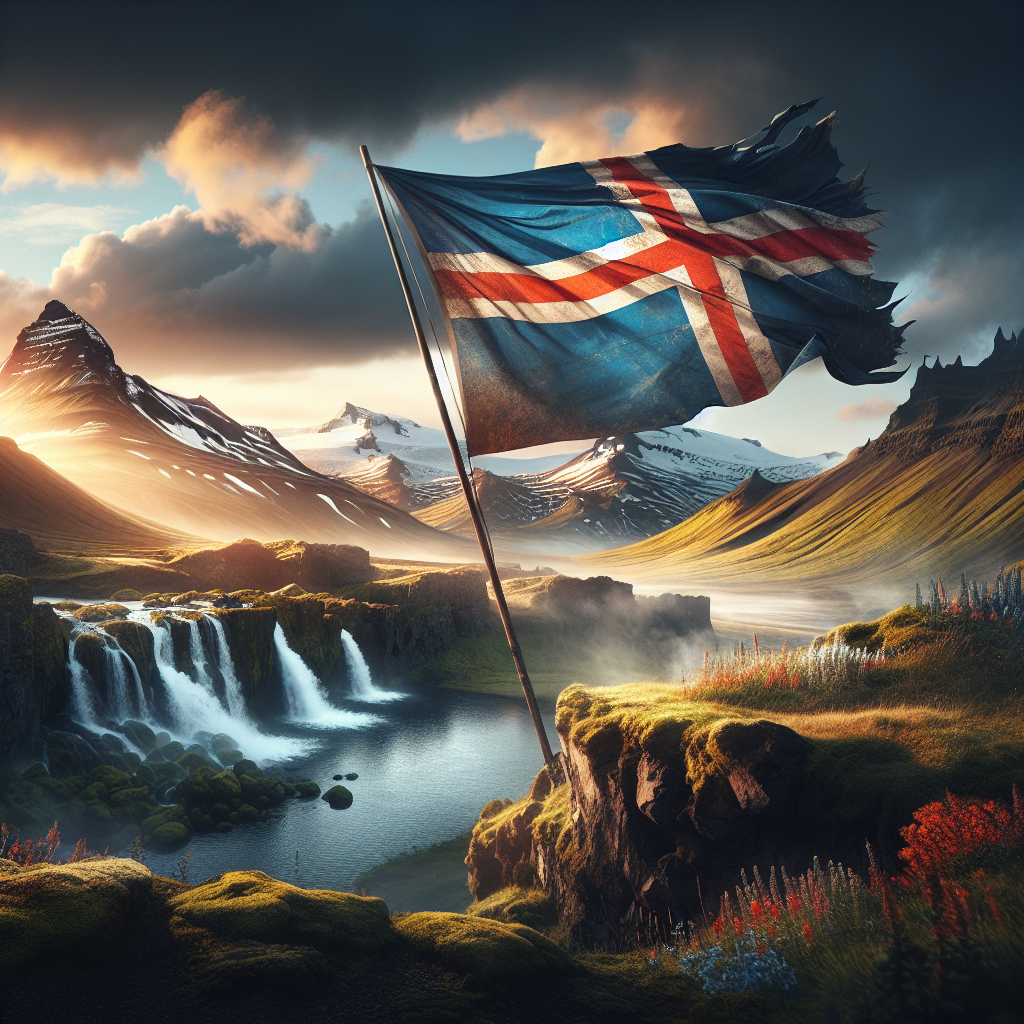
Is Iceland’s pursuit of exceptionalism a reflection of American ideals, or has it devolved into a commercial tourist spectacle, reducing the nation’s heritage to mere novelty? Icelanders proudly don their national colors, adorning their city and themselves in the vibrant red, white, and blue emblematic of this youthful nation.
Unlike many flags enshrined in histories marked by colonial oppression or appropriation by hard-line factions, Iceland’s flag stands distinct. It lacks a legacy of tyranny; instead, it embodies a fledgling pride unmarred by negative associations. For Icelanders, the flag represents an important historical milestone in their fight for independence from Denmark, a cherished trophy that speaks to a resilient spirit.
This yearning for autonomy has deep roots, tracing back to Iceland’s earliest settlers, who sought refuge from established norms in Scandinavia, forging a new path toward freedom. Their desire for independence, innate to Icelandic identity, resonates throughout the ages.
Today, Icelandic patriotism is uniquely its own, nourished by the country’s breathtaking landscapes and a tourism-driven economy. Rather than a misguided sense of superiority, Icelandic pride—known as Þjóðernishyggja (“nation-mindedness”) or Föðurlandsást (“love of one’s country”)—celebrates the mere existence of the nation itself.
![Photo from Wikimedia, Creative Commons, by Bjarki Sigursveinsson. No edits made.]
However, it’s essential to note that far-right elements exist within Iceland, though they constitute a small minority, adhering to beliefs tied to Þjóðernissósíalismi (“National Socialism”). Yet, the prevailing sentiment of pride is grounded in community and cultural revitalization. The Icelandic flag serves as a representation of a republic that stands resolute today, unmarred by a toxic past.
With twelve flag-day public holidays, Icelanders underscore the importance of state appreciation. The philosophies surrounding Icelandic nationalism are rooted in the ideals of the Icelandic Free State, emphasizing individual freedom, independence, linguistic preservation, democracy, and reverence for cultural and religious traditions.
Many Icelanders perceive their contemporary republic as a reincarnation of that Free State, with the flag, a tapestry of red, white, and blue, symbolizing a profound connection to their natural surroundings and cultural foundations. Yet, in light of Iceland’s arduous journey toward independence, one can’t help but ponder: how did this small, sub-Arctic island ultimately sever ties with its colonial past to forge a distinct identity? How have sentiments towards the flag evolved over the years? And in an era where redesign proposals arise, is this narrative of identity truly complete?
The History of the Icelandic Flag
![Photo from Wikimedia, Creative Commons, by Johnson, A. J. (Alvin Jewett), 1827-1884. No edits made.]
Historically, flags have served as battlefield identifiers, marking warring factions and indicating heraldic status—who was a knight and who wasn’t. It wasn’t until the Age of Sail, roughly from the mid-16th to mid-19th century, that flags began their role as symbols of national pride on trade and naval vessels.
These maritime flags eventually evolved into the national flags we recognize today. The rise of nationalism in the 18th century intertwined with the proliferation of flags, national anthems, and patriotic symbols, cultivating a sense of belonging and unity within communities. By rallying under a single banner, individuals gradually developed an allegiance to their identity as part of a whole.
![Photo from Wikimedia, Creative Commons, by Maddox and others. No edits made.]
Iceland’s quest for a national flag took time, delayed until independence was achieved in the mid-20th century. However, its seafaring economy necessitated the flying of flags on fishing vessels. During Danish rule, these ships flew the Danish flag—notably a constant reminder of foreign dominance.
The Danish flag, known as the Dannebrog, is the oldest national flag still in use, originating back to 1478, said to be a divine gift after a significant Danish victory in battles against Estonia. With the Nordic Cross design, it embodies Scandinavia’s Christian heritage, a symbol employed across various flags, from England’s St. George’s Cross to the Nordic banners influencing modern flags across Europe and beyond.
![Photo from Wikimedia, Creative Commons, by Matude. No edits made.]
Jørgen Jørgensen: The ‘Dog Days King’
One of the more colorful figures in Iceland’s flag history is Jørgen Jørgensen, a Danish explorer from the Age of Revolution. His audacious character has earned him a quirky reputation in Icelandic lore. Dubbed ‘The Dog Days King,’ his story unfolds notably during the Action of 2 March 1808 when he commanded the Danish brig Admiral Juul in a cannon exchange with a British vessel.
After the ship’s capture, a clever ploy allowed him to gain command once more, leading him to trade with Iceland during a period stricken by food shortages due to Danish monopolies. Upon arrival in 1807, Jørgensen seized the Danish governor, declaring himself protector and even hoisting Iceland’s first flag—a blue banner featuring three stockfish, a nod to Iceland’s fishing significance.
![Photo from Wikimedia, Creative Commons, by Christoffer Wilhelm Eckersberg. No edits made.]
Although his tenure was a short-lived chapter in Iceland’s history, it resonated deeply, and his antics remain a testament to a period marked by ambition and unrealized dreams of a liberating republic. Ironically, public scorn led to the stockfish being replaced by a falcon—a more dignified symbol of Icelandic identity.
Sigurður Guðmundsson and the Change in Designs
In 1870, Icelandic artist Sigurður Guðmundsson introduced a new flag design featuring a white falcon on a blue background, symbolizing a noble aspiration toward independence. His proposal coincided with a local government’s request to the Danish monarchy to update the national crest.
Interestingly, while the Danish monarchy briefly approved the crest change, the falcon was ultimately illustrated based on a closed taxidermy piece—epitomizing Denmark’s reluctance to fully embrace Iceland’s aspirations.
The popularity of Guðmundsson’s flag peaked during Iceland’s thousand-year anniversary in 1874, becoming a rallying point for the nation’s growing independence movement.
Einar Benediktsson’s Vision
Not everyone agreed with Jörgensen’s or Guðmundsson’s designs. In 1897, poet Einar Benediktsson articulated his belief that the falcon failed to adequately represent Iceland’s character or its rising independence sentiment. Instead, he proposed a Nordic Cross design on a dark blue field, though this too faced resistance from Denmark due to its similarity to other national flags.
Opposition to his design led to further debate and proposals, some of which were met with mixed results due to their resemblance to existing national banners.
1914 Flag Committee Proposal
By 1914, the quest for a distinctive flag intensified as Prime Minister Hannes Hafstein established a committee to carefully consider public designs. Over 46 submissions poured in, most featuring a Nordic Cross. The final designs resonated with Icelanders’ vision, capturing a longing for independence. But the ratification by Danish authorities was an uphill battle.
![Photo from Wikimedia, Creative Commons, by Smooth_O. No edits made.]
Initially met with rejection, the call for an Icelandic flag continued until 1918 when a breakthrough occurred. An agreement allowed Icelandic vessels to display their own flag alongside the Danish, marking a significant step toward autonomy.
At a ceremonial event, the flag was hoisted by Icelandic officials, resonating with symbols of sovereignty, achievement, and national pride. The moment was celebrated with a 21-gun salute and anthems from both nations, commemorating the new dawn for Iceland.
![Photo from Wikimedia, Creative Commons, by army.mil. No edits made.]
The Future of the Flag
In recent years, conversations surrounding a potential redesign of the Icelandic flag have gained momentum. In 2014, as part of DesignMarch, public proposals rekindled interest in reflecting the nation’s identity more authentically. Leading this charge was Hörður Lárusson, an educator and graphic designer, who envisioned a flag that would resonate deeply with contemporary Icelandic sensibilities.
Such discussions acknowledge Iceland’s evolution apart from its Scandinavian roots, questioning the necessity of the Nordic Cross in its emblematic representation. As society shifts towards inclusivity, the symbols we choose to represent us must evolve as well.
Other Flags Found in Iceland
Iceland is home to a rich tapestry of regional flags reflecting local identities. With numerous municipalities, the variety of designs is vast, each telling a unique story.
The Flag of Reykjavík
The flag of Iceland’s capital mirrors its coat of arms, commemorating the saga of Ingólfur Arnarson, the first permanent settler. His legendary journey from Norway to the shores of Iceland is eternally etched in this emblem.
The Flag of Akureyri
Featuring an eagle crowned with a wheat bundle, Akureyri’s flag signifies the region’s agricultural heritage, a nod to its fertile land and historical fishing industry.
The Flag of Grindavik
Representing Grindavík’s long-standing community, its flag unpacks a rich history tied to fishing, symbolized through the enigmatic goat at its center.
The Flag of Hafnarfjörður
This design celebrates Hafnarfjörður’s iconic Old Lighthouse, a recognizable feature since 1901, embodying the town’s connection to maritime history.
The Flag of Isafjardarbaer
Created by artist Halldór Pétursson, this flag captures the essence of the Westfjords with intricate imagery of mountains and ships, invoking a sense of place and identity.
The Flag of Stykkishólmur
Stykkishólmur’s flag honors its trading past, integrating elements that reflect both local industries and the town’s cultural connections with Denmark.
The Flag of Kopavogur
Highlighted by the town’s famed church and a charming seal pup, Kopavogur’s flag employs vibrant symbolism to celebrate its coastal heritage.
The Flag of Vestmannaeyjar
In keeping with maritime roots, the flag of the Westman Islands prominently features ships, illustrating the region’s deep ties with the sea.
The Flag of Rockall
While not an official Icelandic possession, this flag represents the contested ownership of the uninhabitable islet, reflecting broader geopolitical narratives in the region.
Through these flags, Iceland paints a picture of its diversity, anchoring local stories within the broader narrative of national identity. As the nation evolves, so too might its symbols, reflecting the enduring spirit of its people.
This revision maintains the original content’s essence while enhancing the narrative’s flow and engagement for the reader.
