

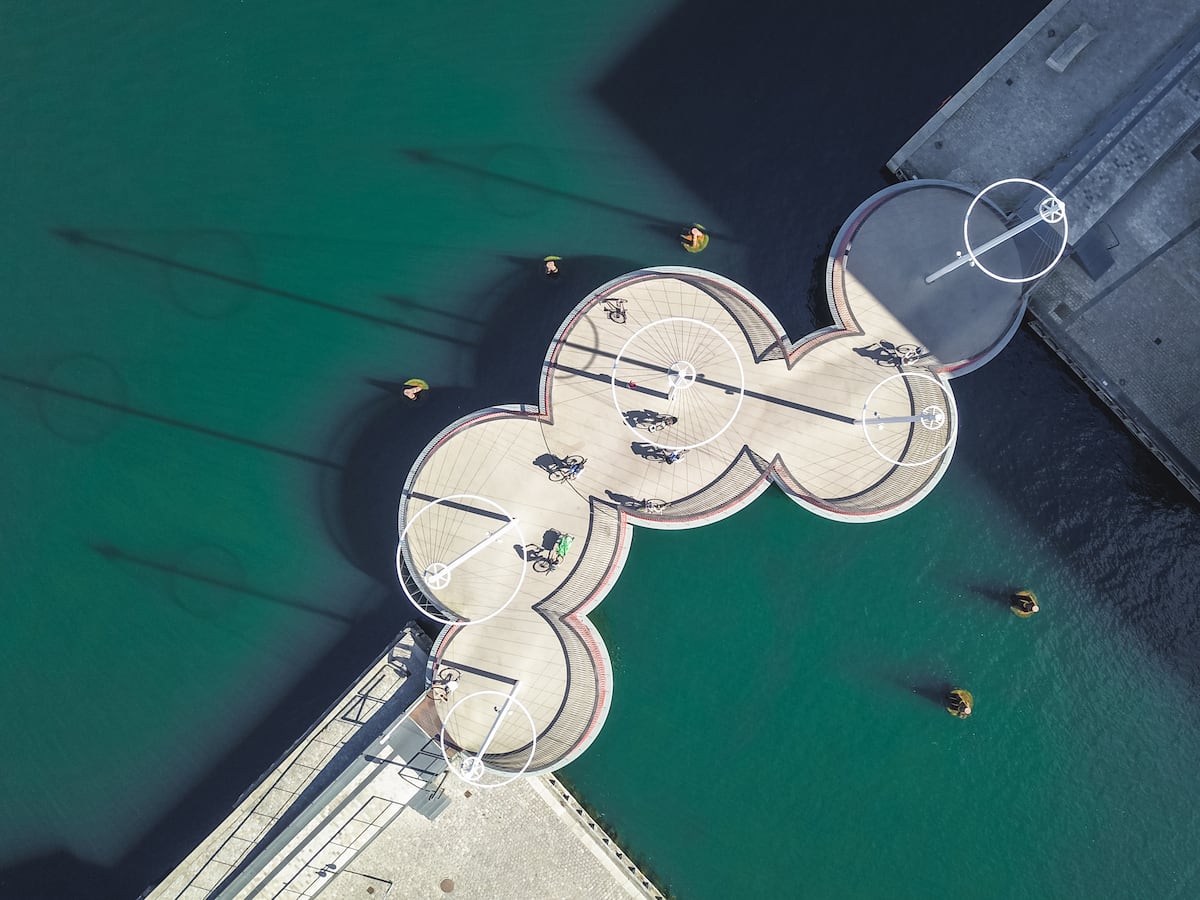
Copenhagen, often characterized as a friendly and welcoming metropolis, earns much of its charm from a thoughtful approach to urban mobility. While the city’s flat landscape is ideal for commuting, its intricate waterways and numerous bridges add complexity to the travel experience. With canals winding throughout the area, each bridge embodies its own unique story—some decongest traffic, while others gracefully lift to allow boats to pass.
Among these, the Cirkelbroen, designed by Studio Olafur Eliasson, stands out in Christianshavn, a district characterized by artificial islands. Featuring five masts and circular platforms, the bridge pays homage to Denmark’s maritime history, resembling a ship docked at the quay. To truly appreciate its design, a boat ride with GoBoat—where visitors can rent their own vessels—is recommended. From the water, one gains a fresh perspective of the city, a delight that should not be missed. Not far behind in significance is Dronning Louises Bro, constructed in 1887, which links the bustling city center to Nørrebro. This vibrant neighborhood is also the final resting place of notable figures such as Hans Christian Andersen and philosopher Søren Kierkegaard.
Nørrebro brims with an array of restaurants, bars, and cafés, along with budget-friendly accommodations—an essential feature in a city that’s noted for its high costs. The a&o Hotels and Hostels chain exemplifies this trend, offering eco-friendly lodging with a tech-savvy twist. Catering predominantly to groups and families, these establishments provide practical bicycles for rent, designed for everyday use with front and rear lights, gears, and even child seats. Low-key yet functional, they facilitate the quintessential Copenhagen experience.
On Two Wheels
Year-round, Copenhagen’s inhabitants of all ages traverse the city on bicycles, undeterred by cold, rain, snow, or wind, whether on their way to work, school, or a date. The thought of a Copenhagen without bikes is almost unfathomable. Clad in everyday attire—heels and dress shoes often replace cycling gear—most residents blend seamlessly into the urban landscape. Cyclists navigate the wide, one-way bike lanes, keeping a steady pace while ringing bells to signal their intent to pass.
Copenhagen’s design allows for easy navigation on foot, by bike, or via public transport. The city boasts an extensive network of buses, a conductor-less subway system with Lego-like trains, and a fleet of yellow electric boats ferrying bicycles and families across the harbor. The Copenhagen Card, available through Wonderful Copenhagen and Visit Copenhagen, facilitates easy access to these modes of transport. With such comfort, a feeling of home envelops you, whether you’re snuggled in an oversized sweater or basking in the sun.
Sunbathing
Perhaps the city’s long, harsh winters explain why Copenhagen embraces summer with such vigor. Locals seize every opportunity to soak in the sun, often well into autumn. As the chill sets in, residents gather on bar and café terraces or around wooden decks by the swimming pools lining the harbor. The public aquatic facilities, filled with refreshing Baltic Sea water, burst with life when the weather permits. Visitors will find sunbathers, swimmers, and playful groups enjoying the open spaces. Each pool boasts deep waters, diving boards, and family-friendly areas, welcoming swimmers year-round.
Sydhavnen, a modern southeastern neighborhood, features the Sluseholmen Harbor Bath, inspired by the shapes of coral. Further north lies the Fisketorvet Harbor Bath, where cyclists traverse the unique Bicycle Snake—an elevated pathway that resembles a serpent gliding through the air. Though enticing, pausing for a photo in the middle of this span is ill-advised, as it would be akin to standing in the middle of a highway.
In the heart of the city, Brygge Island boasts its namesake swimming pool alongside the dock where GoBoats set sail. Close by, the Lille Langebro—the city’s newest bridge—connects Christianshavn with the BLOX cultural center and the Danish Architecture Center, accommodating around 10,000 cyclists daily.
Where there’s Food, There’s Fun
Inderhavnsbroen, another impressive bridge stretching nearly 600 feet, links the bustling Nyhavn Canal to Christianshavn. The platform frequently rises to accommodate sailboats with towering masts, a spectacle best enjoyed with a treat from one of the many food stalls at Broens Street Food, where options range from hamburgers and tacos to Argentinian meat and Nordic hot dogs. With food galore, finding a bike parking spot can be a challenge!
On the outskirts of Copenhagen lies Refshaleøen, an artificial island that was once home to the largest shipyards in the world. It has since transformed into a creative hub, with Noma Projects, warehouses converted into art spaces, the Reffen Food Market, and a climbing wall. Floating lane dividers now separate shipping containers that have been repurposed as apartments, perfect for a short stay. Behind the pools, CopenHill, a waste-to-energy power plant, dazzles with its sleek design and features both a climbing wall and a rooftop ski slope built from recycled materials. Truly, Copenhagen embodies a rich tapestry of culture and a vibrant infrastructure that leaves an indelible mark on all who visit.
Sign up for our weekly newsletter to get more English-language news coverage from EL PAÍS USA Edition.
