

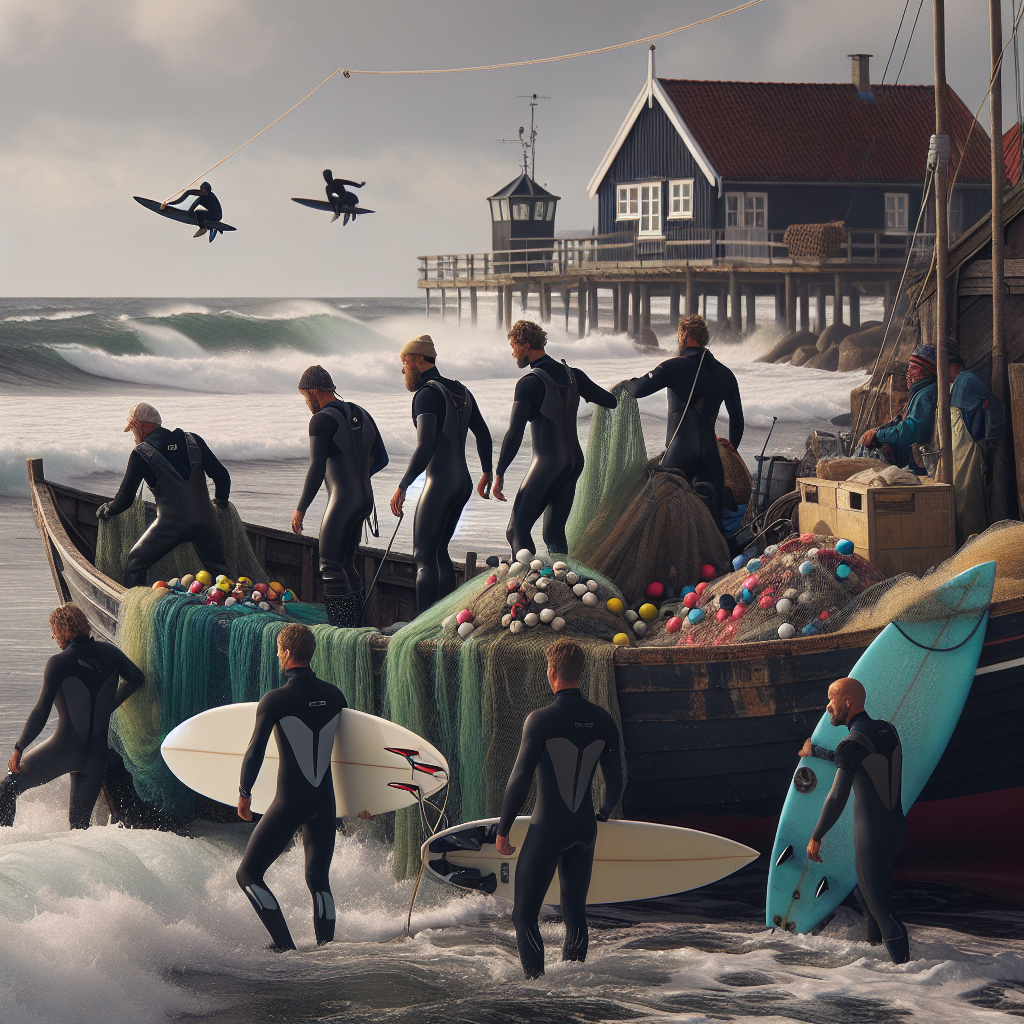
Klitmøller: From Fishing Village to Surfing Haven
Klitmøller, once a humble fishing village, has blossomed into a vibrant and exhilarating surf destination, inviting newcomers to immerse themselves in the expanding community of Cold Hawaii.
For Mai Knudsen, the transformation began when she turned 33. At that time, she was a civil engineer in Copenhagen, seemingly at the pinnacle of her career. Yet, she felt anything but content. “Work was so stressful,” she recalled. “I spent my weekends in a haze, just to brace myself for Monday. I knew my life could be different.”
Her pivotal moment came during a visit to Klitmøller. It didn’t take long for her to exchange the pressures of city life for a home by the sea, overlooking the dunes and the surf. Inspired by a long-held dream, she converted the ground floor of her house into a charming pancake café. Today, a decade later, Knudsen runs Kesses Hus for half the year, only to close it during the winter months to embrace the waves.
“I knew I could really live here,” she said, reflecting on her decision.
Knudsen is part of a burgeoning community in Cold Hawaii, where many have fled the confines of skyscrapers and congestion for the freedom of the coastline. The once-sleepy northwestern coast of Denmark is now alive with galleries, boutiques, organic bakeries, and co-working spaces—many of which have been established by enthusiastic newcomers from over 20 different countries.
In the aftermath of the pandemic, a fresh wave of young South Africans, Brazilians, Australians, and Germans have found their way to this idyllic locale, eager to work remotely and, for some, raise families. Among them are doctors, lawyers, and even the renowned Danish artist Jeppe Hein, who has traded Berlin’s urban rhythm for the local schools, teaching children the art of painting their breath.
In Klitmøller, a vibrant tapestry of cultures and professions is weaving together, all under the generous embrace of the Atlantic’s waves.
