

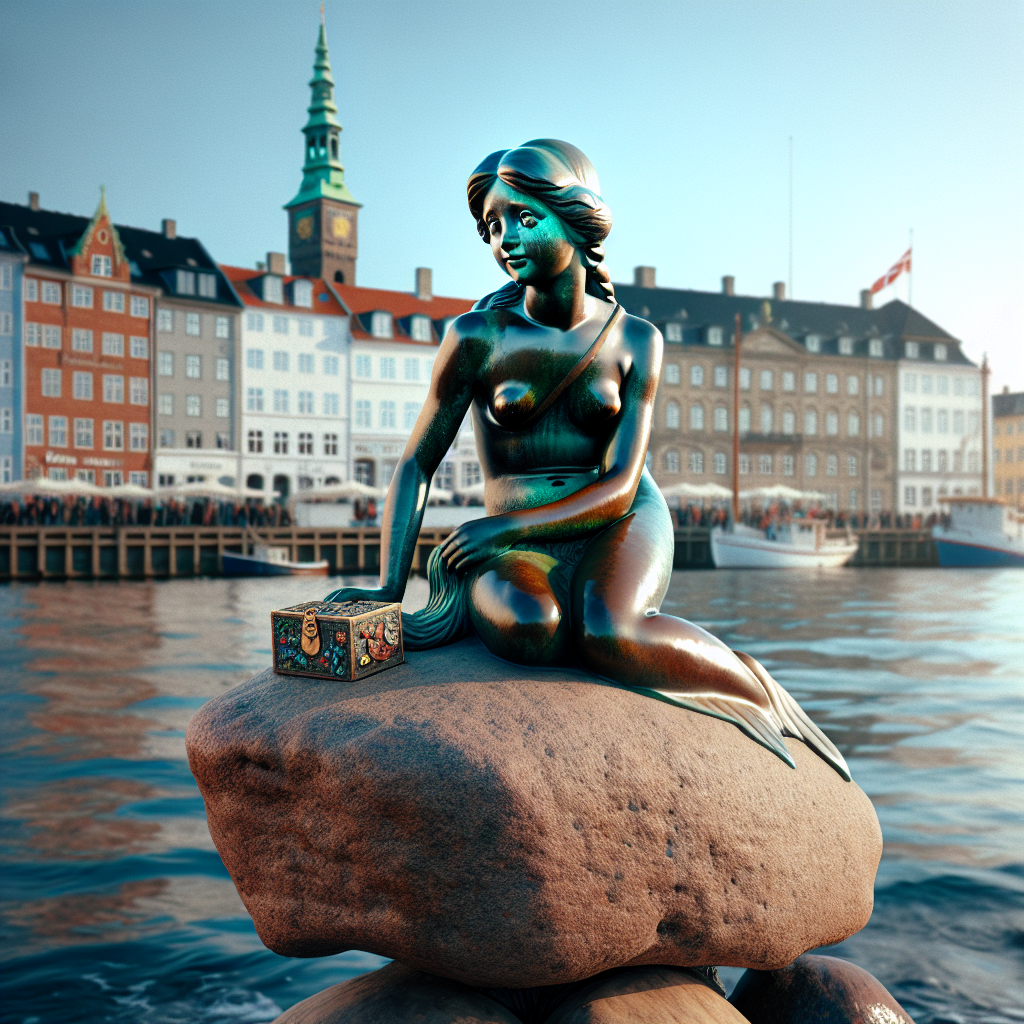
Overlooking the tranquil waters of Copenhagen harbor, the Little Mermaid statue stands as a poignant symbol of love and sacrifice, captivating visitors with its enchanting story and rich cultural heritage
While Norway dazzles with its stunning landscapes and deep-rooted traditions, its neighbor Denmark offers an iconic gem that draws travelers from near and far: Copenhagen’s Little Mermaid statue.
This emblematic piece of Danish folklore rests gently on the shores, providing a tangible connection to the shared myths and artistic legacies of the Scandinavian region.
During a recent mini-cruise between Oslo and Copenhagen with Go Nordic Cruiseline, I had the chance to witness this beloved statue firsthand during a six-hour stop in the Danish capital.
Despite the throngs of tourists, it was a thrilling experience to finally behold this landmark. Was it worth it? That’s for each visitor to decide!
Introducing the Little Mermaid
For over a century, this small yet profoundly meaningful bronze statue has captivated the hearts of those who venture to Copenhagen. Despite its modest size, it has attained the status of one of Denmark’s most celebrated landmarks.
Denmark Travel Resources: Things To Do In Copenhagen – Book Hotels – Book Guided Tours of Copenhagen – Car Rental – Travel Insurance
Perched gracefully upon a rock and gazing out over the horizon, the Little Mermaid statue, created by Edvard Eriksen, embodies the enchanting tale of a mermaid longing for a human existence.
Inspired by Hans Christian Andersen’s 1837 fairy tale, this statue not only captures the mermaid’s dream of belonging among humans but also stands as a significant cultural marker for Denmark.
Andersen’s narrative is notably poignant, deviating from the typical fairy tale formula to weave a tale rich with tragedy and yearning for a joyous outcome.
The story of a young mermaid who sacrifices her voice and endures great suffering for love—and the hope of an immortal soul—has transcended literature to become a cultural icon, bolstered by adaptations such as Disney’s beloved 1989 animated film and its recent live-action remake.
These adaptations have ensured that the tale remains cherished by generations around the world.
The Little Sculpture with the Big Story
In contrast to the grandiosity of more monumental sculptures like Rio de Janeiro’s Christ the Redeemer or New York’s Statue of Liberty, the Little Mermaid statue is a humble figure, measuring just over four feet tall.
This petite stature often surprises visitors accustomed to larger commemorative works, but its size belies the immense cultural weight it carries.
Situated on a rock along the Langelinie promenade—a popular walking route stretching from the Øresund coast to the historic Kastellet citadel—the statue is strategically located near the DFDS ferry terminal and various cruise ship docks.
This prime positioning makes it an easy highlight for tourists, who often crowd around to capture a moment with this iconic figure.
The Origins of the Statue
The conception of the Little Mermaid statue can be credited not to Andersen or Eriksen, but to Carl Jacobsen, heir to the Carlsberg brewery fortune.
Jacobsen, a passionate art collector and philanthropist, was so moved by a ballet adaptation of Andersen’s tale that he commissioned the statue’s creation.
Originally, ballerina Ellen Price was to serve as the model for the mermaid; however, when she faltered at the prospect of public scrutiny, Eriksen used Price’s visage but turned to his own wife’s form for the body.
Since its unveiling in 1913, this beloved statue has been moved only once—remarkably to Shanghai for the Danish Pavilion at Expo 2010, a testament to its international allure.
A Site of Cultural Expression and Protest
Beyond its status as a tourist attraction, the Little Mermaid statue has also emerged as a focal point for political and social discourse. Its prominence and symbolic resonance make it a prime target for protests.
In a striking display of activism, the day after Denmark’s national men’s football team qualified for the 2022 World Cup in Qatar, the statue became a backdrop for human rights advocates.
While Danish media and fans celebrated the qualification, the statue was donned with a national team hat and a sign reading, “15,000 dead in Qatar, hooray for the World Cup,” a stark contrast to the celebratory atmosphere.
This incident is part of a larger narrative, as the Little Mermaid has become a canvas for various social and political messages over the years.
It has endured two decapitations and has been adorned with statements supporting anti-whaling, veganism, and a range of international issues, including protests related to Iraq, Hong Kong, and Ukraine.
Such acts of vandalism underscore its significance not only as a cultural icon but also as a beacon for global advocacy.
Local authorities have debated relocating the statue for its protection, but it remains firmly rooted in its original, accessible location—reflecting a commitment to safeguard cultural heritage while recognizing the complex dynamics of art and public discourse.
Set against the scenic backdrop of Copenhagen harbor, the Little Mermaid stands proud, embodying not just Danish heritage but also the universal themes of love, sacrifice, and yearning that resonate across cultures and eras.
How to Get to the Little Mermaid
The statue is conveniently located just off the Langelinie promenade, a scenic 20-minute stroll from Nyhavn, where visitors can soak in the stunning sights, passing landmarks such as The Royal Danish Playhouse and Amalienborg Palace.
Denmark Travel Resources: Things To Do In Copenhagen – Book Hotels – Book Guided Tours of Copenhagen – Car Rental – Travel Insurance
From Copenhagen Central Station, it’s just three train stops to Østerport Station, followed by a 15-minute walk alongside Kastellet’s historic moats to the statue. Alternatively, visitors might choose to rent a bike, catch a local bus, or take advantage of the hop-on hop-off sightseeing buses that include a stop at this iconic site.
For a more leisurely experience, consider joining a guided sightseeing tour of Copenhagen. Instead of braving the crowds along the shoreline, why not book a classic canal tour?
This two-hour guided cruise through the city’s waterways showcases notable landmarks including Amalienborg Palace, the impressive Copenhagen Opera House, and, of course, the Little Mermaid statue.
Another delightful option is to explore the city on two wheels. A two-hour Copenhagen bicycle tour covers 90% of the city’s highlights, including a visit to the Little Mermaid.
