

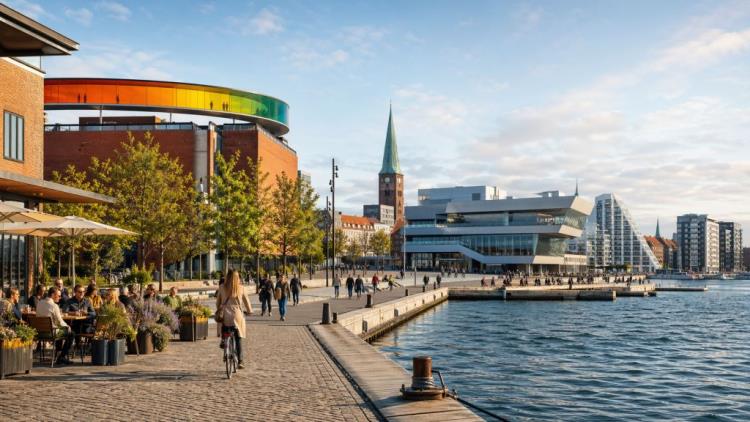
Aarhus in Denmark: A Tranquil Scandinavian Retreat of Museums, Coastlines, and Footloose Exploration
Nestled on the eastern shore of Jutland, Aarhus emerges as Denmark’s second-largest city and a captivating alternative to the bustling streets of Copenhagen. For travelers seeking a Scandinavian getaway unencumbered by haste, Aarhus offers a delightful blend of museums, innovative architecture, youthful energy, delectable cuisine, and scenic coastal promenades. With its manageable size, the city invites visitors to savor each moment—whether engaging in a cultural city break, enjoying a serene seaside weekend, or indulging in gastronomic delights. Here, days unfold at a leisurely pace, marked by coffee breaks, explorations of captivating museums, and views of the glistening bay. For those contemplating a longer stay, accommodations near the city center or the harbor provide convenient access to numerous attractions, either on foot or by bicycle.
Unlike Copenhagen, renowned as the first stop for many international tourists, Aarhus asserts its charm not through sheer size, but through a harmonious rhythm. Data from the Danish statistical system confirms Aarhus Municipality’s status as one of the nation’s largest urban centers, complementing its role as a hub of education, culture, and economy. This unique mix fosters a vibrant atmosphere where historic streets, museums, and cafes seamlessly transition into new residential blocks by the sea, public libraries, and inviting promenades. Visitors to Aarhus find not just a series of attractions, but a city in transformative flux—one that retains its northern clarity, functionality, and simple beauty.
A City Where Museums, Harbor, and Daily Life Intertwine
Positioned along the serene shores of Aarhus Bay, the city boasts a distinct character that sets it apart from the capital. The sea is not merely a backdrop; it plays an integral role in everyday life, visible from its modern neighborhoods, museum terraces, bustling harbor, and accessible beaches. This unique aspect allows travelers to effortlessly blend cultural experiences with aquatic relaxation. In a single day, one can explore an art museum, meander through the historic downtown, enjoy a meal at a local café, and then stroll toward the harbor or beach. Such accessibility enhances Aarhus as a rewarding destination, particularly for those seeking a taste of Scandinavia without the logistics of larger cities.
The compact city center makes it easy for visitors to navigate on foot, with key attractions naturally linked. Starting at the shopping streets or the cathedral, one can wander to the historic Latin Quarter, examine museums, or enjoy green spaces—all while being guided towards the modern harbor area. Cycling is a quintessential aspect of Aarhus life, with local resources emphasizing its ease of use; pedaling through the city reveals charming sights at a thoughtful pace, allowing for spontaneous stops rather than a hurried checklist of ‘must-sees.’
Aarhus distinguishes itself through a tapestry of experiences, devoid of a singular emblem overshadowing all others. ARoS, Den Gamle By, Moesgaard Museum, Dokk1, Aarhus Ø, and the Latin Quarter collectively paint a rich portrait of a city layered in history, modern architecture, coastal recreation, and the everyday rhythms of its residents. Aarhus invites exploration as distinct from the frenetic energy of Copenhagen—it stands as a unique destination with its own identity and tempo.
ARoS: A Kaleidoscopic View of the City
The foremost cultural landmark in Aarhus, ARoS Aarhus Art Museum, has become a visual icon for the city, proudly showcasing modern and contemporary art. At its pinnacle lies the striking Your rainbow panorama, an innovative glass installation by Danish-Icelandic artist Olafur Eliasson. Visitors can stroll through a circular walkway bathed in vibrant hues, offering new perspectives of the city—each color framing a unique view, transforming a simple observation into a lively exploration of light and perception.
Opened in 2011, the installation is not just a charming photo opportunity; it embodies a deeper understanding of place and context. As ARoS prepares for an exciting expansion set for 2026, the museum promises evolving presentations and new exhibitions, underscoring its status as a dynamic cultural institution rather than a static attraction.
ARoS serves as an excellent starting point for comprehending Aarhus, intertwining art, architecture, and urban vistas. From the rooftop, newcomers can orient themselves within the cityscape—eyeing the bustling center, the harbor’s bustle, and the stark lines of contemporary architecture leading to the serene expanse beyond. This connection to public cultural spaces aligns perfectly with Aarhus’s essence, fostering a sense of community and interaction.
Den Gamle By: An Urban Journey Through Danish History
While ARoS showcases the contemporary facet of Aarhus, Den Gamle By immerses visitors in a living testament to Denmark’s historical evolution. This open-air museum invites exploration through a curated tableau of houses, shops, and workshops, each presenting a chapter of Danish life through the ages. Unlike conventional museums where artifacts hide behind glass, Den Gamle By thrives on interaction, allowing guests to stroll through the streets, peer into homes, and observe the everyday details that illustrate a society’s transformation.
Highlighting the experiential nature of history, the museum engages visitors through sensory encounters—smells, sounds, and textures come together to evoke the spirit of bygone eras. Not limited to the distant past, it also reflects more recent history, weaving together narratives from the late 20th and early 21st centuries. This approach turns Den Gamle By into a treasure trove for families, history buffs, and curious travelers eager to grasp the essence of Denmark beyond mere surface symbols.
Conveniently located close to the city center, the museum can be easily incorporated into a day filled with other adventures. Nearby green spaces, such as the Botanical Garden, provide perfect spots for leisurely breaks. With proximity to cafés and shops, visitors can plan their explorations at a relaxed pace, enhancing their overall experience in Aarhus.
Moesgaard Museum: Where Archaeology Meets Architectural Splendor
Situated slightly outside the city center, Moesgaard Museum stands as a vital cultural gem in the broader Aarhus region. With focuses on archaeology and anthropology, the museum captivates with its striking architecture—a sloping green-roofed structure that harmoniously blends into the surrounding landscape. Stepping into Moesgaard signifies a transition from urban life to the tranquil embrace of nature, making it an ideal destination for travelers seeking a deeper understanding of human history beyond the city’s iconic landmarks.
What sets Moesgaard apart is its vibrant presentation of archaeology, deftly avoiding the monotony often associated with the subject. Through inventive scenography and research-driven narratives, the museum transforms prehistory, ancient civilizations, and cultural encounters into an engaging experience for all. It stands out in Danish culture by merging local and global histories, creating a narrative accessible to a diverse audience.
A visit to Moesgaard requires an investment of time, encouraging guests to immerse themselves fully rather than skimming through exhibits. Together with ARoS and Den Gamle By, Moesgaard forms a triangular cultural pathway that enriches visitors’ understanding of Aarhus and its surroundings—an exploration that surpasses a mere one-day visit.
Dokk1: A New Vision of Public Space
Dokk1, a multi-functional cultural space and library located at the harbor, exemplifies Aarhus’s marriage of functionality and architectural innovation. Described by the Danish Architecture Center as a nexus connecting the city and its waterfront, Dokk1 holds the title of one of Scandinavia’s largest public libraries. Its significance, however, transcends mere scale. The building embodies a modern understanding of public spaces: it isn’t simply a quiet retreat; it’s a lively environment for reading, collaboration, family gatherings, and everyday community life.
For visitors, Dokk1 presents itself as more than an architectural highlight. It offers a haven for weary foot travelers to rest, a shelter from inclement weather, and an observatory for harbor life—all while showcasing urban planning that integrates public functions within appealing surroundings. Positioned strategically between the historic core and the newer harbor developments, it stands as a natural stopover as one ventures towards Aarhus Ø.
Such public spaces are crucial to understanding contemporary Aarhus. The city thrives not only through residential projects or tourist attractions but also through buildings providing motivation for residents and visitors alike to linger, creating a distinguishable character that sets Aarhus apart from mere urban development.
Aarhus Ø: Embracing the New Waterfront with Open Arms
Aarhus Ø, the newly revitalized waterfront district, exemplifies the evolution of former harbor spaces into vibrant areas for living, working, recreation, and leisurely strolls. VisitAarhus paints Aarhus Ø as a neighborhood bustling with modern residences, office spaces, green parks, a marina, kayaking opportunities, and even a designated harbor bathing area. Travelers can witness contemporary Scandinavian urban design, characterized by clean lines, sprawling vistas, and an ever-present connection to the sea.
At the heart of this coastal experience lies the harbor bathing area at Bassin 7, crafted by the notable architect Bjarke Ingels. As of spring 2026, the City of Aarhus has announced the temporary closure of the bathing area starting April 7 for renovations, including new wooden decking, with a reopening slated for the summer months. Travelers arriving in late April or May should verify the status before planning a swim, but a leisurely walk through the harbor district will still be a highlight.
Aarhus Ø exudes a magical charm during the early evening, as the interplay of architecture, water, and light creates an inviting ambiance. Though it’s not an ancient city center, it’s a growing area rich with cafés, pathways, and public spaces, embodying a narrative distinct from conventional touristy postcards. For those who relish proximity to the contemporary aspects of the city, accommodations along the harbor are a compelling choice, particularly for those keen on enjoying the waterfront lifestyle.
Accessible Beaches: A Summer Retreat Just Steps from the City
Aarhus offers the rare delight of a coastal experience within easy reach of urban living. Den Permanente, a beloved city beach, lies just a ten-minute bike ride from the center. In summer, lifeguards, changing facilities, and a kiosk ensure a practical outing for visitors wishing to blend cultural excursions with swimming escapades. Here, the beach isn’t a distant spectacle but woven into the fabric of daily life—a museum visit in the morning, beach time in the afternoon, and an evening stroll or dinner in the city.
Though the beaches of Aarhus don’t boast the Mediterranean allure, they present a unique northern respite. The water is cooler, the weather capricious, and the atmosphere tranquil. This makes for an appealing alternative for travelers looking for a refreshing escape rather than classic summer tourism; a brief dip, serene moments by the shore, leisurely strolls along the coastline, and the profound connection to nature. In warmer seasons, this coastal element becomes a signature strength of Aarhus.
For visitors from Croatia, accustomed to the dominance of the sea as a summertime staple, the Danish coast may appear modest yet remarkably invigorating. While the waters may lack the balmy temperatures and vibrant colors of the Adriatic, they offer a different flavor of vacation: less spectacle, more serenity, greater space, and a profound sense of everyday life flowing seamlessly. When planning a visit during peak season, flexibility is key, as weather conditions can dictate the day’s rhythm. Nonetheless, even if swimming doesn’t dominate the itinerary, the coast remains an integral part of Aarhus’s identity.
The Latin Quarter: A Tapestry of Cafés and Scandinavian Charm
The Latin Quarter, or Latinerkvarteret, is one of Aarhus’s most enchanting areas for a leisurely stroll. Officially heralded as the city’s oldest and most atmospheric district, its roots stretch back to the late 15th century. Here, winding streets, colorful façades, and an intimate ambiance invite exploration without a set agenda—entering quaint shops, enjoying a coffee break, marveling at storefronts, capturing the charm of details, and observing the local life blending effortlessly between historic architecture and modern sensibilities.
The café and bakery culture plays a pivotal role in this mix. Tourist guides tout various spots within the Latin Quarter where Danish design, artisanal bread, pastries, cakes, and meticulously brewed coffee come together. For travelers, this culinary scene provides not just nourishment but a glimpse into the broader Aarhus experience. The city thrives not on the momentum of must-see landmarks alone, but on the delight found in the quiet interludes: coffee enjoyed in a serene corner, bicycles leaning against colorfully painted walls, and spontaneous visits to local shops can be as enriching as a museum visit.
The Latin Quarter skillfully balances historical roots with a contemporary vibe, offering a distinctive northern charm that steers clear of cold sterility. It’s a vibrant locale that isn’t confined to the past like a static museum; rather, it thrives with energy and creativity. For those extending their stay in Aarhus, accommodations near the Latin Quarter provide convenience for evening outings, allowing guests to return to their lodgings easily while enjoying the local café, shop, and dining scene at their leisure.
Aarhus: The Calmer Choice for a Memorable Holiday
While Copenhagen undoubtedly serves as Denmark’s bustling capital, complete with international allure and a broader array of attractions, Aarhus shines as a more serene option for travelers yearning for a less hurried experience. In Aarhus, travelers needn’t traverse vast distances between sites; the pressure of abiding by the most popular tourist circuits dissipates, allowing for spontaneous exploration. Instead of rushing from one landmark to the next, visitors can curate their days around just a few activities, cultivating room to unravel and wander.
This doesn’t imply that Aarhus lacks substance; on the contrary, it boasts enough cultural richness to warrant a dedicated trip. From the contemporary art of ARoS and the vibrant storytelling of Den Gamle By to the explorative depths of Moesgaard Museum and the architectural brilliance of Dokk1—combined with the waterfront vibrancy of Aarhus Ø, the serene allure of the Latin Quarter, and its welcoming beaches—Aarhus’s offerings are compelling enough to entice any visitor. The difference is in the pacing of the experience. Aarhus rewards those who prefer to slow down and immerse themselves in their surroundings rather than racing from one scheduled event to the next.
For Croatian travelers, Aarhus presents an appealing alternative to conventional Scandinavian city breaks. It doesn’t overwhelm with an endless barrage of iconic symbols, yet offers recognizable landmarks, a beachfront charm, a youthful vibrancy, and a rich cultural palette. This diverse mix makes Aarhus particularly inviting for couples, solo adventurers, families with older children, and anyone seeking a Scandinavian getaway infused with a delightful sense of calm.
A Suggested Itinerary: Three Days of Culture, Sea, and Urban Life
For a fulfilling first day in Aarhus, begin in the city center, immersing yourself in the Latin Quarter before heading to ARoS. A morning stroll through the charming streets sets the tone for your exploration, while a visit to the museum offers perspectives that elevate the experience. Absorb the panoramic brilliance of Your rainbow panorama—an ideal introduction that contextualizes the interplay between the city center, the harbor, and the greater urban landscape. Afterward, carve out time for coffee and dinner while meandering towards Dokk1, taking advantage of pleasant weather for a waterfront walk.
Dedicate the second day to historical and natural explorations. Den Gamle By invites a thorough visit, especially for those keen on delving into the various time periods it depicts. After exploring, the Botanical Garden offers a lush escape, leading you toward Den Permanente beach or back to the city. In the warmer months, this itinerary harmoniously balances culture and relaxation; in colder weather, visitors may gravitate towards indoor cafés and shops for a cozy refuge.
The third day should be reserved for Moesgaard Museum and the enchantment of Aarhus Ø. Visit Moesgaard at a leisurely pace, taking time to connect with its offerings, and on your return to the city, spend the evening savoring the harbor district. If the bathing area is available, Aarhus Ø becomes a refreshing corner; should it remain closed for renovations, the promenade, contemporary architecture, and picturesque views of the water still beckon exploration. Those seeking straightforward logistics will find accommodations that place them within walking distance of the center, Dokk1, and the harbor, with easy access to further attractions via public transportation or cycling.
A Practical Tips: Walking, Cycling, and a Relaxed Itinerary
Aarhus charms best when visitors embrace its scale, relishing its manageable nature. It possesses sufficient cultural vitality for a rich experience without overwhelming tourists. Official tourism sources highlight the ease of cycling around the city; VisitDenmark also mentions a complimentary city bike scheme available at various locations, ensuring that a car is not necessary for fundamental explorations. By walking and cycling, visitors often experience even greater immersion than through rapid transit.
Weather in Denmark should be viewed as an integral part of the journey rather than a deterrent. Rain, wind, and shifting light can alter plans, yet Aarhus boasts ample indoor activities to adapt your itinerary easily. Museums, libraries, cafés, and shops shine in dreary conditions, while sunny breaks invite visits to beaches, parks, and the waterfront. Such flexibility becomes paramount during spring and autumn, offering delightful retreats without guaranteeing the warmth of summer’s embrace.
For those in search of a gentler Scandinavian adventure, Aarhus encapsulates that treasured experience often lost amid larger tourist hubs: the realization that a city can be thoroughly explored without rushing. Its rich museums, inviting coastline, contemporary architecture, and historical quarters exude character, all within a laid-back rhythm that allows for more than mere sightseeing. This distinction is Aarhus’s greatest asset: it’s not simply a smaller Copenhagen, but an entirely different Danish perspective on merging culture, coastal living, and northern style within a holiday that prioritizes ample breathing room.
Sources:
– VisitAarhus – the official tourism organization of the Aarhus region, overview of attractions, museums, the coast, cafés, and practical information (link)
– VisitDenmark – the official guide to Aarhus, featuring museums, free content, and city navigation (link)
– ARoS Aarhus Art Museum – insights into the 2026 program and the museum’s evolving offerings (link)
– ARoS Aarhus Art Museum – details on Olafur Eliasson’s installation Your rainbow panorama (link)
– Den Gamle By – comprehensive information regarding this open-air museum of urban history in Aarhus (link)
– Moesgaard Museum – official insights about the archaeology and anthropology museum near Aarhus (link)
– Danish Architecture Center – outlines Dokk1’s role as a public hub connecting the city and harbor (link)
– VisitAarhus – description of the Aarhus Ø district and life along the waterfront (link)
– City of Aarhus – updates on the harbor bathing area and renovation details beginning April 7, 2026 (link)
– VisitAarhus – information on Den Permanente beach and visitor amenities (link)
– VisitAarhus – breakdown of the Latin Quarter’s historical significance within Aarhus (link)
– Danmarks Statistik – published statistical data for Aarhus Municipality (link)
